






Did you twist your ankle? We're talking about an ankle sprain!
Ankle sprain is one of the most common injuries one can experience, whether they are athletic or not. A clumsy step, a sudden twist of the foot, or a wrong movement during sports are just a few examples of situations that can lead to a sprain, commonly known as a twisted ankle. Let's see exactly what an ankle sprain is, how we can prevent it, treat it, and how we should manage it for a quick and effective recovery.
 What is an ankle sprain?
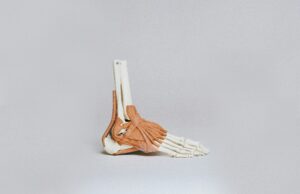
An ankle sprain, or "ankle joint sprain" according to medical terminology, occurs due to overstretching or tearing of the ligaments that hold the bones of the ankle joint together and protect them from injuries and damage due to incorrect movements, a fall, or excessive pressure. These ligaments have elasticity, which allows them to stretch to a certain point and then return to their normal length. If they exceed their stretching limit, then a partial or complete rupture of their fibers occurs. Depending on the degree of ligament stretching and the extent of damage to one or more ligaments, ankle sprains are divided into 3 types:
What is an ankle sprain?
An ankle sprain, or "ankle joint sprain" according to medical terminology, occurs due to overstretching or tearing of the ligaments that hold the bones of the ankle joint together and protect them from injuries and damage due to incorrect movements, a fall, or excessive pressure. These ligaments have elasticity, which allows them to stretch to a certain point and then return to their normal length. If they exceed their stretching limit, then a partial or complete rupture of their fibers occurs. Depending on the degree of ligament stretching and the extent of damage to one or more ligaments, ankle sprains are divided into 3 types:
 When to consult a doctor
If you feel pain and see swelling in your ankle, you should call your doctor to assess whether further evaluation of the case is needed. If the symptoms are severe, you may have sustained significant damage to a ligament or bone in your ankle.
Complications from an ankle sprain
Improper treatment of a sprain, engaging in sports activities almost immediately after a sprain, or frequent ankle sprains can lead to the following complications:
When to consult a doctor
If you feel pain and see swelling in your ankle, you should call your doctor to assess whether further evaluation of the case is needed. If the symptoms are severe, you may have sustained significant damage to a ligament or bone in your ankle.
Complications from an ankle sprain
Improper treatment of a sprain, engaging in sports activities almost immediately after a sprain, or frequent ankle sprains can lead to the following complications:
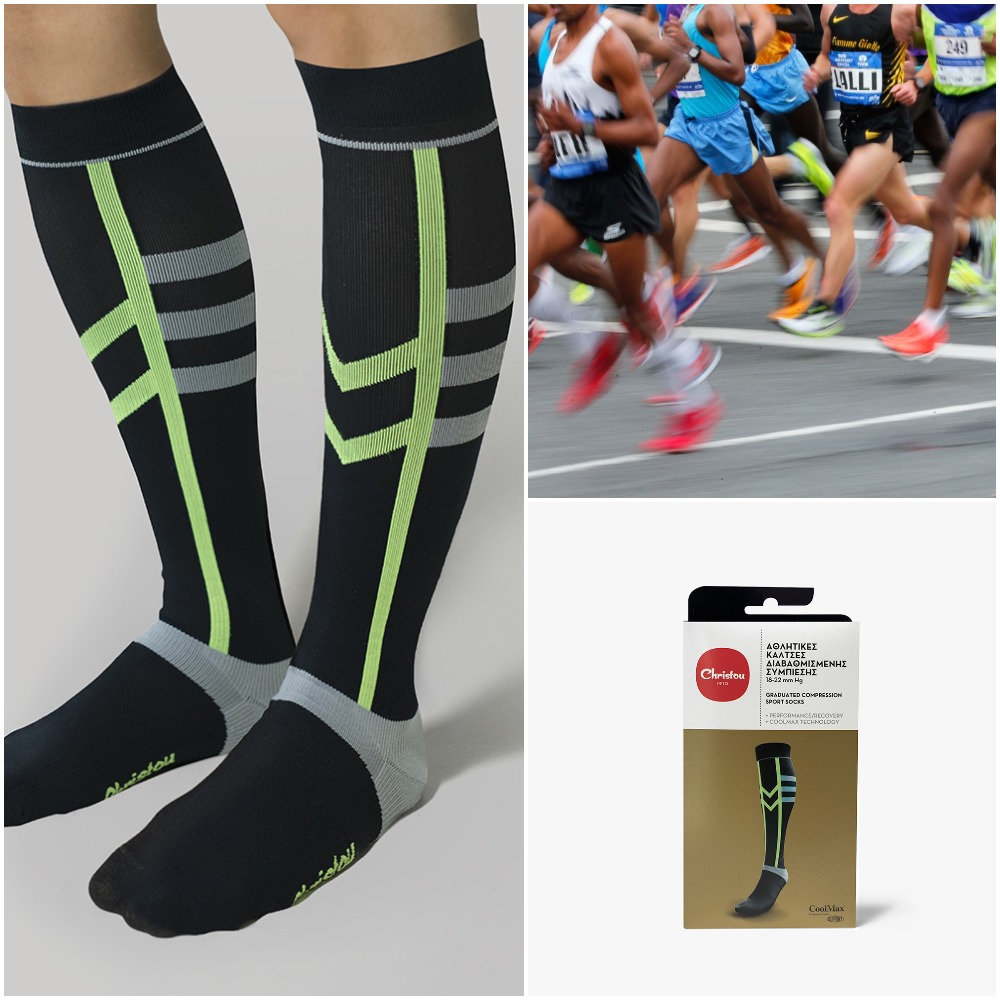 Wear special compression technology socks for sports: Christou 1910 athletic compression socks improve blood circulation, enhance muscle support, and reduce the risk of injuries. With a breathable composition and CoolMax technology, they keep your feet cool and dry, providing comfort and energy throughout sports activity.
Wear compression technology socks for strong and stable steps: Christou 1910 graduated compression socks give an energetic feeling all day long regardless of daily lifestyle (sedentary office work, long hours standing). Additionally, compression improves blood circulation, offering a "feel good factor" to both active women and dynamic men, while also protecting against edema formation due to the continuous pressure exerted on the ankle during walking.
Use protective equipment: During certain high-risk activities, if your ankles are sensitive and prone to sprains even with simple walking, if you have already sustained a previous injury, or if you want to feel protected, then Christou 1910 health protective accessories are essential:
Wear special compression technology socks for sports: Christou 1910 athletic compression socks improve blood circulation, enhance muscle support, and reduce the risk of injuries. With a breathable composition and CoolMax technology, they keep your feet cool and dry, providing comfort and energy throughout sports activity.
Wear compression technology socks for strong and stable steps: Christou 1910 graduated compression socks give an energetic feeling all day long regardless of daily lifestyle (sedentary office work, long hours standing). Additionally, compression improves blood circulation, offering a "feel good factor" to both active women and dynamic men, while also protecting against edema formation due to the continuous pressure exerted on the ankle during walking.
Use protective equipment: During certain high-risk activities, if your ankles are sensitive and prone to sprains even with simple walking, if you have already sustained a previous injury, or if you want to feel protected, then Christou 1910 health protective accessories are essential:
What is an ankle sprain?
An ankle sprain, or "ankle joint sprain" according to medical terminology, occurs due to overstretching or tearing of the ligaments that hold the bones of the ankle joint together and protect them from injuries and damage due to incorrect movements, a fall, or excessive pressure. These ligaments have elasticity, which allows them to stretch to a certain point and then return to their normal length. If they exceed their stretching limit, then a partial or complete rupture of their fibers occurs. Depending on the degree of ligament stretching and the extent of damage to one or more ligaments, ankle sprains are divided into 3 types:
- Grade 1 (mild form): The elastic fibers of the ligament are slightly stretched or there is a very small tear. The ankle will have minor swelling and tenderness to the touch.
- Grade 2 (moderate form): There is a partial rupture of the ligament fibers. The ankle is swollen at the injury site and causes pain with movement.
- Grade 3 (severe form): A complete ligament rupture has occurred, swelling is intense, the injury is painful, and walking is difficult.
- Sports activities: High-intensity team sports, such as basketball, football, and volleyball, usually involve sudden changes in direction or collisions, increasing the risk of ankle joint injuries. Also, an incorrect landing after a jump or a twist during a sports activity, such as in tennis or track and field, is a common cause of injury.
- Falls: Ankle injuries can be caused by falling after tripping, slippery roads, walking, or exercising on uneven surfaces.
- Excessive exertion: Exceeding physical limits during physical exercise or daily activities can lead to joint injuries.
- Inappropriate footwear: Worn-out, inappropriate, or high-heeled shoes destabilize the feet and ankles during movement or walking, making people more vulnerable to ankle and general joint injuries.
- Previous ankle injury: A recent ankle sprain or another type of ankle injury increases the chances of a new injury.
- Poor physical condition: A lifestyle that does not include sports or physical exercise or even daily walking affects ankle flexibility and can increase the risk of a sprain.
- Pain and tenderness
- Swelling and bruising
- Difficulty moving
- Ankle instability
- A snapping sensation at the time of injury
When to consult a doctor
If you feel pain and see swelling in your ankle, you should call your doctor to assess whether further evaluation of the case is needed. If the symptoms are severe, you may have sustained significant damage to a ligament or bone in your ankle.
Complications from an ankle sprain
Improper treatment of a sprain, engaging in sports activities almost immediately after a sprain, or frequent ankle sprains can lead to the following complications:
- Chronic ankle pain
- Chronic ankle joint instability
- Development of arthritis in the ankle
Wear special compression technology socks for sports: Christou 1910 athletic compression socks improve blood circulation, enhance muscle support, and reduce the risk of injuries. With a breathable composition and CoolMax technology, they keep your feet cool and dry, providing comfort and energy throughout sports activity.
Wear compression technology socks for strong and stable steps: Christou 1910 graduated compression socks give an energetic feeling all day long regardless of daily lifestyle (sedentary office work, long hours standing). Additionally, compression improves blood circulation, offering a "feel good factor" to both active women and dynamic men, while also protecting against edema formation due to the continuous pressure exerted on the ankle during walking.
Use protective equipment: During certain high-risk activities, if your ankles are sensitive and prone to sprains even with simple walking, if you have already sustained a previous injury, or if you want to feel protected, then Christou 1910 health protective accessories are essential:
- Ankle brace with 4 flexible side supports for safety and comfort during movement : Designed to protect injured ankles and provide safety from injuries. With adjustable straps and flexible stays, it allows free movement with safety, while being lightweight and comfortable for all-day wear. Ideal for use with all shoes, even heels or loafers!
- Silicone heel cups for heel pain relief : If you are experiencing heel pain, Christou 1910 anatomical silicone heel cups are the ideal solution. With a soft texture and a 1.5 cm elevation, they absorb shocks and protect joints, providing immediate relief. Additionally, they are easy to care for and can be reused again and again without losing their volume and shape.


