



Homo Smartphone
A recent article in Oneman titled "We are the hunchback generation" got us thinking... How addicted are we to our smartphones, after all?
 image credits: medicalxpress.com[/caption]
The "smart devices," which promise us so much—knowledge, communication, entertainment—often simply turn us into functional guinea pigs, who prolongedly press a touch screen to receive a little pleasure.
Our almost obsessive need to be updated on everything, not to miss any information, not only creates internal confusion but also a problem in our communication, as our attention is intertwined with notifications and not with the people who are next to us at that given moment.
Our most addictive habit keeps us hunched over our phone, usually only lifting our head to take a good selfie! As tragicomic as it may sound, Homo Smartphone, despite having the most capabilities, is essentially the most helpless of all to act compared to past generations.
We sit more and more burrowed in our chairs, in the familiar hunched posture, "enslaved" to a virtual interaction of our favorite social media, or to the latest work email, which little by little transcends the private sphere and our personal time...
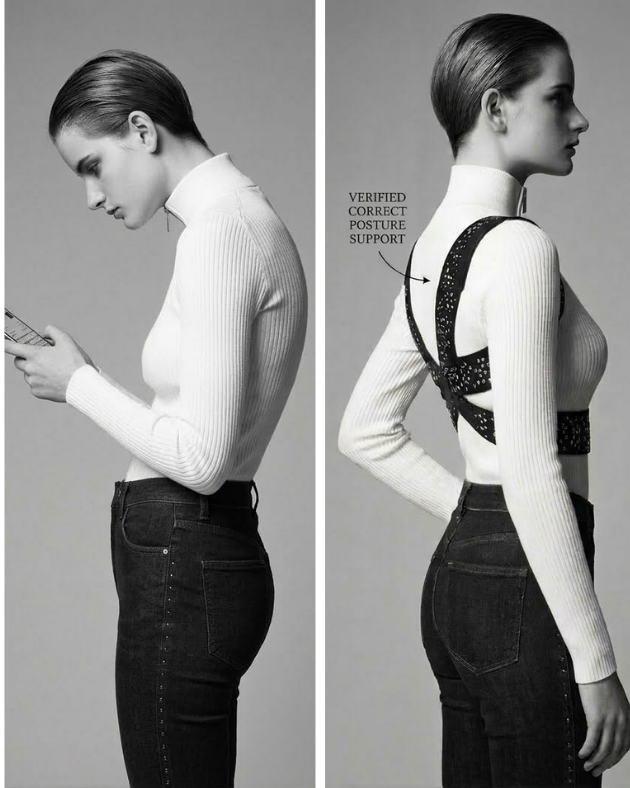
Beyond our social behavior, as expected, we have also adopted a harmful posture for our body. Our eyes, focused, almost hypnotized, do not blink enough, the muscles in our shoulders, permanently raised, have become tense, our neck leans forward, while our chest has relaxed into a passive image of "collapse."
[caption id="attachment_4318" align="alignnone" width="381"]
image credits: medicalxpress.com[/caption]
The "smart devices," which promise us so much—knowledge, communication, entertainment—often simply turn us into functional guinea pigs, who prolongedly press a touch screen to receive a little pleasure.
Our almost obsessive need to be updated on everything, not to miss any information, not only creates internal confusion but also a problem in our communication, as our attention is intertwined with notifications and not with the people who are next to us at that given moment.
Our most addictive habit keeps us hunched over our phone, usually only lifting our head to take a good selfie! As tragicomic as it may sound, Homo Smartphone, despite having the most capabilities, is essentially the most helpless of all to act compared to past generations.
We sit more and more burrowed in our chairs, in the familiar hunched posture, "enslaved" to a virtual interaction of our favorite social media, or to the latest work email, which little by little transcends the private sphere and our personal time...
Beyond our social behavior, as expected, we have also adopted a harmful posture for our body. Our eyes, focused, almost hypnotized, do not blink enough, the muscles in our shoulders, permanently raised, have become tense, our neck leans forward, while our chest has relaxed into a passive image of "collapse."
[caption id="attachment_4318" align="alignnone" width="381"]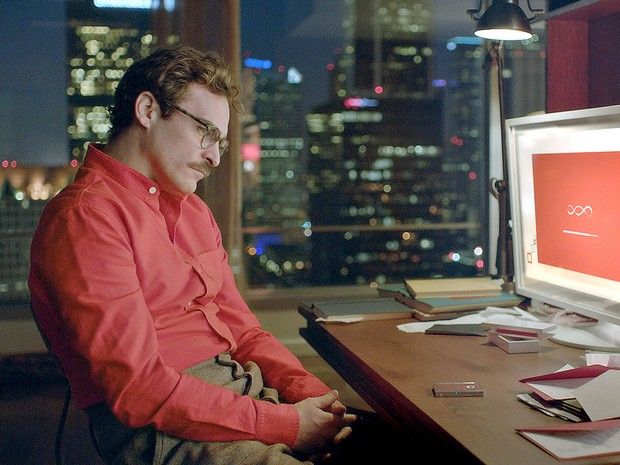 image credits: Oneman.gr[/caption]
Thus, we do not breathe correctly from the diaphragm, burdening not only our spine but also the blood circulation in our body. The unreleased stress and tension make depression symptoms and panic attacks increasingly common. Without any dynamic movement in our lives, positive substances, such as endorphins and serotonin, the well-known "happiness hormones," are not released into our bodies, making it a motionless and rigid carrier of negative energy and toxic tension.
The term "Technecks" describes not only millennials but also older people who cannot manage the flood of information in a balanced way. The problem is not technology, but its uncontrolled use. All of us have cultivated our natural curiosity a little more, observing the lives of others through social media, even making pointless comparisons and seeking the mass acceptance of unknown followers...
[caption id="attachment_4326" align="alignleft" width="304"]
image credits: Oneman.gr[/caption]
Thus, we do not breathe correctly from the diaphragm, burdening not only our spine but also the blood circulation in our body. The unreleased stress and tension make depression symptoms and panic attacks increasingly common. Without any dynamic movement in our lives, positive substances, such as endorphins and serotonin, the well-known "happiness hormones," are not released into our bodies, making it a motionless and rigid carrier of negative energy and toxic tension.
The term "Technecks" describes not only millennials but also older people who cannot manage the flood of information in a balanced way. The problem is not technology, but its uncontrolled use. All of us have cultivated our natural curiosity a little more, observing the lives of others through social media, even making pointless comparisons and seeking the mass acceptance of unknown followers...
[caption id="attachment_4326" align="alignleft" width="304"] image credits: unsplash.com[/caption]
However, we forget to do something truly beneficial for ourselves. To stand up for a moment, distanced, and escape the "digital noise," clearing our mind and body and gaining a real awareness of the space around us, enjoying every moment.
[caption id="attachment_4328" align="alignnone" width="313"]
image credits: unsplash.com[/caption]
However, we forget to do something truly beneficial for ourselves. To stand up for a moment, distanced, and escape the "digital noise," clearing our mind and body and gaining a real awareness of the space around us, enjoying every moment.
[caption id="attachment_4328" align="alignnone" width="313"]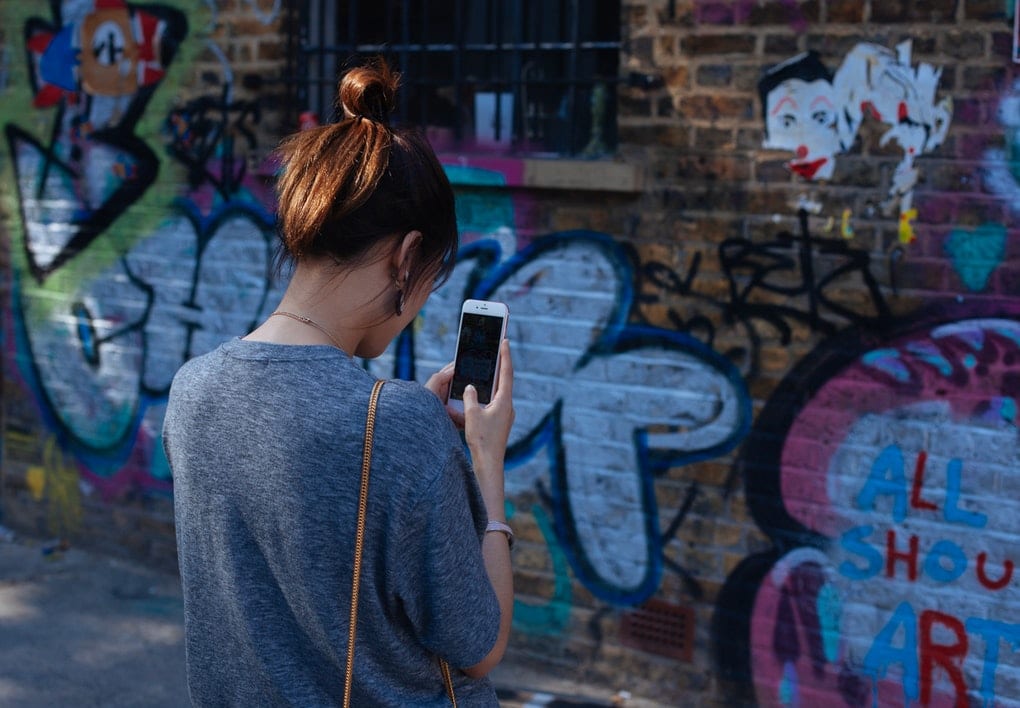 image credits: unsplash.com[/caption]
 Jean Twenge[/caption]
The digital conditions of existence affect us and even more the malleable nature of children, causing many ups and downs in their mood and psychology in general. The barometer of emotions depends on digital likes, and the validation of their self-esteem hangs by this digital thread.
[caption id="attachment_4322" align="alignnone" width="312"]
Jean Twenge[/caption]
The digital conditions of existence affect us and even more the malleable nature of children, causing many ups and downs in their mood and psychology in general. The barometer of emotions depends on digital likes, and the validation of their self-esteem hangs by this digital thread.
[caption id="attachment_4322" align="alignnone" width="312"] image credits: wonderingfair.com[/caption]
It is therefore necessary to replace FOMO with its counterpart. JOMO (Joy Of Missing Out). It is not bad to filter the information we receive, keeping only what truly interests us. It is not the end of the world if we miss something. We do not become hermits if we abstain from social media for a few hours a day, dedicating this precious time to ourselves and our loved ones.
Instead of going down in history as the generation with bowed heads, let's decide to act!
And as long as we remain stuck due to necessity and professional obligations, let's give our body a small break, relieving the burden from our shoulders, back, and neck!
image credits: wonderingfair.com[/caption]
It is therefore necessary to replace FOMO with its counterpart. JOMO (Joy Of Missing Out). It is not bad to filter the information we receive, keeping only what truly interests us. It is not the end of the world if we miss something. We do not become hermits if we abstain from social media for a few hours a day, dedicating this precious time to ourselves and our loved ones.
Instead of going down in history as the generation with bowed heads, let's decide to act!
And as long as we remain stuck due to necessity and professional obligations, let's give our body a small break, relieving the burden from our shoulders, back, and neck!
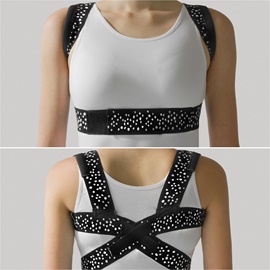 Christou1910 Back Support Strap for Correct Posture
€14,95
SHOP NOW
Christou1910 Back Support Strap for Correct Posture
€14,95
SHOP NOW
FOMO in our lives
The well-known FOMO (Fear Of Missing Out) syndrome on social media, i.e., the fear of missing out on an update, is more or less known... All of us, by now, have our mobile phone as an extension of our hand and find it difficult to put it down, even for a moment, without making sure we have seen every single like or comment, in real time, the moment the small typing dots start appearing... [caption id="attachment_4324" align="alignnone" width="365"] image credits: medicalxpress.com[/caption]
The "smart devices," which promise us so much—knowledge, communication, entertainment—often simply turn us into functional guinea pigs, who prolongedly press a touch screen to receive a little pleasure.
Our almost obsessive need to be updated on everything, not to miss any information, not only creates internal confusion but also a problem in our communication, as our attention is intertwined with notifications and not with the people who are next to us at that given moment.
Our most addictive habit keeps us hunched over our phone, usually only lifting our head to take a good selfie! As tragicomic as it may sound, Homo Smartphone, despite having the most capabilities, is essentially the most helpless of all to act compared to past generations.
We sit more and more burrowed in our chairs, in the familiar hunched posture, "enslaved" to a virtual interaction of our favorite social media, or to the latest work email, which little by little transcends the private sphere and our personal time...
Beyond our social behavior, as expected, we have also adopted a harmful posture for our body. Our eyes, focused, almost hypnotized, do not blink enough, the muscles in our shoulders, permanently raised, have become tense, our neck leans forward, while our chest has relaxed into a passive image of "collapse."
[caption id="attachment_4318" align="alignnone" width="381"] image credits: Oneman.gr[/caption]
Thus, we do not breathe correctly from the diaphragm, burdening not only our spine but also the blood circulation in our body. The unreleased stress and tension make depression symptoms and panic attacks increasingly common. Without any dynamic movement in our lives, positive substances, such as endorphins and serotonin, the well-known "happiness hormones," are not released into our bodies, making it a motionless and rigid carrier of negative energy and toxic tension.
The term "Technecks" describes not only millennials but also older people who cannot manage the flood of information in a balanced way. The problem is not technology, but its uncontrolled use. All of us have cultivated our natural curiosity a little more, observing the lives of others through social media, even making pointless comparisons and seeking the mass acceptance of unknown followers...
[caption id="attachment_4326" align="alignleft" width="304"] image credits: unsplash.com[/caption]
However, we forget to do something truly beneficial for ourselves. To stand up for a moment, distanced, and escape the "digital noise," clearing our mind and body and gaining a real awareness of the space around us, enjoying every moment.
[caption id="attachment_4328" align="alignnone" width="313"] image credits: unsplash.com[/caption]
The iGens generation
The most worrying thing, however, is a study about the future. Children born from 1995 onwards, the so-called (iGens), grow up without knowing natural play and an alternative way of entertainment and carefree enjoyment. Gradually, therefore, they are transformed into a new type of Homo Reacticus, who simply interacts with our known schematic, digital reactions ("like, happy, sad, angry and wow")! According to Jean Twenge, Professor of Psychology at San Diego State University, this also affects their mental health. [caption id="attachment_4320" align="alignnone" width="147"] Jean Twenge[/caption]
The digital conditions of existence affect us and even more the malleable nature of children, causing many ups and downs in their mood and psychology in general. The barometer of emotions depends on digital likes, and the validation of their self-esteem hangs by this digital thread.
[caption id="attachment_4322" align="alignnone" width="312"] image credits: wonderingfair.com[/caption]
It is therefore necessary to replace FOMO with its counterpart. JOMO (Joy Of Missing Out). It is not bad to filter the information we receive, keeping only what truly interests us. It is not the end of the world if we miss something. We do not become hermits if we abstain from social media for a few hours a day, dedicating this precious time to ourselves and our loved ones.
Instead of going down in history as the generation with bowed heads, let's decide to act!
And as long as we remain stuck due to necessity and professional obligations, let's give our body a small break, relieving the burden from our shoulders, back, and neck!
Back support strap for adults and teenagers
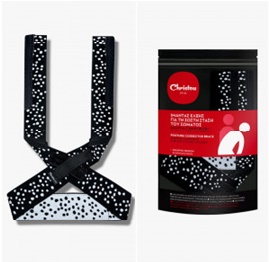
Because hunching over at a desk is a necessary evil, Christou1910 designed the Back Support Strap for adults and teenagers. The natural stretching helps our torso straighten, rest, and gradually regain its... pride! For all of us who slouch, the back strap can become a small inner voice that reminds us to bring our body back to where it belongs. With our torso upright and our head held high, in a state of mental uplift that does not depend on social media!
Christou1910 Back Support Strap for Correct Posture
€14,95
SHOP NOW


