

Pediatric Flatfoot: Address it early! (Part One)
[big]Most of us are somewhat familiar with the term flat feet. But what do we know about its appearance from infancy and, subsequently, childhood?[/big]
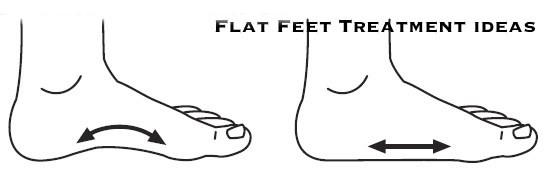 image credits: dinopt.com[/caption]
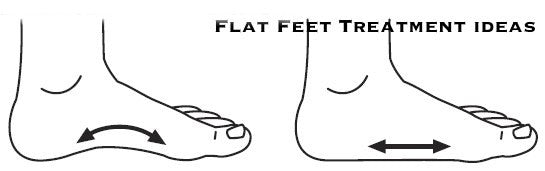
Pediatric flat feet (pes planus) essentially refers to a flat or very low arch in the foot, which becomes noticeable when children stand or walk.
According to the American Academy of Pediatrics and healthychildren.org, pediatric flat feet are common in infants and younger children up to six years old (44% of children between the ages of 3 and 6 years old exhibit flat feet). In infants, a small layer of fat in the sole "hides" the developing arch, while toddlers still have loose ligaments.
[caption id="attachment_4464" align="alignnone" width="393"]
image credits: dinopt.com[/caption]
Pediatric flat feet (pes planus) essentially refers to a flat or very low arch in the foot, which becomes noticeable when children stand or walk.
According to the American Academy of Pediatrics and healthychildren.org, pediatric flat feet are common in infants and younger children up to six years old (44% of children between the ages of 3 and 6 years old exhibit flat feet). In infants, a small layer of fat in the sole "hides" the developing arch, while toddlers still have loose ligaments.
[caption id="attachment_4464" align="alignnone" width="393"]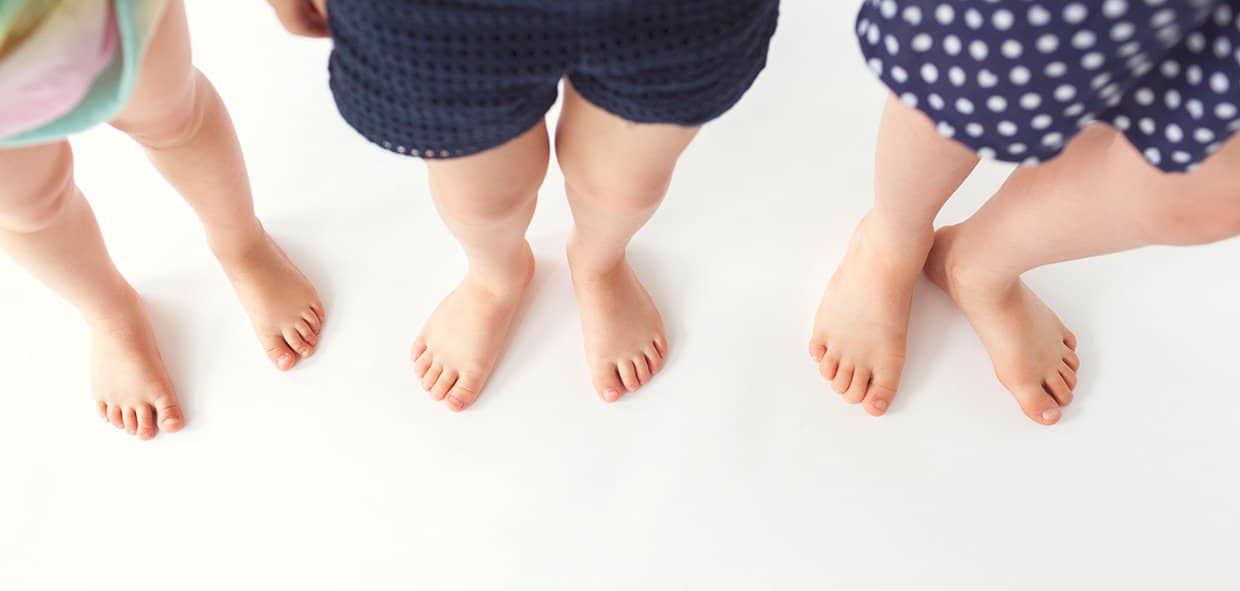 Image credits: shoesfeetgear.com[/caption]
The flat arch usually corrects itself naturally as muscles strengthen and soft tissues stiffen. The height of the foot arch in children increases up to the age of 9 years. However, 1 to 2 out of 10 children will continue to have flat feet as adults.
The problem should particularly concern you if flat feet persist after the age of 9, or, conversely, appear suddenly in your child.
Flat feet vary from child to child: they can be flexible or rigid, painless or painful, and are linked to the tightness of the Achilles tendon at the base of the foot.
In the majority of cases, flat feet are painless, but they become noticeable after prolonged exercise, walking, running, or intense activity, which makes the shifting of body weight onto the feet more apparent. Pain can be diffuse throughout the foot, in the sole, or the ankle.
According to Joshua Burns and David Little, Professors in the Department of Paediatrics at Westmead Children's Hospital, University of Sydney, pediatric flat feet have been associated with various causes.
[caption id="attachment_4466" align="alignnone" width="180"]
Image credits: shoesfeetgear.com[/caption]
The flat arch usually corrects itself naturally as muscles strengthen and soft tissues stiffen. The height of the foot arch in children increases up to the age of 9 years. However, 1 to 2 out of 10 children will continue to have flat feet as adults.
The problem should particularly concern you if flat feet persist after the age of 9, or, conversely, appear suddenly in your child.
Flat feet vary from child to child: they can be flexible or rigid, painless or painful, and are linked to the tightness of the Achilles tendon at the base of the foot.
In the majority of cases, flat feet are painless, but they become noticeable after prolonged exercise, walking, running, or intense activity, which makes the shifting of body weight onto the feet more apparent. Pain can be diffuse throughout the foot, in the sole, or the ankle.
According to Joshua Burns and David Little, Professors in the Department of Paediatrics at Westmead Children's Hospital, University of Sydney, pediatric flat feet have been associated with various causes.
[caption id="attachment_4466" align="alignnone" width="180"] Joshua Burns[/caption]
[caption id="attachment_4468" align="alignnone" width="180"]
Joshua Burns[/caption]
[caption id="attachment_4468" align="alignnone" width="180"] David Little[/caption]
Childhood obesity, valgus feet (i.e., feet turned inwards, keeping the knees together and the soles turned outwards without aligning), and improperly fitting shoes are some common references related to this anatomical issue.
The study of the problem continues, and although we cannot yet isolate any single factor as definitive, we can, however, take into account that all these factors contribute to it.
David Little[/caption]
Childhood obesity, valgus feet (i.e., feet turned inwards, keeping the knees together and the soles turned outwards without aligning), and improperly fitting shoes are some common references related to this anatomical issue.
The study of the problem continues, and although we cannot yet isolate any single factor as definitive, we can, however, take into account that all these factors contribute to it.
 image credits: dinopt.com[/caption]
To ensure the correct development of a child's foot and prevent new problems from arising, it is essential to carefully choose the most important accessory in your little one's appearance: their shoes.
Too tight, too wide, too narrow, too stretched out – any of these issues can cause damage to the delicate, developing child's foot, leading to future problems in adulthood.
While still toddlers, your little ones' feet have more cartilage than bone. Although the foot structure is complete by the age of 2, the bones do not fully develop and harden before the age of 18!
[caption id="attachment_4472" align="alignnone" width="343"]
image credits: dinopt.com[/caption]
To ensure the correct development of a child's foot and prevent new problems from arising, it is essential to carefully choose the most important accessory in your little one's appearance: their shoes.
Too tight, too wide, too narrow, too stretched out – any of these issues can cause damage to the delicate, developing child's foot, leading to future problems in adulthood.
While still toddlers, your little ones' feet have more cartilage than bone. Although the foot structure is complete by the age of 2, the bones do not fully develop and harden before the age of 18!
[caption id="attachment_4472" align="alignnone" width="343"]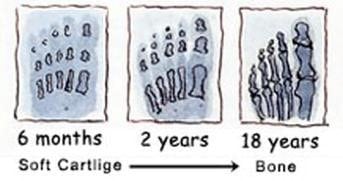 Footprint from 6 months to 18 years old! image credits: dinopt.com[/caption]
Flexible, durable, non-slip soles are one of the most important features to look for in infant shoes. Older children should wear shoes that are flexible and allow the foot to bend and move as if it were barefoot.
Children learn to walk by "gripping" the ground with their toes as they develop the intrinsic strength of their foot and arch. Therefore, at home, it is recommended to let your child go barefoot, facilitating the natural development of the foot. However, when surfaces are uneven, it is preferable for them to wear soft shoes that do not hinder the foot, offering rigid support for protection.
[caption id="attachment_4474" align="alignnone" width="358"]
Footprint from 6 months to 18 years old! image credits: dinopt.com[/caption]
Flexible, durable, non-slip soles are one of the most important features to look for in infant shoes. Older children should wear shoes that are flexible and allow the foot to bend and move as if it were barefoot.
Children learn to walk by "gripping" the ground with their toes as they develop the intrinsic strength of their foot and arch. Therefore, at home, it is recommended to let your child go barefoot, facilitating the natural development of the foot. However, when surfaces are uneven, it is preferable for them to wear soft shoes that do not hinder the foot, offering rigid support for protection.
[caption id="attachment_4474" align="alignnone" width="358"]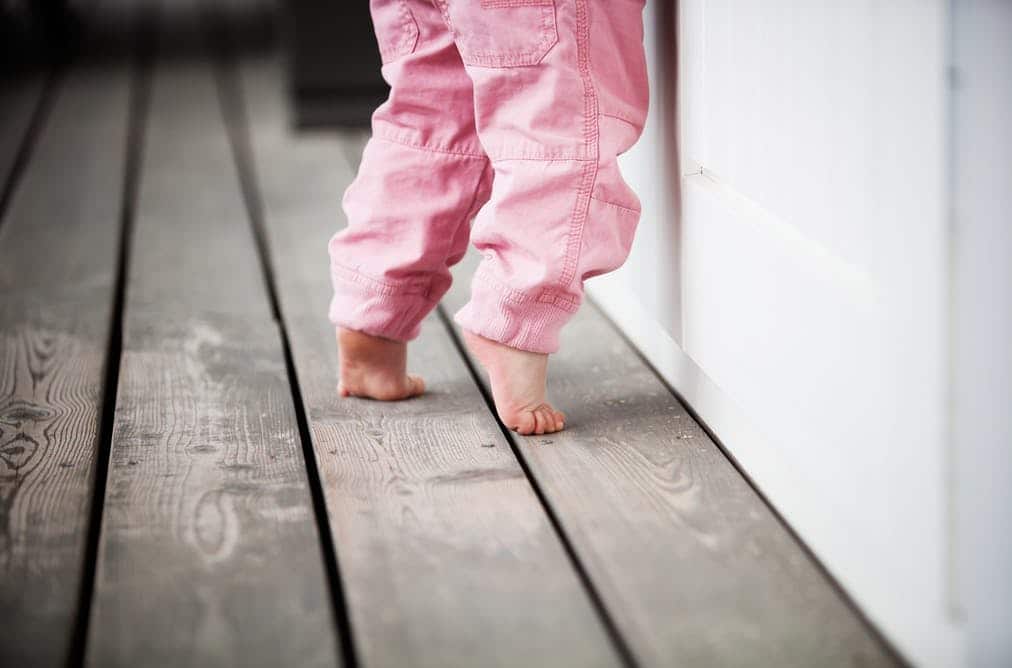 Image credits: the conversation.com[/caption]
[caption id="attachment_4476" align="alignnone" width="353"]
Image credits: the conversation.com[/caption]
[caption id="attachment_4476" align="alignnone" width="353"]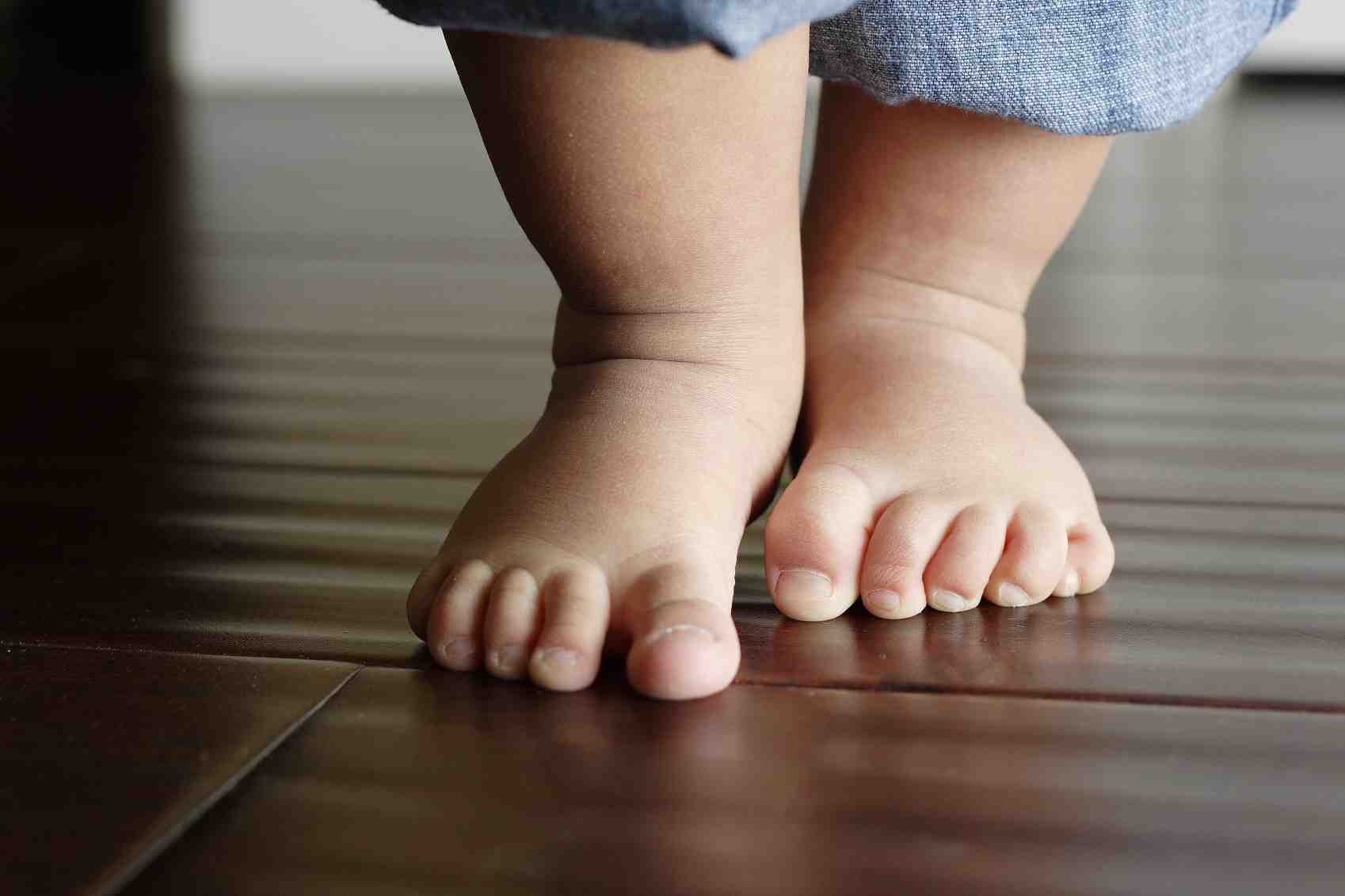 Image credits: feetfirstpodiatry.com[/caption]
Up to the age of 4 to 5, children's feet grow 2 full sizes a year, and even after that, they continue to grow 1 size a year. From simple crawling and the swaying of uncertain first steps to regular walking, which usually establishes itself between the ages of 3 to 5, their shoes must provide appropriate support, flexibility, and bear weight, according to the demands at each developmental stage.
[caption id="attachment_4478" align="alignnone" width="336"]
Image credits: feetfirstpodiatry.com[/caption]
Up to the age of 4 to 5, children's feet grow 2 full sizes a year, and even after that, they continue to grow 1 size a year. From simple crawling and the swaying of uncertain first steps to regular walking, which usually establishes itself between the ages of 3 to 5, their shoes must provide appropriate support, flexibility, and bear weight, according to the demands at each developmental stage.
[caption id="attachment_4478" align="alignnone" width="336"]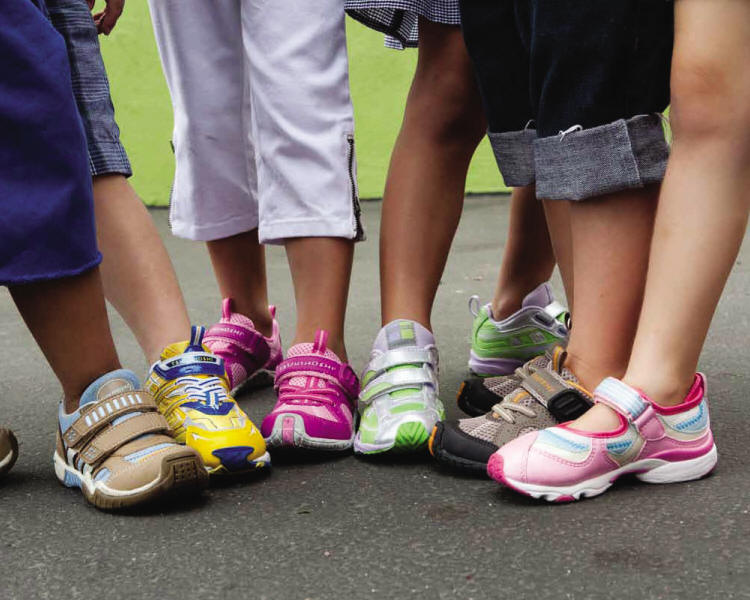 Image credits: culvercitycrossroads.com[/caption]
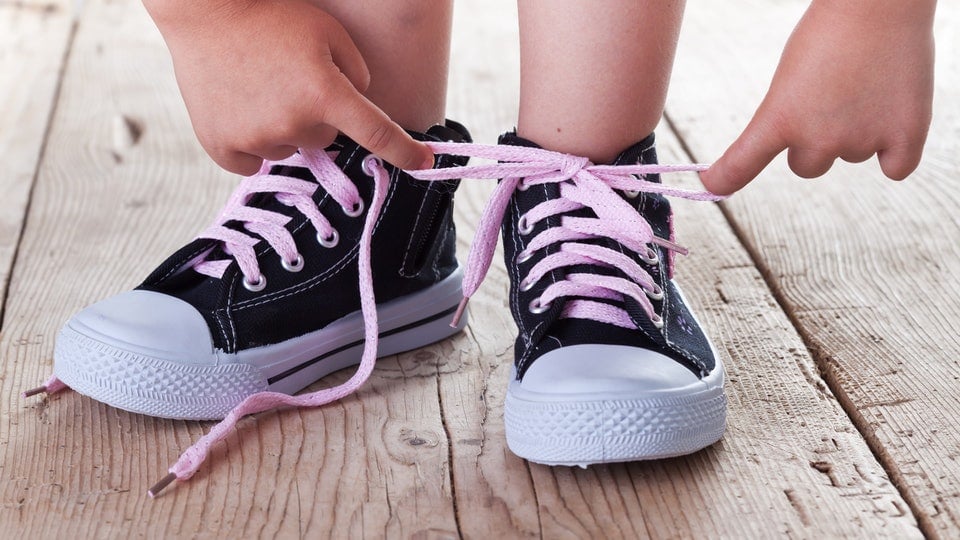 Image credits: Romper.com[/caption]
The most basic characteristics are stability, support, durability, and comfort. A relaxed fit and ease of putting them on and taking them off, the choice of soft materials, and a loose design are all essential points to consider when choosing each pair.
Specifically, the American Academy of Pediatrics recommends:
Image credits: Romper.com[/caption]
The most basic characteristics are stability, support, durability, and comfort. A relaxed fit and ease of putting them on and taking them off, the choice of soft materials, and a loose design are all essential points to consider when choosing each pair.
Specifically, the American Academy of Pediatrics recommends:
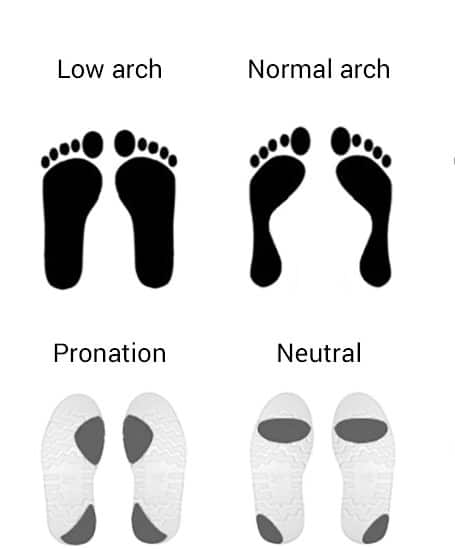 Sketch with shoe wear patterns for flat feet (left) and normal feet (right) image credits: oseifrimpong.me[/caption]
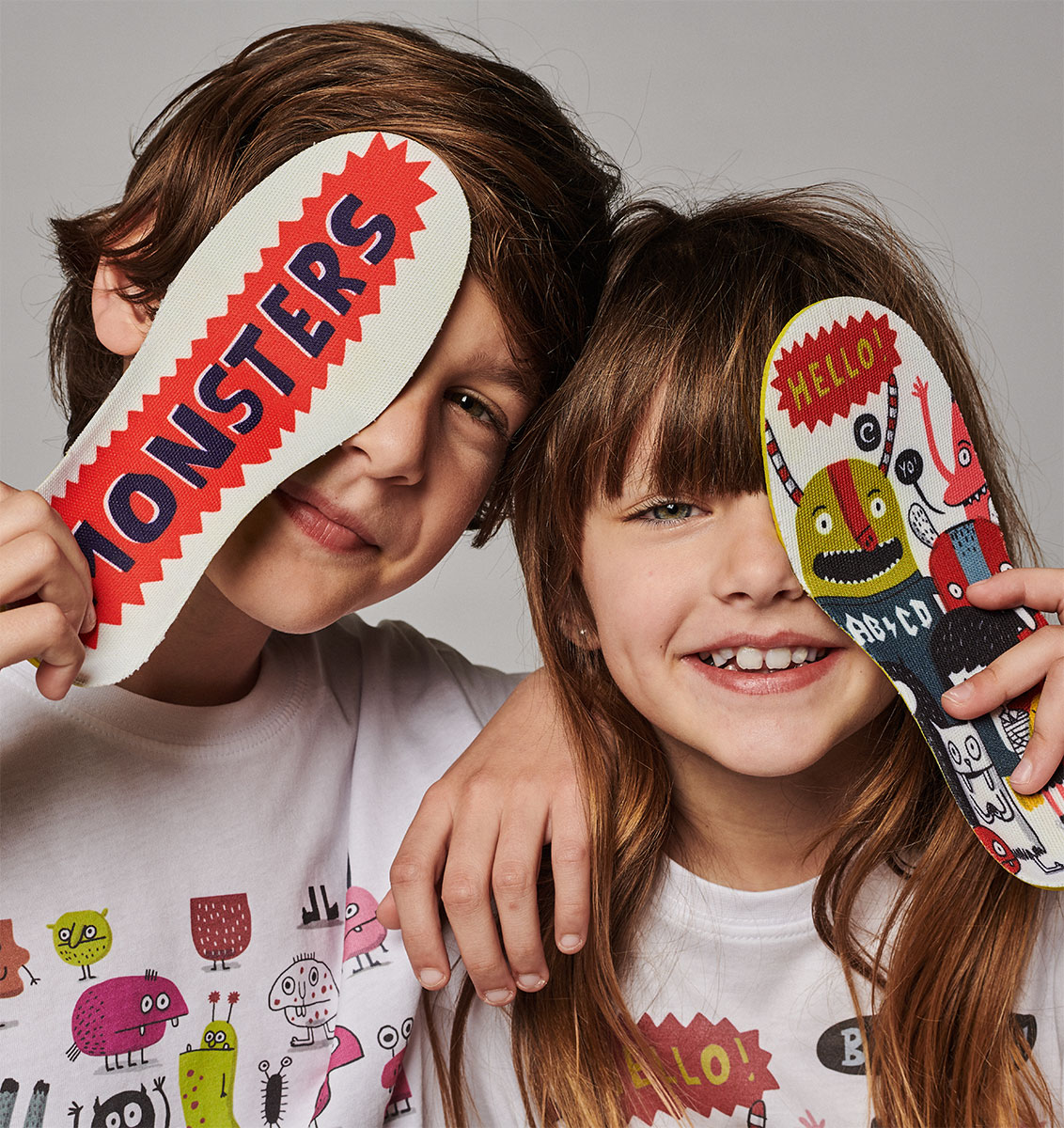 Taking all these needs into account, Christou1910 decided to highlight the correct formation of the child's foot, filling a significant gap in foot care in an accessible way for everyone.
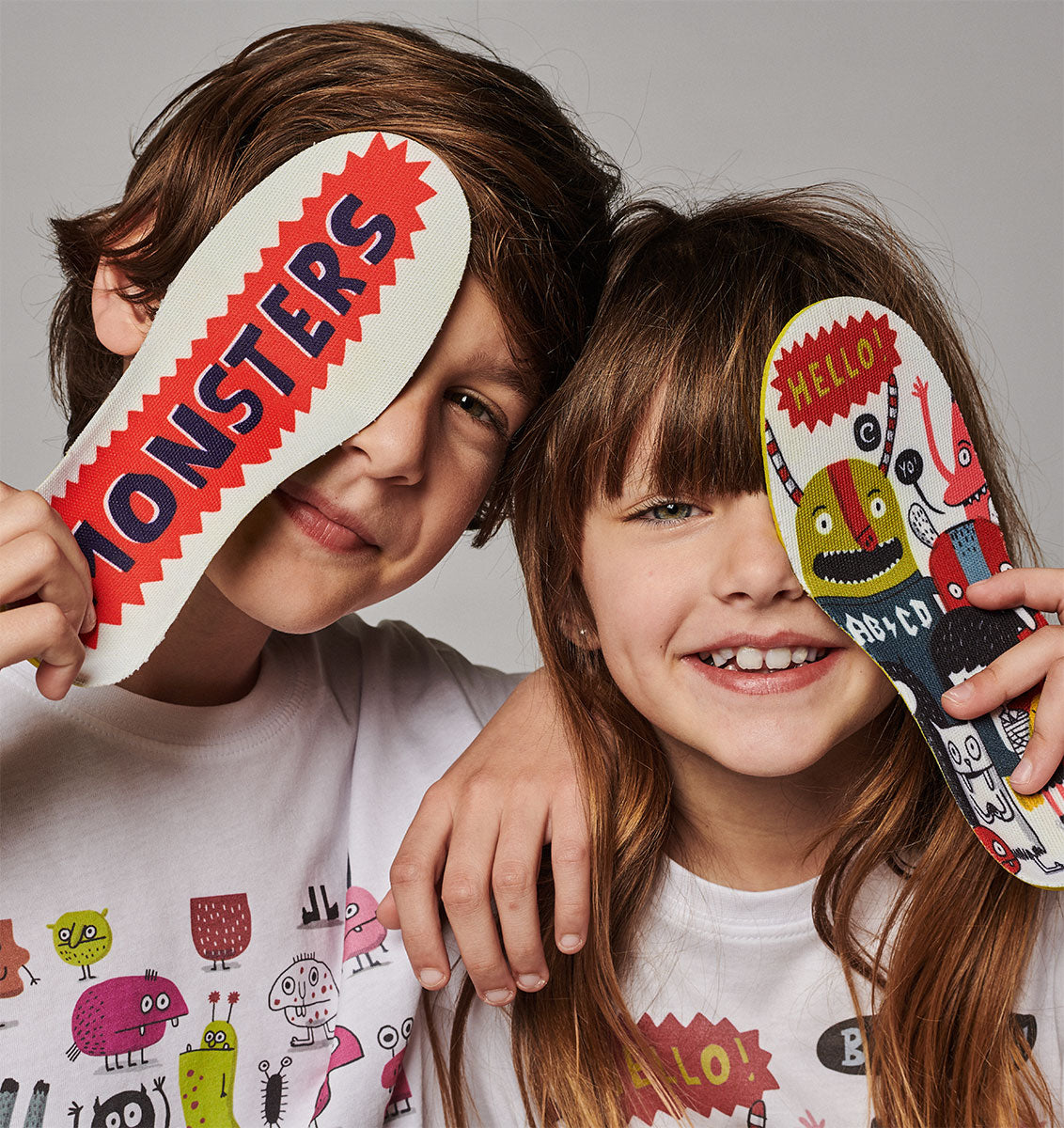
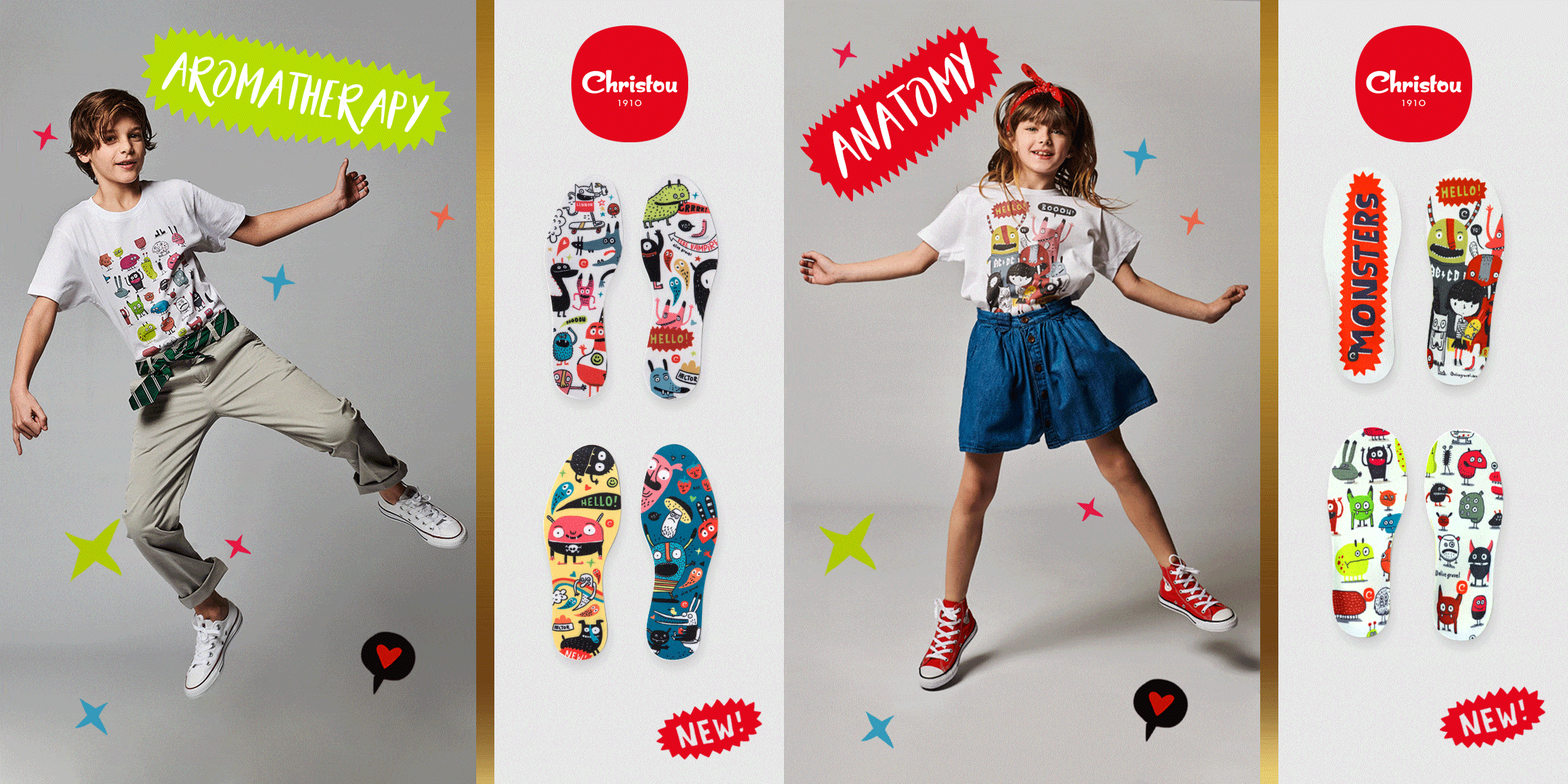
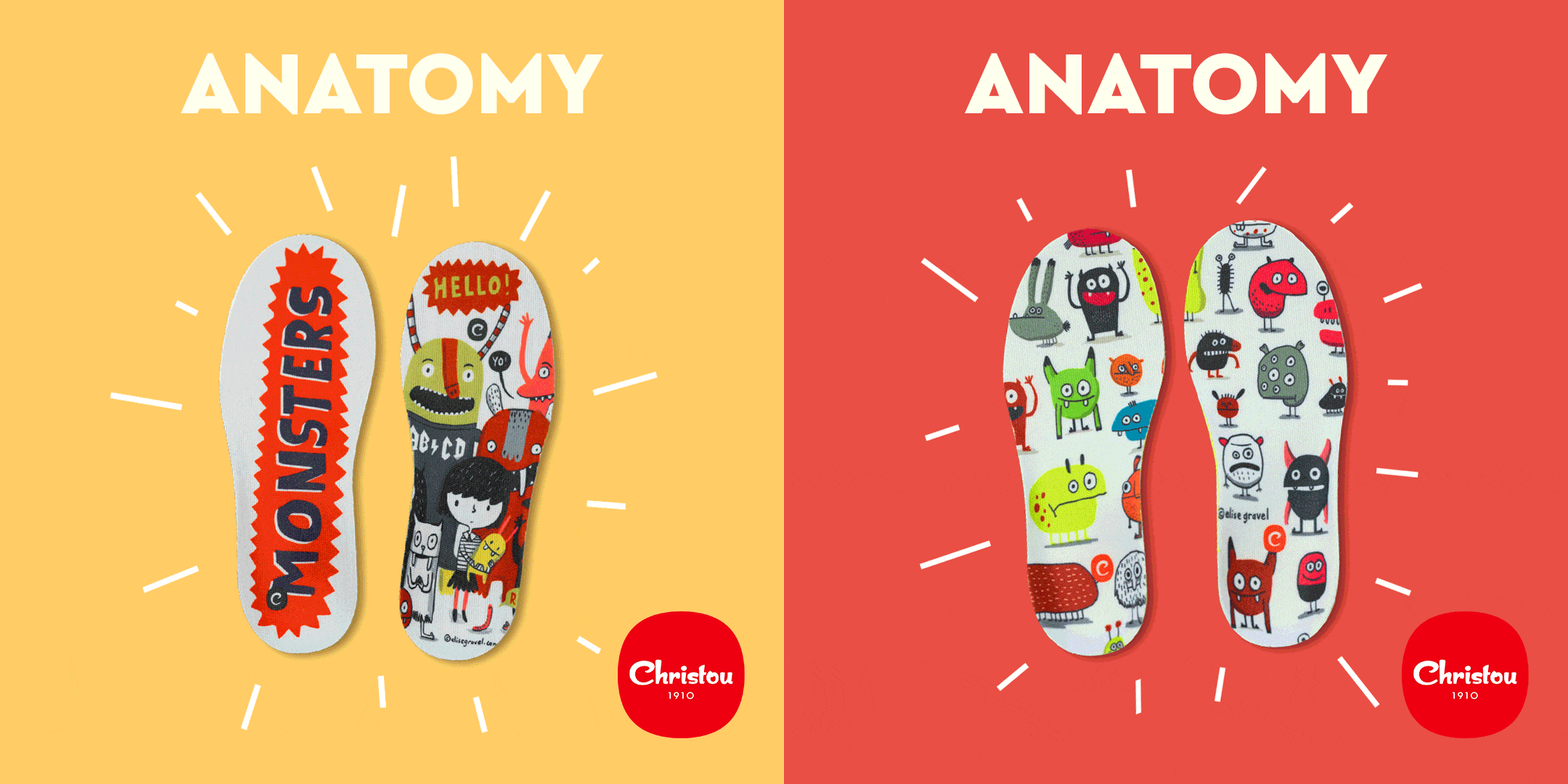
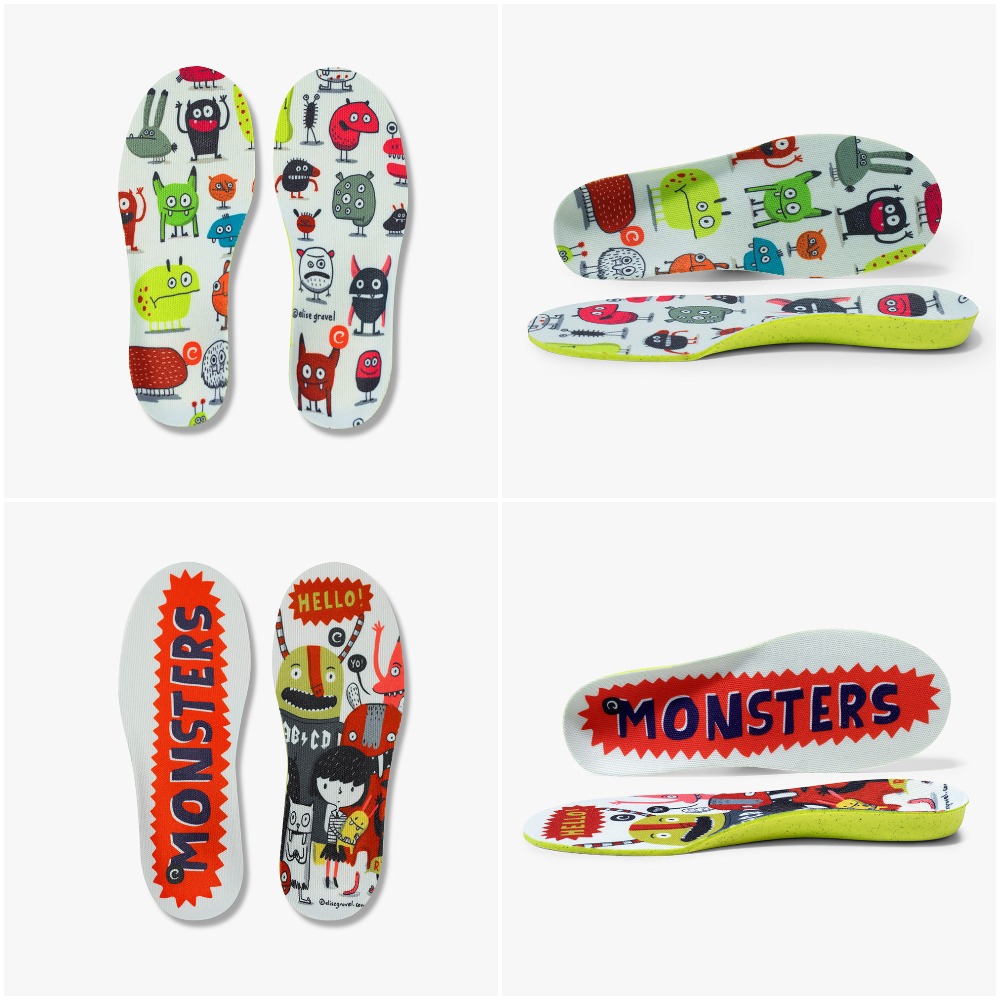
The "Monsters" series of children's anatomical insoles is a small but essential addition to every child's shoe. The insoles are a simple, everyday tool for all parents, acting as the best trainers for your little ones' energetic feet!
It is important to add a carefully designed anatomical insole for children to the midsole, also known as the "heart of the shoe," in order to provide proper support, preventing friction, shocks, and the problem of flat feet, which can create musculoskeletal problems in the future.
Taking all these needs into account, Christou1910 decided to highlight the correct formation of the child's foot, filling a significant gap in foot care in an accessible way for everyone.
The "Monsters" series of children's anatomical insoles is a small but essential addition to every child's shoe. The insoles are a simple, everyday tool for all parents, acting as the best trainers for your little ones' energetic feet!
It is important to add a carefully designed anatomical insole for children to the midsole, also known as the "heart of the shoe," in order to provide proper support, preventing friction, shocks, and the problem of flat feet, which can create musculoskeletal problems in the future.
 approx. €7.80
SHOP NOW
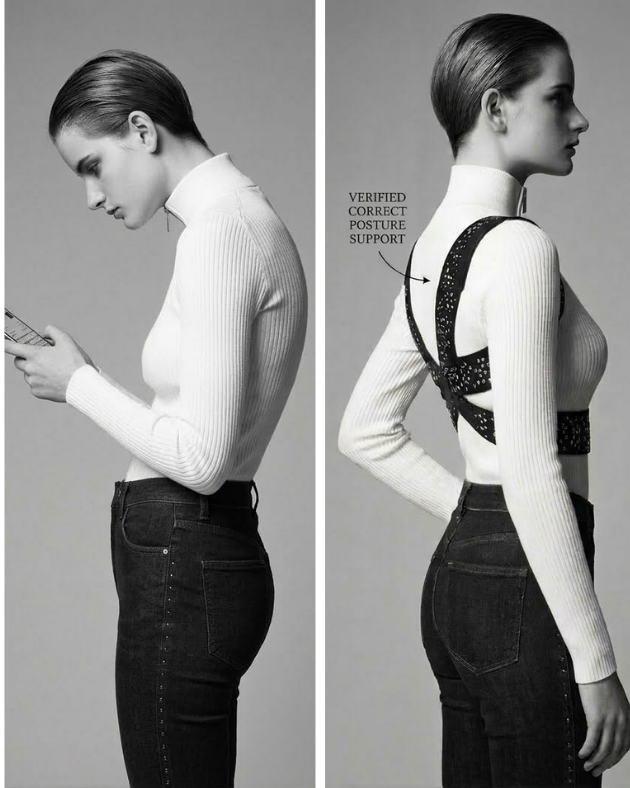
[big]It is known that people with flat feet are up to 50% more likely to develop back problems, and this is because other muscle groups work excessively to compensate for the problem.[/big]
approx. €7.80
SHOP NOW
[big]It is known that people with flat feet are up to 50% more likely to develop back problems, and this is because other muscle groups work excessively to compensate for the problem.[/big]
 approx. €7.80
SHOP NOW
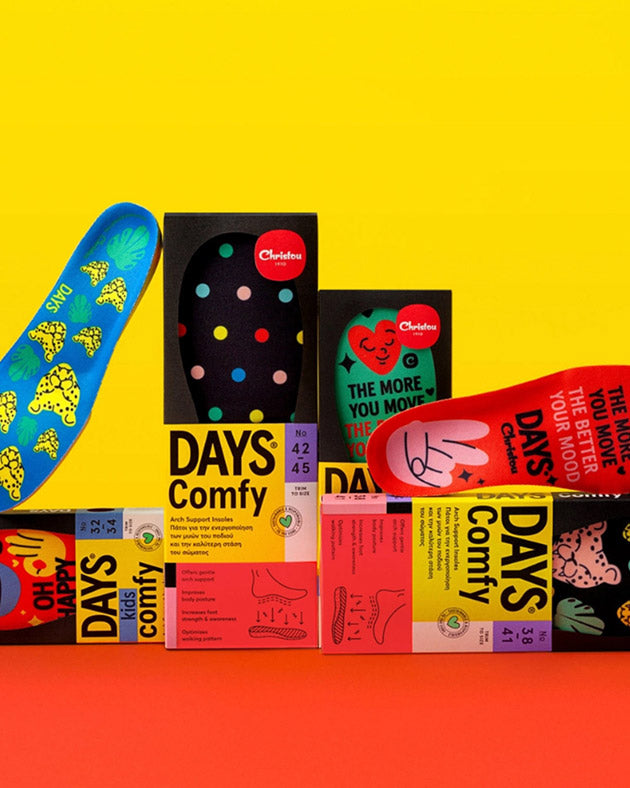
Supporting a child's gait protects the spine, maintains proper body posture, and helps reduce fatigue. The insole with special Ortholite technology, a soft, foamy material, fills the shoe in the safest way, "teaching" the foot with repeated use its correct position.
approx. €7.80
SHOP NOW
Supporting a child's gait protects the spine, maintains proper body posture, and helps reduce fatigue. The insole with special Ortholite technology, a soft, foamy material, fills the shoe in the safest way, "teaching" the foot with repeated use its correct position.
 approx. €7.80
SHOP NOW
The shoe becomes the friendliest environment for the foot, freeing the lively protagonists of your life from pain, injuries, and anatomical problems!
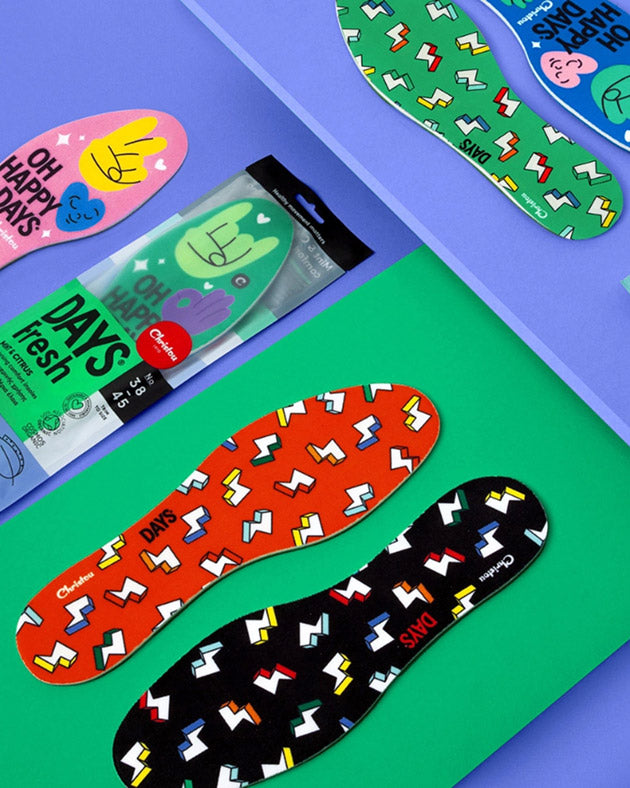
And because anything addressed to children can never be boring, but rather must ignite their vivid imagination, the children's insoles have been designed in collaboration with the multi-award-winning Franco-Canadian illustrator and children's book author Elise Gravel. The insoles, "dressed" with fantastic monsters, care for our little ones' delicate feet and turn the development of a child's foot into... art!
Do not allow flat feet to become a chronic anatomical problem in children's feet. Buy the mischievous insoles here SHOP NOW and dress their little feet with care and safety!
Or, on your next shopping trip for children's items, find the Christou1910 monster stand at the shoecorner of Attica department stores, at Dpam chain stores, at Intersport, and at your beloved Lapin stores!
You can also find your favorite aromatic and anatomical insoles at selected pharmacies throughout Greece!
Find the nearest point of sale by entering your address HERE.
[caption id="attachment_4664" align="aligncenter" width="292"]
approx. €7.80
SHOP NOW
The shoe becomes the friendliest environment for the foot, freeing the lively protagonists of your life from pain, injuries, and anatomical problems!
And because anything addressed to children can never be boring, but rather must ignite their vivid imagination, the children's insoles have been designed in collaboration with the multi-award-winning Franco-Canadian illustrator and children's book author Elise Gravel. The insoles, "dressed" with fantastic monsters, care for our little ones' delicate feet and turn the development of a child's foot into... art!
Do not allow flat feet to become a chronic anatomical problem in children's feet. Buy the mischievous insoles here SHOP NOW and dress their little feet with care and safety!
Or, on your next shopping trip for children's items, find the Christou1910 monster stand at the shoecorner of Attica department stores, at Dpam chain stores, at Intersport, and at your beloved Lapin stores!
You can also find your favorite aromatic and anatomical insoles at selected pharmacies throughout Greece!
Find the nearest point of sale by entering your address HERE.
[caption id="attachment_4664" align="aligncenter" width="292"]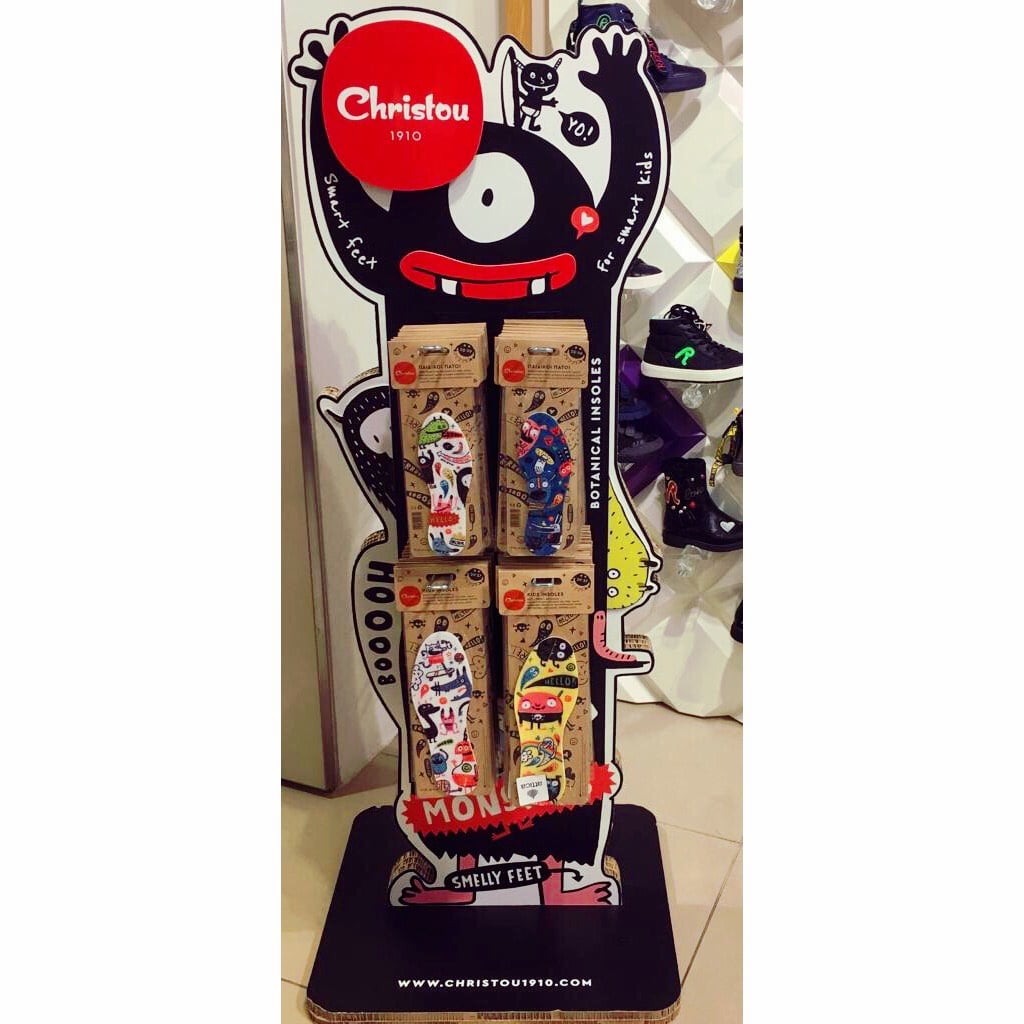 The Christou1910 stand at the Dpam store in The Mall Athens[/caption]
[caption id="attachment_4655" align="aligncenter" width="259"]
The Christou1910 stand at the Dpam store in The Mall Athens[/caption]
[caption id="attachment_4655" align="aligncenter" width="259"]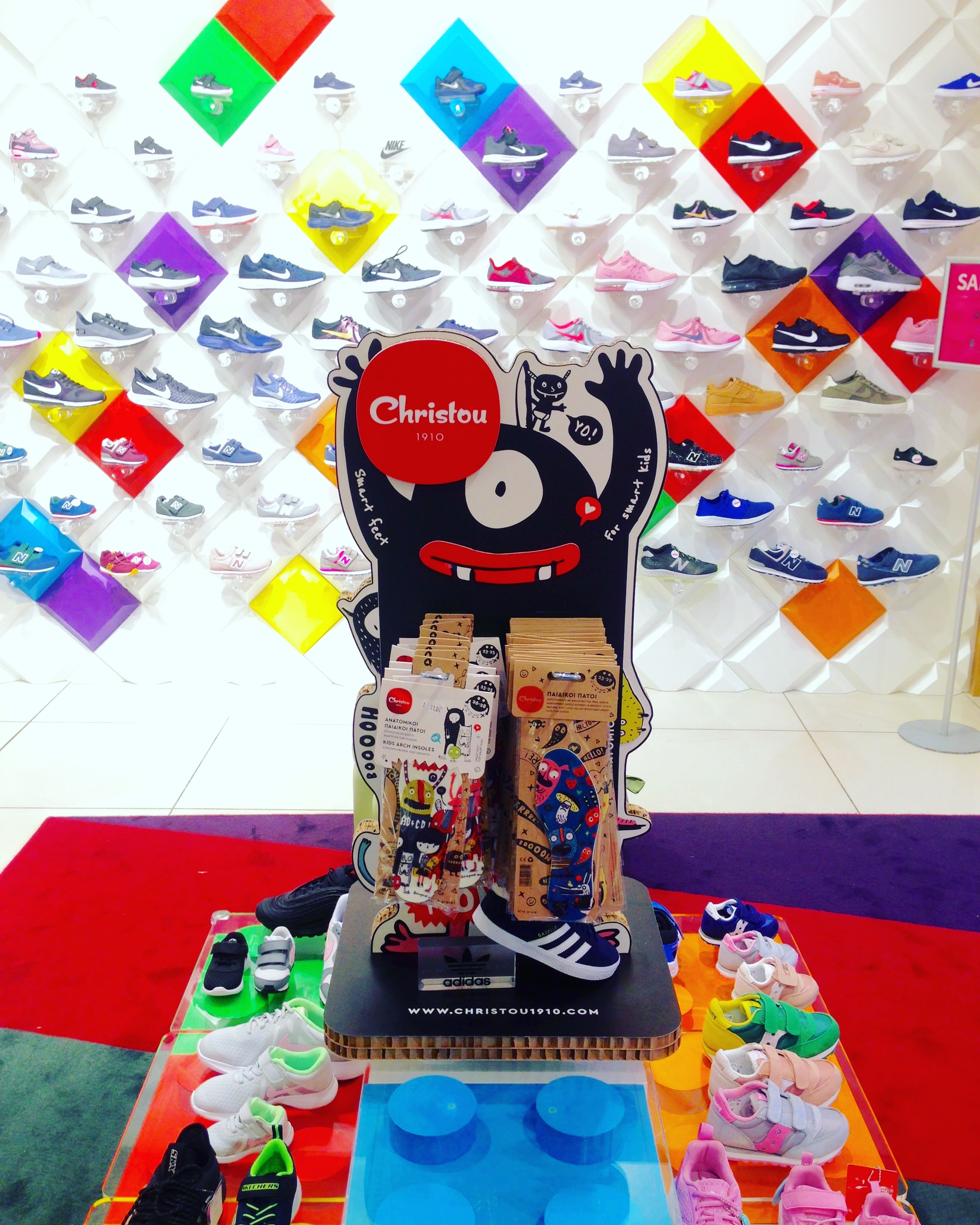 Christou1910 children's anatomical insoles at Attica's shoecorner[/caption]
[caption id="attachment_4657" align="aligncenter" width="300"]
Christou1910 children's anatomical insoles at Attica's shoecorner[/caption]
[caption id="attachment_4657" align="aligncenter" width="300"]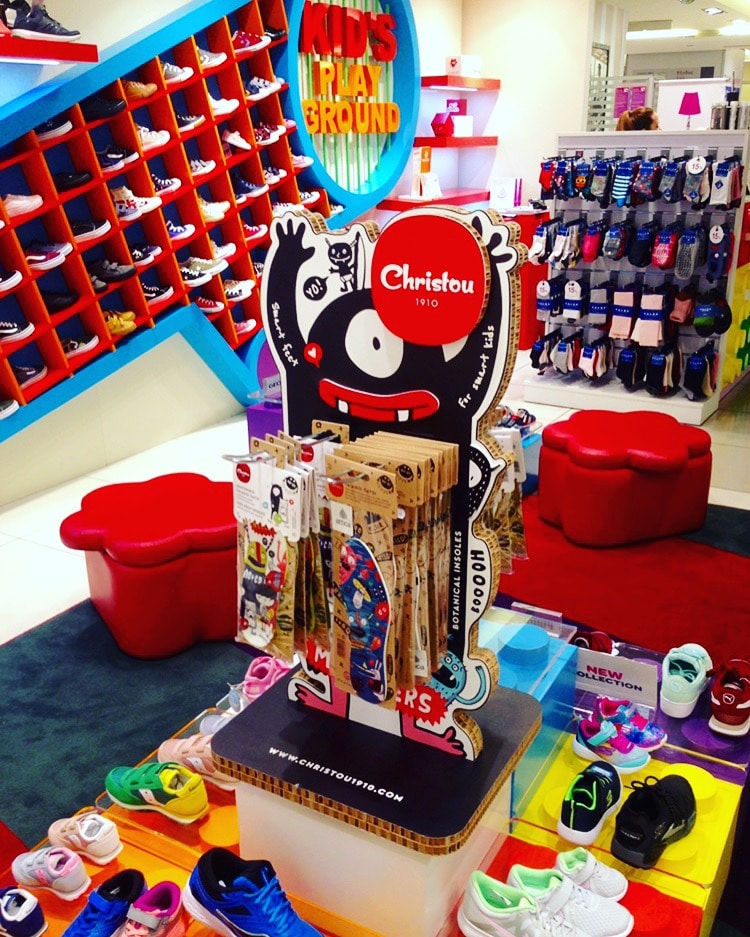 Christou1910 children's anatomical insoles at Attica's shoecorner[/caption]
What are pediatric flat feet and what causes them?
[caption id="attachment_4462" align="alignnone" width="405"] image credits: dinopt.com[/caption]
Pediatric flat feet (pes planus) essentially refers to a flat or very low arch in the foot, which becomes noticeable when children stand or walk.
According to the American Academy of Pediatrics and healthychildren.org, pediatric flat feet are common in infants and younger children up to six years old (44% of children between the ages of 3 and 6 years old exhibit flat feet). In infants, a small layer of fat in the sole "hides" the developing arch, while toddlers still have loose ligaments.
[caption id="attachment_4464" align="alignnone" width="393"] Image credits: shoesfeetgear.com[/caption]
The flat arch usually corrects itself naturally as muscles strengthen and soft tissues stiffen. The height of the foot arch in children increases up to the age of 9 years. However, 1 to 2 out of 10 children will continue to have flat feet as adults.
The problem should particularly concern you if flat feet persist after the age of 9, or, conversely, appear suddenly in your child.
Flat feet vary from child to child: they can be flexible or rigid, painless or painful, and are linked to the tightness of the Achilles tendon at the base of the foot.
In the majority of cases, flat feet are painless, but they become noticeable after prolonged exercise, walking, running, or intense activity, which makes the shifting of body weight onto the feet more apparent. Pain can be diffuse throughout the foot, in the sole, or the ankle.
According to Joshua Burns and David Little, Professors in the Department of Paediatrics at Westmead Children's Hospital, University of Sydney, pediatric flat feet have been associated with various causes.
[caption id="attachment_4466" align="alignnone" width="180"] Joshua Burns[/caption]
[caption id="attachment_4468" align="alignnone" width="180"] David Little[/caption]
Childhood obesity, valgus feet (i.e., feet turned inwards, keeping the knees together and the soles turned outwards without aligning), and improperly fitting shoes are some common references related to this anatomical issue.
The study of the problem continues, and although we cannot yet isolate any single factor as definitive, we can, however, take into account that all these factors contribute to it.
The right shoes
[caption id="attachment_4470" align="alignnone" width="327"] image credits: dinopt.com[/caption]
To ensure the correct development of a child's foot and prevent new problems from arising, it is essential to carefully choose the most important accessory in your little one's appearance: their shoes.
Too tight, too wide, too narrow, too stretched out – any of these issues can cause damage to the delicate, developing child's foot, leading to future problems in adulthood.
While still toddlers, your little ones' feet have more cartilage than bone. Although the foot structure is complete by the age of 2, the bones do not fully develop and harden before the age of 18!
[caption id="attachment_4472" align="alignnone" width="343"] Footprint from 6 months to 18 years old! image credits: dinopt.com[/caption]
Flexible, durable, non-slip soles are one of the most important features to look for in infant shoes. Older children should wear shoes that are flexible and allow the foot to bend and move as if it were barefoot.
Children learn to walk by "gripping" the ground with their toes as they develop the intrinsic strength of their foot and arch. Therefore, at home, it is recommended to let your child go barefoot, facilitating the natural development of the foot. However, when surfaces are uneven, it is preferable for them to wear soft shoes that do not hinder the foot, offering rigid support for protection.
[caption id="attachment_4474" align="alignnone" width="358"] Image credits: the conversation.com[/caption]
[caption id="attachment_4476" align="alignnone" width="353"] Image credits: feetfirstpodiatry.com[/caption]
Up to the age of 4 to 5, children's feet grow 2 full sizes a year, and even after that, they continue to grow 1 size a year. From simple crawling and the swaying of uncertain first steps to regular walking, which usually establishes itself between the ages of 3 to 5, their shoes must provide appropriate support, flexibility, and bear weight, according to the demands at each developmental stage.
[caption id="attachment_4478" align="alignnone" width="336"] Image credits: culvercitycrossroads.com[/caption]
- Precisely because children's feet grow so quickly, it is important to measure them regularly, especially before buying a new pair of shoes, and particularly for their everyday school shoes, which will undergo daily wear and tear and must be as durable and comfortable as possible. According to Independent, the average child is estimated to take about a million steps in them!
- As less than one-third of children easily find the right size, it is preferable to choose half sizes, which allow the foot to have exactly the space it needs.
- Avoid the idea of buying oversized shoes with the prospect that the child's foot will grow into them, as this provides no support for the developing foot, can cause blisters as the foot moves awkwardly, or even worse, lead to incorrect habits, such as clenching the toes to hold the shoe in place.
- Also, it is equally important not to wait until the old pair has reached its wear limit before buying a new one! Shoes that are too tight and worn are torture for children's delicate skin and can even lead to deformities, such as bunions on the big toe.
Image credits: Romper.com[/caption]
The most basic characteristics are stability, support, durability, and comfort. A relaxed fit and ease of putting them on and taking them off, the choice of soft materials, and a loose design are all essential points to consider when choosing each pair.
Specifically, the American Academy of Pediatrics recommends:
- Shoes should be lightweight and flexible to support natural foot movement with a stable base of support.
- Shoes should be made of synthetic leather, canvas, or mesh material to allow the foot to breathe.
- Shoes with rubber soles are preferable as they have better resistance on slippery surfaces.
- Shoes should have good shock absorption with durable soles, as children engage in more active activities as they grow.
Sketch with shoe wear patterns for flat feet (left) and normal feet (right) image credits: oseifrimpong.me[/caption]
Children's Orthopedic Insoles
Taking all these needs into account, Christou1910 decided to highlight the correct formation of the child's foot, filling a significant gap in foot care in an accessible way for everyone.
The "Monsters" series of children's anatomical insoles is a small but essential addition to every child's shoe. The insoles are a simple, everyday tool for all parents, acting as the best trainers for your little ones' energetic feet!
It is important to add a carefully designed anatomical insole for children to the midsole, also known as the "heart of the shoe," in order to provide proper support, preventing friction, shocks, and the problem of flat feet, which can create musculoskeletal problems in the future.
approx. €7.80
SHOP NOW
[big]It is known that people with flat feet are up to 50% more likely to develop back problems, and this is because other muscle groups work excessively to compensate for the problem.[/big]
approx. €7.80
SHOP NOW
Supporting a child's gait protects the spine, maintains proper body posture, and helps reduce fatigue. The insole with special Ortholite technology, a soft, foamy material, fills the shoe in the safest way, "teaching" the foot with repeated use its correct position.
approx. €7.80
SHOP NOW
The shoe becomes the friendliest environment for the foot, freeing the lively protagonists of your life from pain, injuries, and anatomical problems!
And because anything addressed to children can never be boring, but rather must ignite their vivid imagination, the children's insoles have been designed in collaboration with the multi-award-winning Franco-Canadian illustrator and children's book author Elise Gravel. The insoles, "dressed" with fantastic monsters, care for our little ones' delicate feet and turn the development of a child's foot into... art!
Do not allow flat feet to become a chronic anatomical problem in children's feet. Buy the mischievous insoles here SHOP NOW and dress their little feet with care and safety!
Or, on your next shopping trip for children's items, find the Christou1910 monster stand at the shoecorner of Attica department stores, at Dpam chain stores, at Intersport, and at your beloved Lapin stores!
You can also find your favorite aromatic and anatomical insoles at selected pharmacies throughout Greece!
Find the nearest point of sale by entering your address HERE.
[caption id="attachment_4664" align="aligncenter" width="292"] The Christou1910 stand at the Dpam store in The Mall Athens[/caption]
[caption id="attachment_4655" align="aligncenter" width="259"] Christou1910 children's anatomical insoles at Attica's shoecorner[/caption]
[caption id="attachment_4657" align="aligncenter" width="300"] Christou1910 children's anatomical insoles at Attica's shoecorner[/caption]