





Period pain: Useful, natural tips to help your body
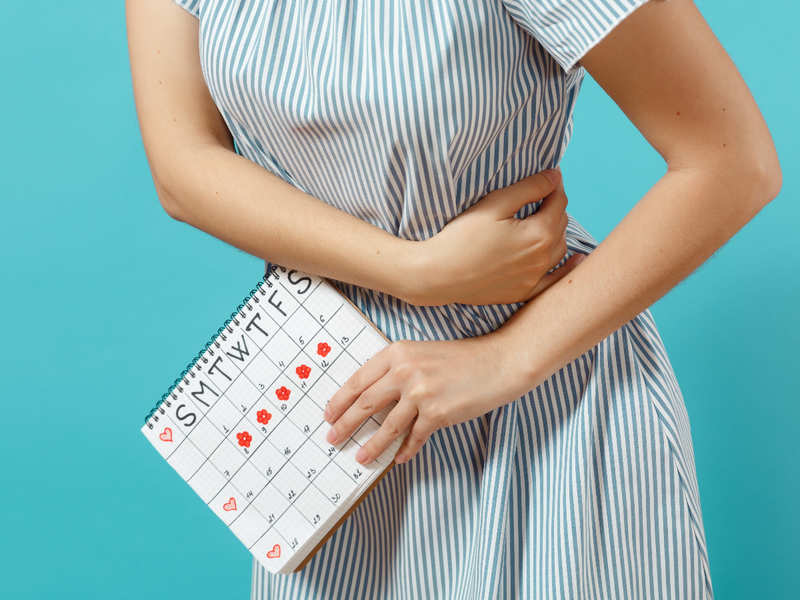
Cramps, bloating, a feeling of heaviness, abdominal and lower back pain, headache, bad mood...
Do these all sound familiar? Then you most likely belong to the 80% of women who spend five to seven days a month dealing with period pain, either intermittently or constantly at some point in their reproductive age.
From abdominal cramps to muscle stiffness and low back and lower back pain, menstruation for the majority of women always brings with it a feeling of discomfort, which reflects in different parts of the body... However, while most women are forced to compromise and coexist with mild discomfort, resorting to abundant painkillers, 15% feel the intensity of the pain to such an extent that it makes even simple, daily tasks impossible, confining them to bed and familiarizing them with this monthly ordeal.
Our demanding daily schedule reflects additional physical and mental stress, making the cramps of these days even more painful...
[caption id="attachment_4799" align="aligncenter" width="468"] image credits: pinterest.com[/caption]
All this pain, when there are no other organic causes, is called "primary dysmenorrhea" in medical terminology. For most women, the pain starts as an annoying warning bell, usually a week before their period, preparing them for the arrival of these difficult days of the month, and is called "premenstrual syndrome." Premenstrual syndrome is a collection of emotional and physical symptoms associated with ovulation. Symptoms start around the 14th day of the menstrual cycle and can last up to 7 days after the onset of menstruation.
Let's look more specifically at what causes the back and lower back pain that can make you less mobile.
image credits: pinterest.com[/caption]
All this pain, when there are no other organic causes, is called "primary dysmenorrhea" in medical terminology. For most women, the pain starts as an annoying warning bell, usually a week before their period, preparing them for the arrival of these difficult days of the month, and is called "premenstrual syndrome." Premenstrual syndrome is a collection of emotional and physical symptoms associated with ovulation. Symptoms start around the 14th day of the menstrual cycle and can last up to 7 days after the onset of menstruation.
Let's look more specifically at what causes the back and lower back pain that can make you less mobile.
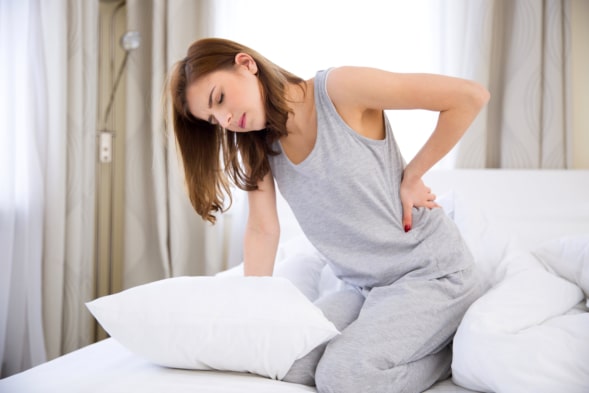 image credits: rd.com[/caption]
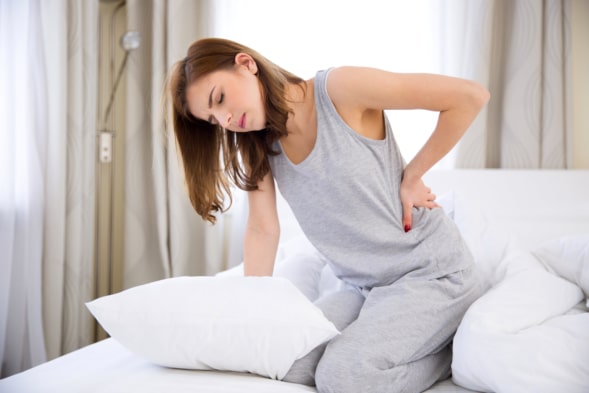
Low back and lower back pain is muscular in nature, is due to hormonal changes, and is directly related to uterine contractions. Each month the endometrium, i.e., the inner lining of the uterus, thickens as part of preparation for pregnancy. At the same time, this lining also produces prostaglandins, the chemicals primarily responsible for uterine contractions as well as pain, cramps, and discomfort during menstruation.
If pregnancy does not occur, estrogen and progesterone levels drop, prompting the body to shed this lining through menstruation. If the uterus contracts too strongly, it creates pressure on nearby blood vessels, interrupting the oxygenation of nearby muscles, which causes severe abdominal pain and reflects in the lower back, waist, and even thighs. Women with high prostaglandin levels may also experience other symptoms, such as nausea, severe migraines, or diarrhea.
image credits: rd.com[/caption]
Low back and lower back pain is muscular in nature, is due to hormonal changes, and is directly related to uterine contractions. Each month the endometrium, i.e., the inner lining of the uterus, thickens as part of preparation for pregnancy. At the same time, this lining also produces prostaglandins, the chemicals primarily responsible for uterine contractions as well as pain, cramps, and discomfort during menstruation.
If pregnancy does not occur, estrogen and progesterone levels drop, prompting the body to shed this lining through menstruation. If the uterus contracts too strongly, it creates pressure on nearby blood vessels, interrupting the oxygenation of nearby muscles, which causes severe abdominal pain and reflects in the lower back, waist, and even thighs. Women with high prostaglandin levels may also experience other symptoms, such as nausea, severe migraines, or diarrhea.
 A crucial factor in pain management is our diet. A drastic solution for menstruation-related pain is to consume foods rich in vitamins, especially vitamin B and magnesium.
All the vitamins you need can be found in foods such as brown rice, papaya, bananas, walnuts, green tea, green leafy vegetables, and chicken.
Brown rice and papaya are rich in vitamin B6, which helps with bloating and relieves pressure from your back.
Leafy vegetables and chicken are rich sources of iron, which helps blood circulation. Walnuts, dried fruits with vitamin K, and green tea contain anti-inflammatory properties that can reduce swelling and lower back pain.
By incorporating healthy ingredients into your diet, you can help your body cleanse itself internally, finding the strength to stop the pain.
A crucial factor in pain management is our diet. A drastic solution for menstruation-related pain is to consume foods rich in vitamins, especially vitamin B and magnesium.
All the vitamins you need can be found in foods such as brown rice, papaya, bananas, walnuts, green tea, green leafy vegetables, and chicken.
Brown rice and papaya are rich in vitamin B6, which helps with bloating and relieves pressure from your back.
Leafy vegetables and chicken are rich sources of iron, which helps blood circulation. Walnuts, dried fruits with vitamin K, and green tea contain anti-inflammatory properties that can reduce swelling and lower back pain.
By incorporating healthy ingredients into your diet, you can help your body cleanse itself internally, finding the strength to stop the pain.
 For chocolate lovers, the news is good! Dark chocolate is one of the best solutions for both abdominal cramps and low back pain!
If you are experiencing low-intensity pain, then a little dark chocolate is a healthier alternative to painkillers - not to mention tastier! Dark chocolate contains a large amount of cocoa, which has anti-inflammatory and pain-relieving properties. Muscle relaxation and the production of endorphins, which improve mood, will work in a very positive way for the difficult moments of these days!
In combination, you should not skip generous amounts of water, because hydration also improves the oxygenation of the body. Avoid alcohol, wine, and caffeine consumption and reduce smoking as much as possible during this painful period.
For chocolate lovers, the news is good! Dark chocolate is one of the best solutions for both abdominal cramps and low back pain!
If you are experiencing low-intensity pain, then a little dark chocolate is a healthier alternative to painkillers - not to mention tastier! Dark chocolate contains a large amount of cocoa, which has anti-inflammatory and pain-relieving properties. Muscle relaxation and the production of endorphins, which improve mood, will work in a very positive way for the difficult moments of these days!
In combination, you should not skip generous amounts of water, because hydration also improves the oxygenation of the body. Avoid alcohol, wine, and caffeine consumption and reduce smoking as much as possible during this painful period.
 It is well known that exercise strengthens muscles and improves blood circulation, ensuring better health and physical condition. In relation to difficult days, no matter how heavy you feel, you should try to incorporate some simple exercises, as this reduces abdominal cramps and makes your back muscles more resilient and toned. Among the most recommended exercises are aerobic exercise, walking, swimming, and of course yoga. Low-intensity exercises help treat chronic pain in a mild but systematic way.
Frequent stretching and back stretching is an even easier way to unlock your back and waist, as it immediately relieves tight muscles. One such example is to lie down, bring your knees to your chest, and hold them there tightly to reduce the likelihood of cramping.
It is well known that exercise strengthens muscles and improves blood circulation, ensuring better health and physical condition. In relation to difficult days, no matter how heavy you feel, you should try to incorporate some simple exercises, as this reduces abdominal cramps and makes your back muscles more resilient and toned. Among the most recommended exercises are aerobic exercise, walking, swimming, and of course yoga. Low-intensity exercises help treat chronic pain in a mild but systematic way.
Frequent stretching and back stretching is an even easier way to unlock your back and waist, as it immediately relieves tight muscles. One such example is to lie down, bring your knees to your chest, and hold them there tightly to reduce the likelihood of cramping.
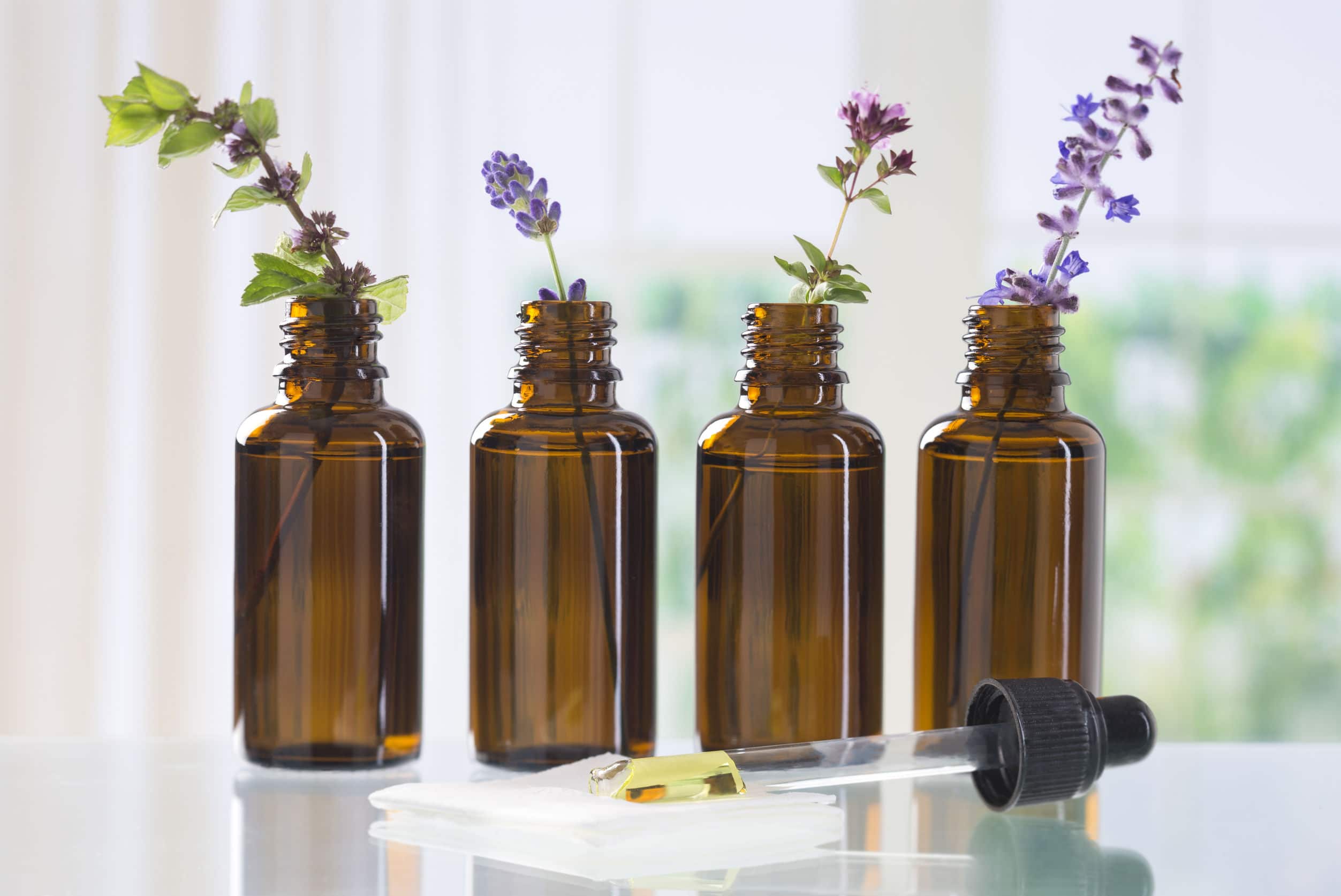 Topical massage with essential oil extracts is a natural way to relax, improve blood circulation, and promote well-being in the affected area of the lower back. You can choose between peppermint oil, which has anti-inflammatory properties and immediately cools the painful area, or frankincense for its vibrant, relaxing scent. Another very beneficial extract is that of chasteberry, known for regulating the female hormonal system and dysmenorrhea.
Health expert Kirsten Karchmer, founder of the Viv Wellness Center for the study, treatment, and improvement of period pain worldwide, spoke to Goop, recommending certain herbs as a significant source of pain relief.
[caption id="attachment_4811" align="alignnone" width="299"]
Topical massage with essential oil extracts is a natural way to relax, improve blood circulation, and promote well-being in the affected area of the lower back. You can choose between peppermint oil, which has anti-inflammatory properties and immediately cools the painful area, or frankincense for its vibrant, relaxing scent. Another very beneficial extract is that of chasteberry, known for regulating the female hormonal system and dysmenorrhea.
Health expert Kirsten Karchmer, founder of the Viv Wellness Center for the study, treatment, and improvement of period pain worldwide, spoke to Goop, recommending certain herbs as a significant source of pain relief.
[caption id="attachment_4811" align="alignnone" width="299"] Kirsten Karchmer[/caption]
[caption id="attachment_4813" align="alignnone" width="347"]
Kirsten Karchmer[/caption]
[caption id="attachment_4813" align="alignnone" width="347"] image credits: pinterest.com[/caption]
Fennel seed:
image credits: pinterest.com[/caption]
Fennel seed:
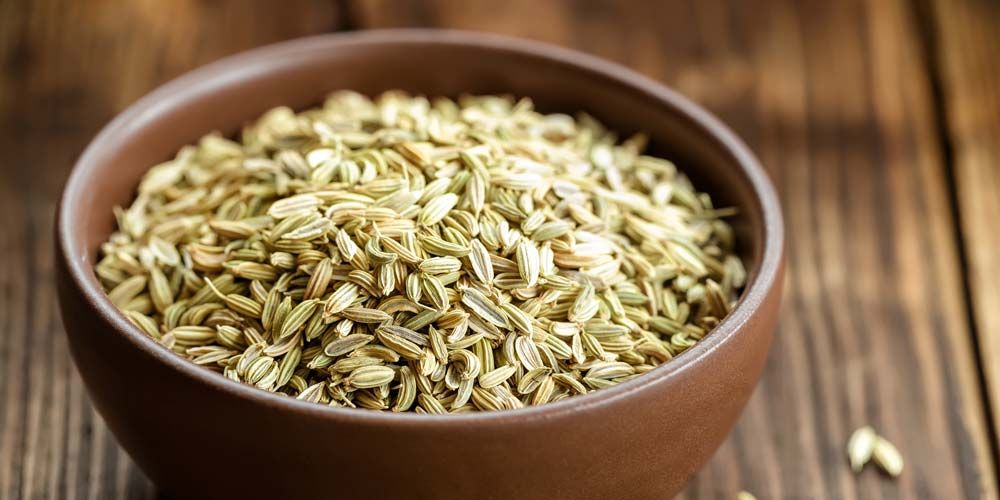 Fennel is one of the most studied herbs regarding acute dysmenorrhea pain. A 2006 study showed that it is as effective as mefenamic acid, an anti-inflammatory drug prescribed for period pain. Fennel also reduces nausea, fatigue, and gives a feeling of optimism and good mood.
Cinnamon:
Fennel is one of the most studied herbs regarding acute dysmenorrhea pain. A 2006 study showed that it is as effective as mefenamic acid, an anti-inflammatory drug prescribed for period pain. Fennel also reduces nausea, fatigue, and gives a feeling of optimism and good mood.
Cinnamon:
 Cinnamon is almost as effective as ibuprofen for relieving pain, cramps, and nausea. A 2015 placebo-controlled study showed that it significantly reduced discomfort in 7 out of 10 cases.
Ginger:
Cinnamon is almost as effective as ibuprofen for relieving pain, cramps, and nausea. A 2015 placebo-controlled study showed that it significantly reduced discomfort in 7 out of 10 cases.
Ginger:
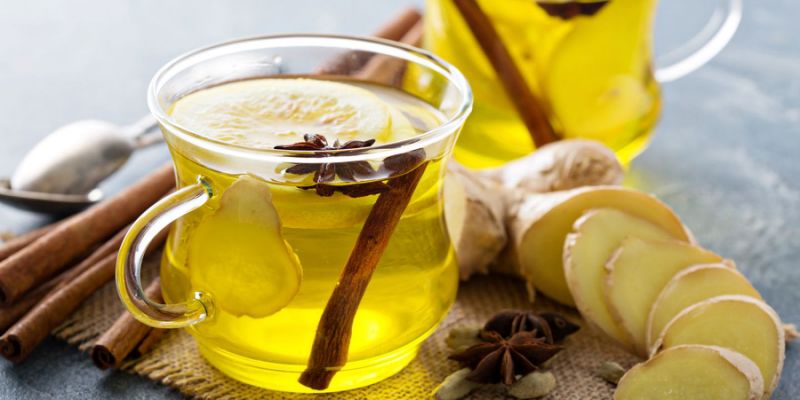 Something you can easily find in your kitchen is ginger. Beyond medicinal interventions, ginger has a similar effect to mefenamic acid and ibuprofen and treats common symptoms such as lower back pain, headaches, gastrointestinal disorders, nausea, and muscle and joint pain.
For digestive problems (gas, bloating, nausea, heartburn, diarrhea, or constipation): Prefer cooking herbs such as mint, lemon, honey, ginger, and licorice, which soothe stomach pain. Also look for natural extract of Poria Cocos Sclerotium, a kind of superfood from China that improves digestive function.
For stress, irritable nerves, mood swings, feelings of resignation and depression: When you experience the "rollercoaster" of extreme ups and downs in your mood and balance during your period, you can say stop by making a natural blend of herbs that have been proven to lift your spirits! Valerian, Chinese peony, bupleurum (Chai Hu Bupleurum) and Cyperus (cyperus rhizome) act as catalysts for tension, insomnia and exacerbated nerves!
For pain, breast tenderness, migraines, and cramps: Herbs with anti-inflammatory properties are very helpful in relieving all these "blows" of pain. The active ingredient in turmeric has been shown to counteract chronic pain and spasms. Dong quai root, an ancient herb from Syria, has been used for years to treat women's problems. One of the most powerful herbs in Traditional Chinese Medicine for healing many diseases is Baikal skullcap (Scutellaria baicalensis), helping with detoxification and better liver function.
Something you can easily find in your kitchen is ginger. Beyond medicinal interventions, ginger has a similar effect to mefenamic acid and ibuprofen and treats common symptoms such as lower back pain, headaches, gastrointestinal disorders, nausea, and muscle and joint pain.
For digestive problems (gas, bloating, nausea, heartburn, diarrhea, or constipation): Prefer cooking herbs such as mint, lemon, honey, ginger, and licorice, which soothe stomach pain. Also look for natural extract of Poria Cocos Sclerotium, a kind of superfood from China that improves digestive function.
For stress, irritable nerves, mood swings, feelings of resignation and depression: When you experience the "rollercoaster" of extreme ups and downs in your mood and balance during your period, you can say stop by making a natural blend of herbs that have been proven to lift your spirits! Valerian, Chinese peony, bupleurum (Chai Hu Bupleurum) and Cyperus (cyperus rhizome) act as catalysts for tension, insomnia and exacerbated nerves!
For pain, breast tenderness, migraines, and cramps: Herbs with anti-inflammatory properties are very helpful in relieving all these "blows" of pain. The active ingredient in turmeric has been shown to counteract chronic pain and spasms. Dong quai root, an ancient herb from Syria, has been used for years to treat women's problems. One of the most powerful herbs in Traditional Chinese Medicine for healing many diseases is Baikal skullcap (Scutellaria baicalensis), helping with detoxification and better liver function.
 Place a hot water bottle on your abdomen to relax the area from muscle spasms and soothe blood vessels. A relaxing hot shower will relieve all this pressure from your body, allowing you to recover.
 approx. €18.95 SHOP NOW
No matter how unbearable the pain in your body is, the obligations and demands of everyday life "run" and with them you are forced to run to meet them. Driving, standing, weekly shopping, mom's hugs, all these unconscious actions, these days seem like torture! In order to facilitate your movements as much as possible, you can support your spine, lower back and abdomen with an important, protective health accessory that will relieve you.
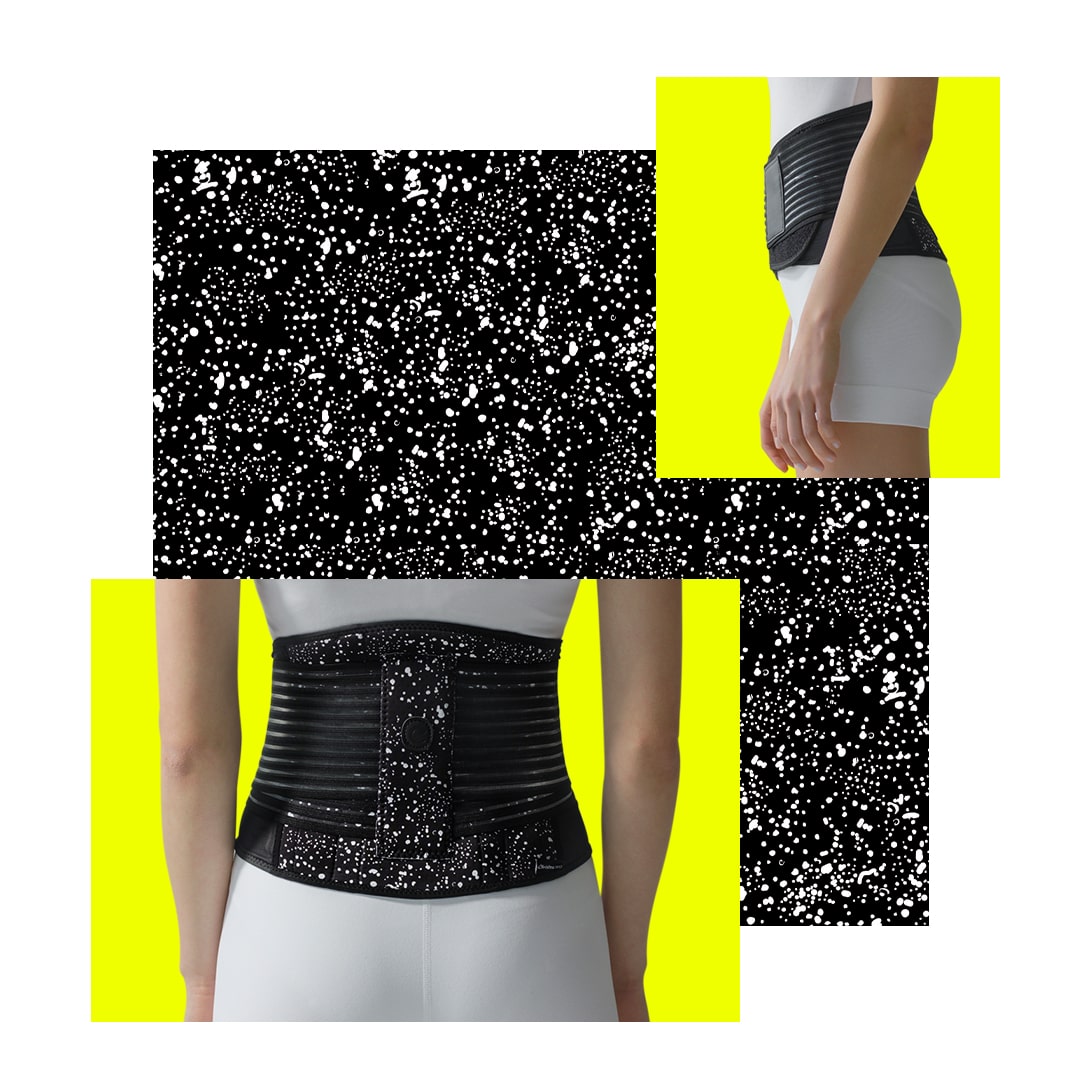
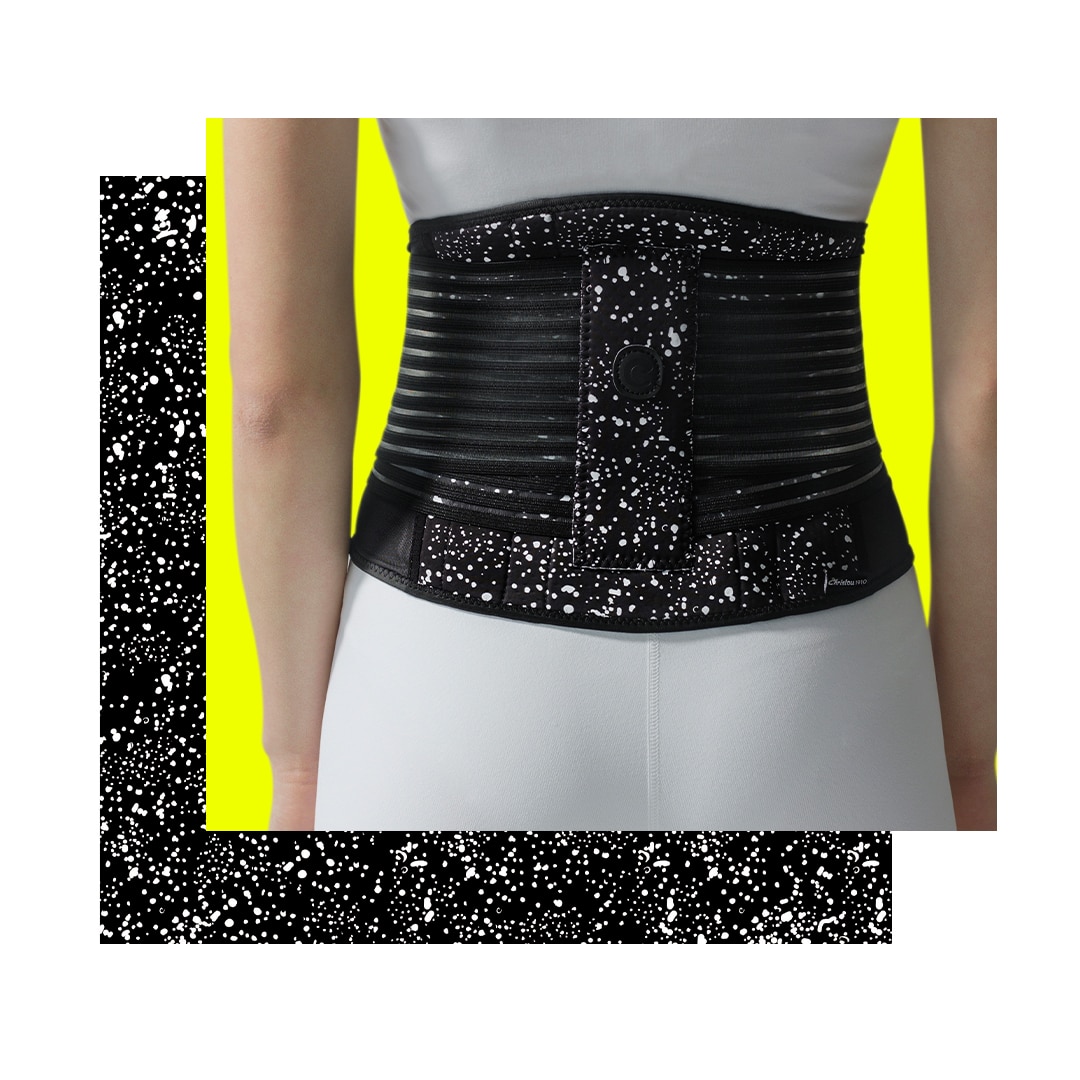
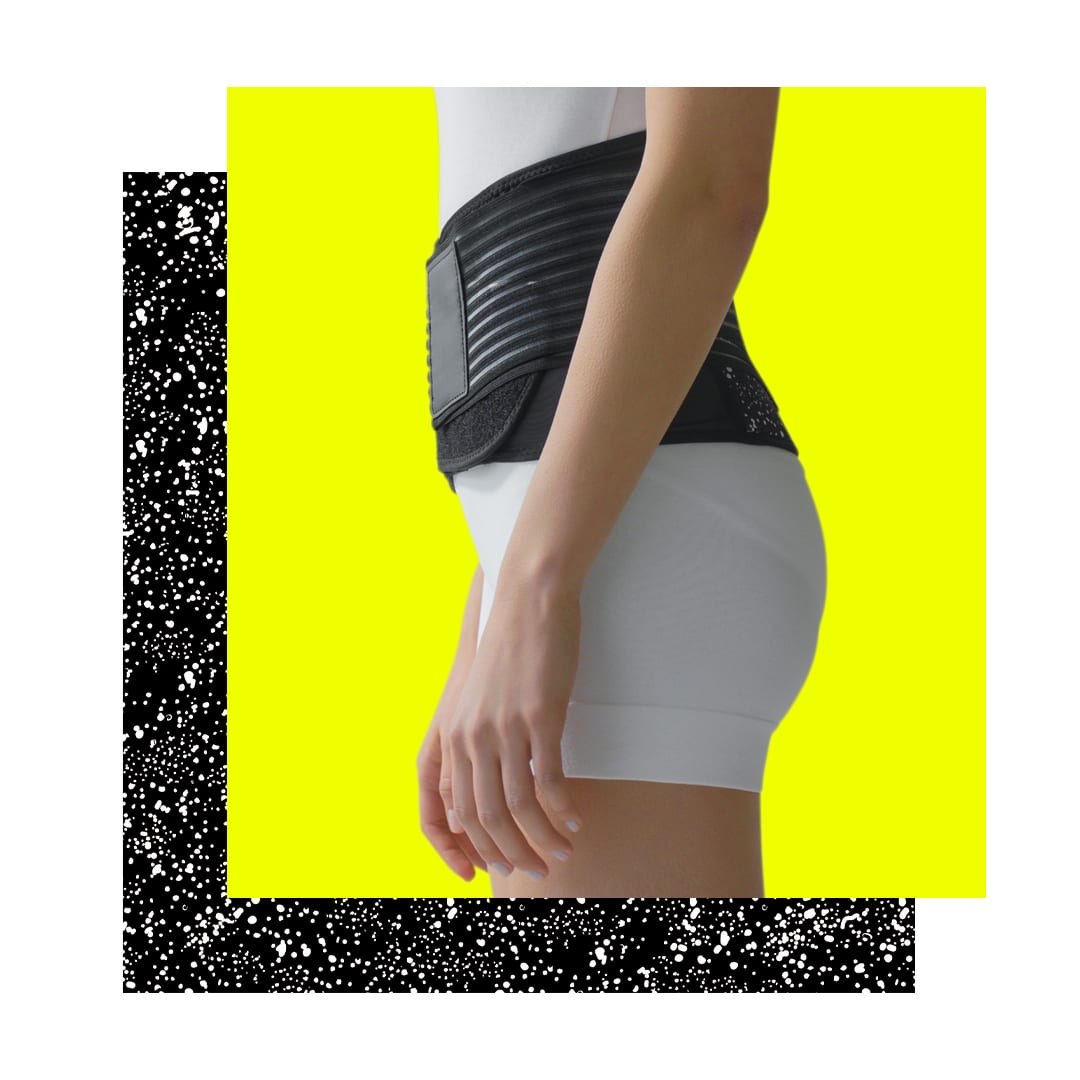
The waist support belt with a special design and modern, minimal aesthetic, can be worn comfortably all day long. With 4 flexible stays that follow the natural movement of the body and extra side straps, it hugs your waist and abdomen, making you feel safe and comfortable in every activity. The bandage creates hyperemia, instantly warms the entire affected area and allows active blood nutrients to "reach" the painful spot quickly, treating the inflammation of menstruation.
approx. €18.95 SHOP NOW
No matter how unbearable the pain in your body is, the obligations and demands of everyday life "run" and with them you are forced to run to meet them. Driving, standing, weekly shopping, mom's hugs, all these unconscious actions, these days seem like torture! In order to facilitate your movements as much as possible, you can support your spine, lower back and abdomen with an important, protective health accessory that will relieve you.
The waist support belt with a special design and modern, minimal aesthetic, can be worn comfortably all day long. With 4 flexible stays that follow the natural movement of the body and extra side straps, it hugs your waist and abdomen, making you feel safe and comfortable in every activity. The bandage creates hyperemia, instantly warms the entire affected area and allows active blood nutrients to "reach" the painful spot quickly, treating the inflammation of menstruation.
 approx. €18.95 SHOP NOW
Introduce the waist support belt to your body and equip yourself with a natural product that will significantly contribute to reducing pain during the difficult days of the month and will make you feel better for as long as needed! It is worth giving yourself an ally for relief, with natural pain-relieving action, and getting back to your usual good daily movement, both at work and during exercise!
approx. €18.95 SHOP NOW
Introduce the waist support belt to your body and equip yourself with a natural product that will significantly contribute to reducing pain during the difficult days of the month and will make you feel better for as long as needed! It is worth giving yourself an ally for relief, with natural pain-relieving action, and getting back to your usual good daily movement, both at work and during exercise!
image credits: pinterest.com[/caption]
All this pain, when there are no other organic causes, is called "primary dysmenorrhea" in medical terminology. For most women, the pain starts as an annoying warning bell, usually a week before their period, preparing them for the arrival of these difficult days of the month, and is called "premenstrual syndrome." Premenstrual syndrome is a collection of emotional and physical symptoms associated with ovulation. Symptoms start around the 14th day of the menstrual cycle and can last up to 7 days after the onset of menstruation.
Let's look more specifically at what causes the back and lower back pain that can make you less mobile.
Lower Back Pain
[caption id="attachment_4797" align="alignnone" width="463"] image credits: rd.com[/caption]
Low back and lower back pain is muscular in nature, is due to hormonal changes, and is directly related to uterine contractions. Each month the endometrium, i.e., the inner lining of the uterus, thickens as part of preparation for pregnancy. At the same time, this lining also produces prostaglandins, the chemicals primarily responsible for uterine contractions as well as pain, cramps, and discomfort during menstruation.
If pregnancy does not occur, estrogen and progesterone levels drop, prompting the body to shed this lining through menstruation. If the uterus contracts too strongly, it creates pressure on nearby blood vessels, interrupting the oxygenation of nearby muscles, which causes severe abdominal pain and reflects in the lower back, waist, and even thighs. Women with high prostaglandin levels may also experience other symptoms, such as nausea, severe migraines, or diarrhea.
Natural Ways to Treat It
Although most women resort to immediate use of ibuprofen painkillers, there are also some natural remedies that improve your lifestyle in the long term. Period pain cumulatively acts as a general test of our physical and psychological condition. For this reason, the body's system seeks help and specific ways to strengthen itself.- Vitamin-Rich Diet
A crucial factor in pain management is our diet. A drastic solution for menstruation-related pain is to consume foods rich in vitamins, especially vitamin B and magnesium.
All the vitamins you need can be found in foods such as brown rice, papaya, bananas, walnuts, green tea, green leafy vegetables, and chicken.
Brown rice and papaya are rich in vitamin B6, which helps with bloating and relieves pressure from your back.
Leafy vegetables and chicken are rich sources of iron, which helps blood circulation. Walnuts, dried fruits with vitamin K, and green tea contain anti-inflammatory properties that can reduce swelling and lower back pain.
By incorporating healthy ingredients into your diet, you can help your body cleanse itself internally, finding the strength to stop the pain.
For chocolate lovers, the news is good! Dark chocolate is one of the best solutions for both abdominal cramps and low back pain!
If you are experiencing low-intensity pain, then a little dark chocolate is a healthier alternative to painkillers - not to mention tastier! Dark chocolate contains a large amount of cocoa, which has anti-inflammatory and pain-relieving properties. Muscle relaxation and the production of endorphins, which improve mood, will work in a very positive way for the difficult moments of these days!
In combination, you should not skip generous amounts of water, because hydration also improves the oxygenation of the body. Avoid alcohol, wine, and caffeine consumption and reduce smoking as much as possible during this painful period.
- Regular Exercise
It is well known that exercise strengthens muscles and improves blood circulation, ensuring better health and physical condition. In relation to difficult days, no matter how heavy you feel, you should try to incorporate some simple exercises, as this reduces abdominal cramps and makes your back muscles more resilient and toned. Among the most recommended exercises are aerobic exercise, walking, swimming, and of course yoga. Low-intensity exercises help treat chronic pain in a mild but systematic way.
Frequent stretching and back stretching is an even easier way to unlock your back and waist, as it immediately relieves tight muscles. One such example is to lie down, bring your knees to your chest, and hold them there tightly to reduce the likelihood of cramping.
- Essential Oils and Herbs
Topical massage with essential oil extracts is a natural way to relax, improve blood circulation, and promote well-being in the affected area of the lower back. You can choose between peppermint oil, which has anti-inflammatory properties and immediately cools the painful area, or frankincense for its vibrant, relaxing scent. Another very beneficial extract is that of chasteberry, known for regulating the female hormonal system and dysmenorrhea.
Health expert Kirsten Karchmer, founder of the Viv Wellness Center for the study, treatment, and improvement of period pain worldwide, spoke to Goop, recommending certain herbs as a significant source of pain relief.
[caption id="attachment_4811" align="alignnone" width="299"] Kirsten Karchmer[/caption]
[caption id="attachment_4813" align="alignnone" width="347"] image credits: pinterest.com[/caption]
Fennel seed:
Fennel is one of the most studied herbs regarding acute dysmenorrhea pain. A 2006 study showed that it is as effective as mefenamic acid, an anti-inflammatory drug prescribed for period pain. Fennel also reduces nausea, fatigue, and gives a feeling of optimism and good mood.
Cinnamon:
Cinnamon is almost as effective as ibuprofen for relieving pain, cramps, and nausea. A 2015 placebo-controlled study showed that it significantly reduced discomfort in 7 out of 10 cases.
Ginger:
Something you can easily find in your kitchen is ginger. Beyond medicinal interventions, ginger has a similar effect to mefenamic acid and ibuprofen and treats common symptoms such as lower back pain, headaches, gastrointestinal disorders, nausea, and muscle and joint pain.
For digestive problems (gas, bloating, nausea, heartburn, diarrhea, or constipation): Prefer cooking herbs such as mint, lemon, honey, ginger, and licorice, which soothe stomach pain. Also look for natural extract of Poria Cocos Sclerotium, a kind of superfood from China that improves digestive function.
For stress, irritable nerves, mood swings, feelings of resignation and depression: When you experience the "rollercoaster" of extreme ups and downs in your mood and balance during your period, you can say stop by making a natural blend of herbs that have been proven to lift your spirits! Valerian, Chinese peony, bupleurum (Chai Hu Bupleurum) and Cyperus (cyperus rhizome) act as catalysts for tension, insomnia and exacerbated nerves!
For pain, breast tenderness, migraines, and cramps: Herbs with anti-inflammatory properties are very helpful in relieving all these "blows" of pain. The active ingredient in turmeric has been shown to counteract chronic pain and spasms. Dong quai root, an ancient herb from Syria, has been used for years to treat women's problems. One of the most powerful herbs in Traditional Chinese Medicine for healing many diseases is Baikal skullcap (Scutellaria baicalensis), helping with detoxification and better liver function.
- Warm bath and hot compresses:
Place a hot water bottle on your abdomen to relax the area from muscle spasms and soothe blood vessels. A relaxing hot shower will relieve all this pressure from your body, allowing you to recover.
Waist Support Belt
approx. €18.95 SHOP NOW
No matter how unbearable the pain in your body is, the obligations and demands of everyday life "run" and with them you are forced to run to meet them. Driving, standing, weekly shopping, mom's hugs, all these unconscious actions, these days seem like torture! In order to facilitate your movements as much as possible, you can support your spine, lower back and abdomen with an important, protective health accessory that will relieve you.
The waist support belt with a special design and modern, minimal aesthetic, can be worn comfortably all day long. With 4 flexible stays that follow the natural movement of the body and extra side straps, it hugs your waist and abdomen, making you feel safe and comfortable in every activity. The bandage creates hyperemia, instantly warms the entire affected area and allows active blood nutrients to "reach" the painful spot quickly, treating the inflammation of menstruation.
approx. €18.95 SHOP NOW
Introduce the waist support belt to your body and equip yourself with a natural product that will significantly contribute to reducing pain during the difficult days of the month and will make you feel better for as long as needed! It is worth giving yourself an ally for relief, with natural pain-relieving action, and getting back to your usual good daily movement, both at work and during exercise!