
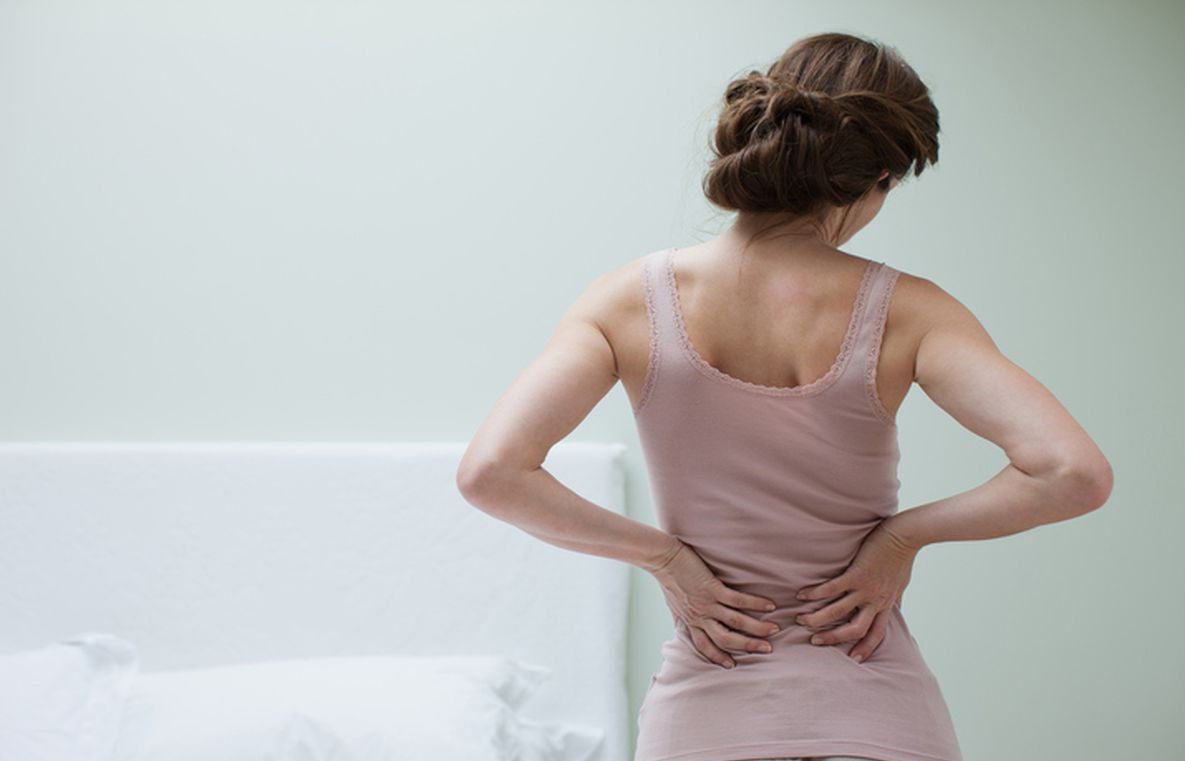
Back pain: the most famous pain in the world!
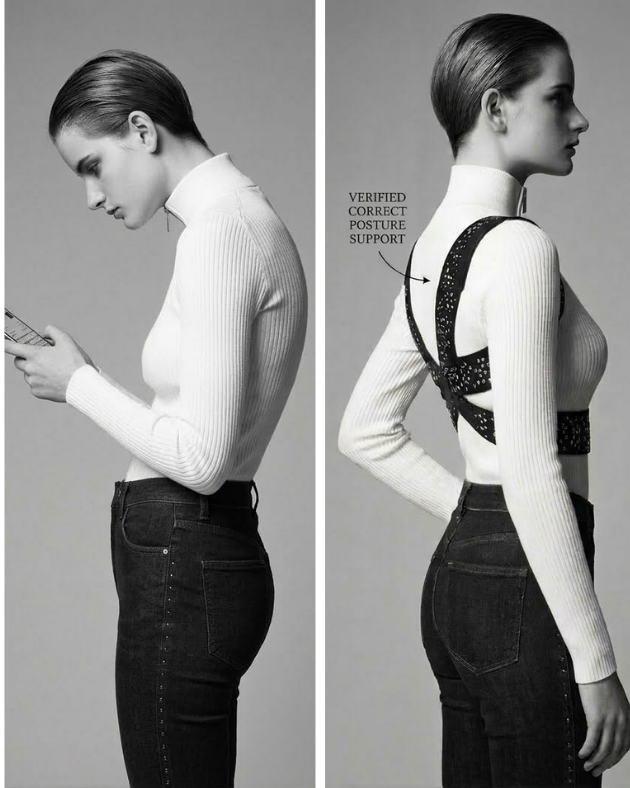
Lower back pain is the fifth most common reason we seek medical help! This nagging, unpleasant feeling that troubles us, or even immobilizes us, is, unfortunately, a result of our modern lifestyle and prolonged sedentary habits, not only in our professional environment but also in the limited free time we have!
Menstruation, muscle spasm, high uric acid, arthritis, and increased weight are some of the most common causes that can lead to this intense discomfort in our body.
In some cases, it can even be a consequence of accumulated stress and, therefore, a negative, psychosomatic reaction of our body that manifests in a particular part of the body.
Generally, it is estimated that up to 80% of the world's population will experience lower back pain at some point in their lives. This pain knows no age, affecting everyone from teenagers to more mature individuals. In fact, it is estimated that from 1995 until today, mobility problems attributed to this pain have increased by 54%.
Those who suffer from this chronic pain often completely avoid any form of exercise, fearing they might injure the area or exacerbate the problem with a wrong movement.
However, constant suffering from pain needs a solution, and this can only be achieved by adequately "fortifying" our body! Improving hip mobility and strengthening our core can bring the relief we so desperately seek.
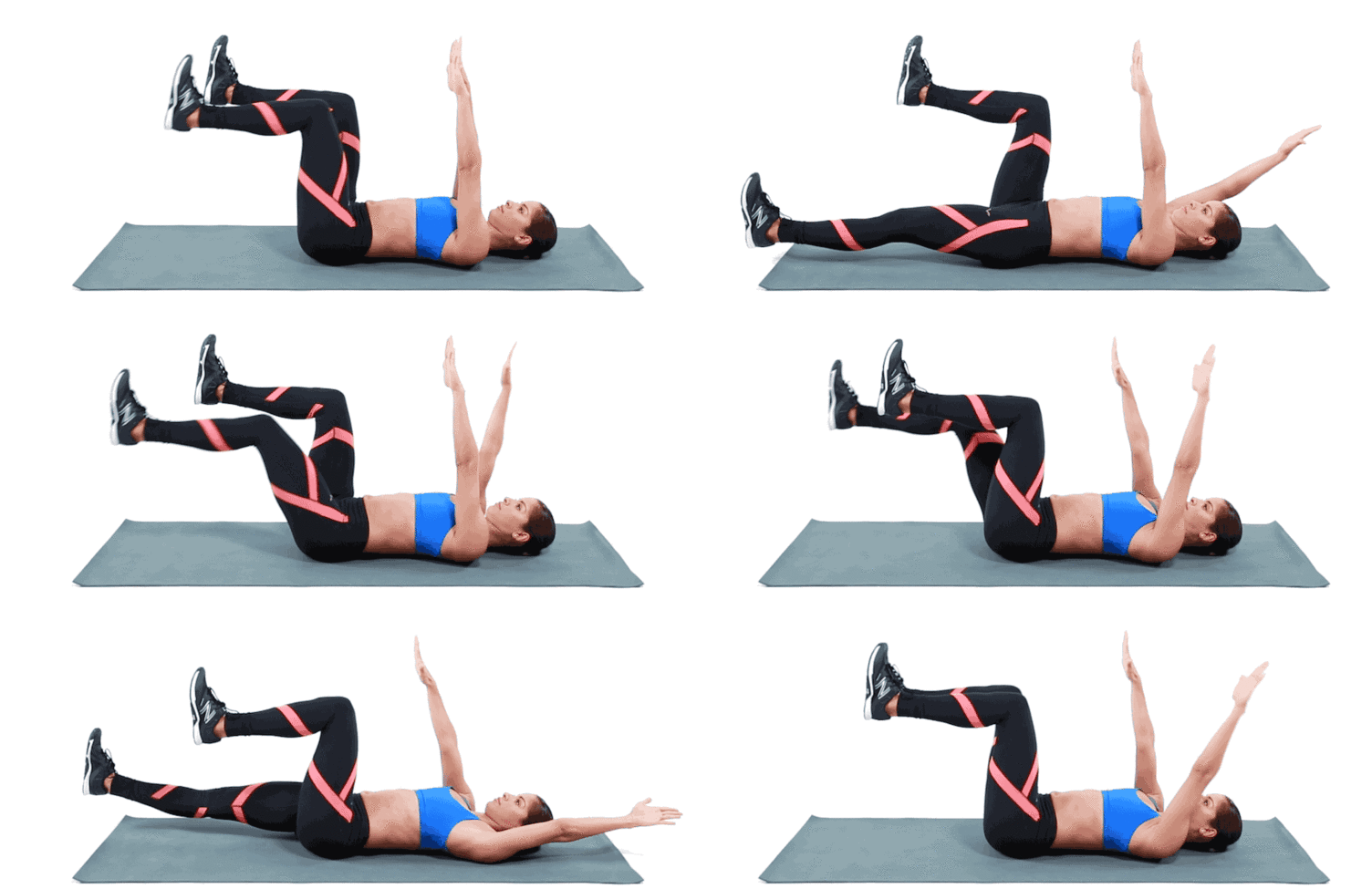 image credits: self.com[/caption]
Lie on your back with your feet in the air and your knees bent at 90 degrees.
Raise your arms in the air so that they are directly above your shoulders.
Slowly extend your right leg in front of you and your left arm over your head, keeping your lower back pressed to the floor.
Return to the starting position. Repeat on the other side.
image credits: self.com[/caption]
Lie on your back with your feet in the air and your knees bent at 90 degrees.
Raise your arms in the air so that they are directly above your shoulders.
Slowly extend your right leg in front of you and your left arm over your head, keeping your lower back pressed to the floor.
Return to the starting position. Repeat on the other side.
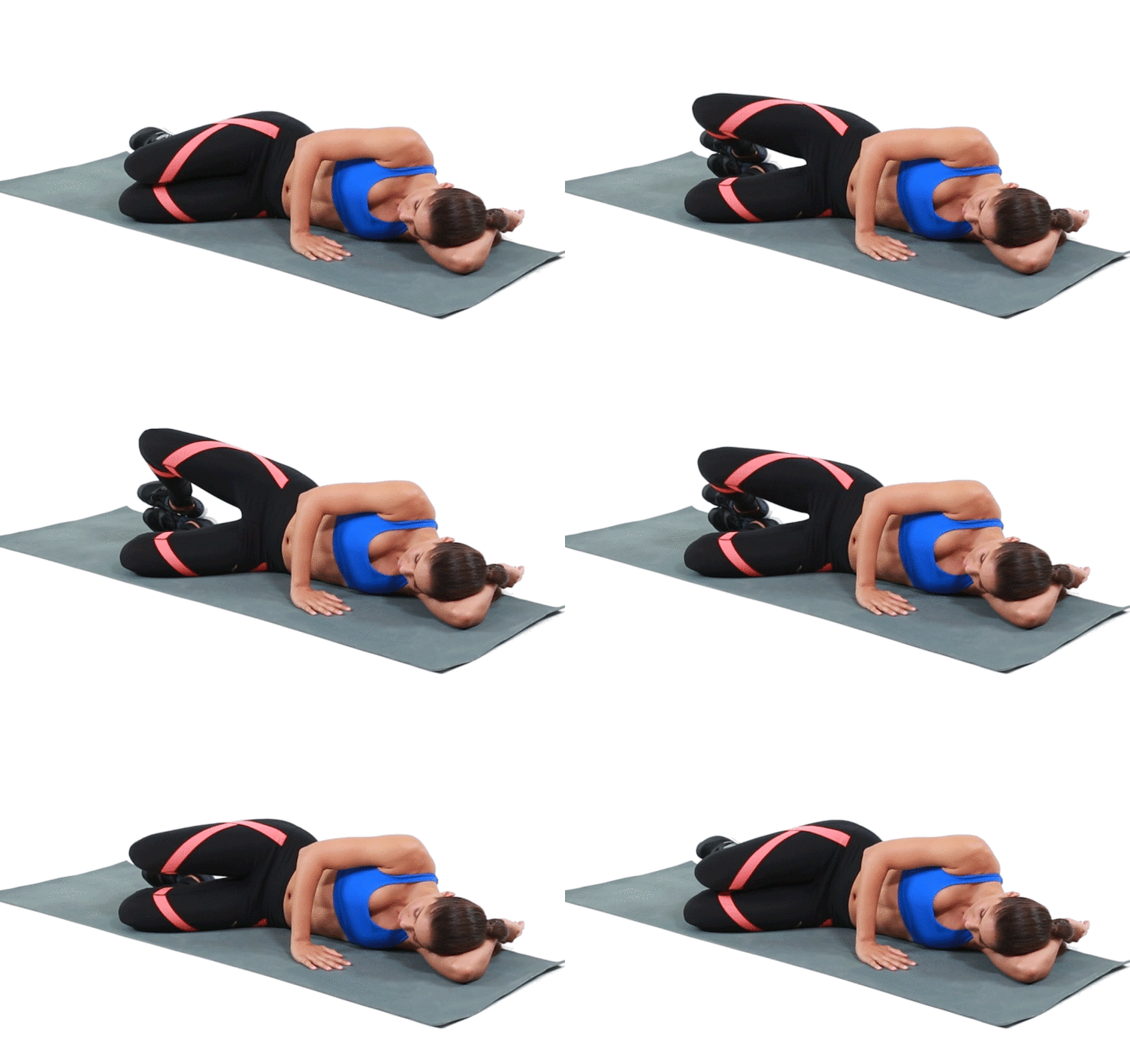 image credits: self.com[/caption]
Lie on your left side with your hip, knees, and ankles stacked one on top of the other.
Bend your knees at a 90-degree angle.
Keeping your feet together, rotate your right knee open, then slowly lower it back to the ground.
Don't forget to do the other side!
image credits: self.com[/caption]
Lie on your left side with your hip, knees, and ankles stacked one on top of the other.
Bend your knees at a 90-degree angle.
Keeping your feet together, rotate your right knee open, then slowly lower it back to the ground.
Don't forget to do the other side!
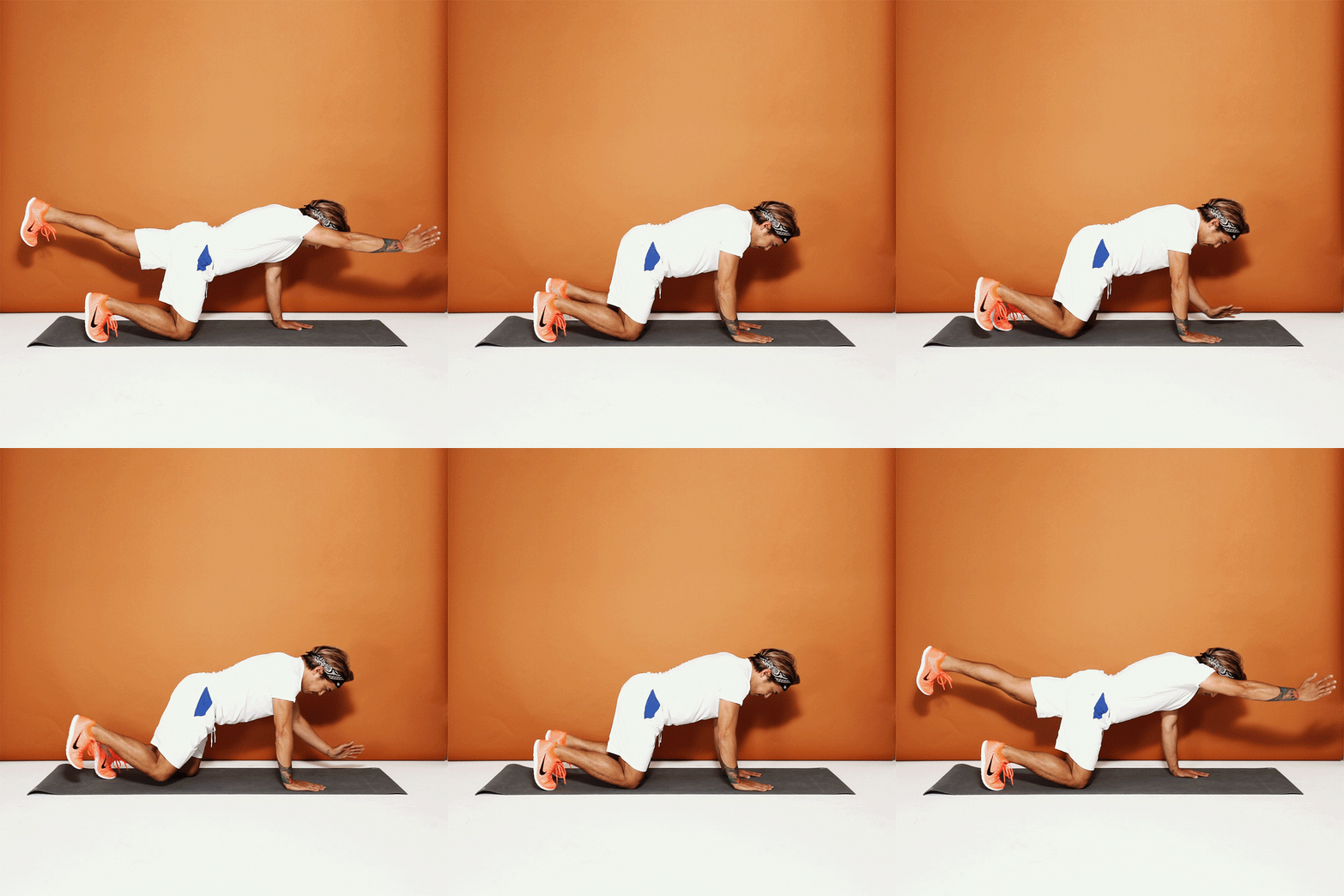 image credits: self.com[/caption]
Start on your hands and knees in a tabletop position, with your wrists directly under your shoulders and your knees directly under your hips.
Extend your right arm forward and your left leg back, keeping your back flat and hips square.
Engage your core and exhale as you draw your right elbow to your left knee.
Extend back out and repeat.
Don't forget to do the other side!
image credits: self.com[/caption]
Start on your hands and knees in a tabletop position, with your wrists directly under your shoulders and your knees directly under your hips.
Extend your right arm forward and your left leg back, keeping your back flat and hips square.
Engage your core and exhale as you draw your right elbow to your left knee.
Extend back out and repeat.
Don't forget to do the other side!
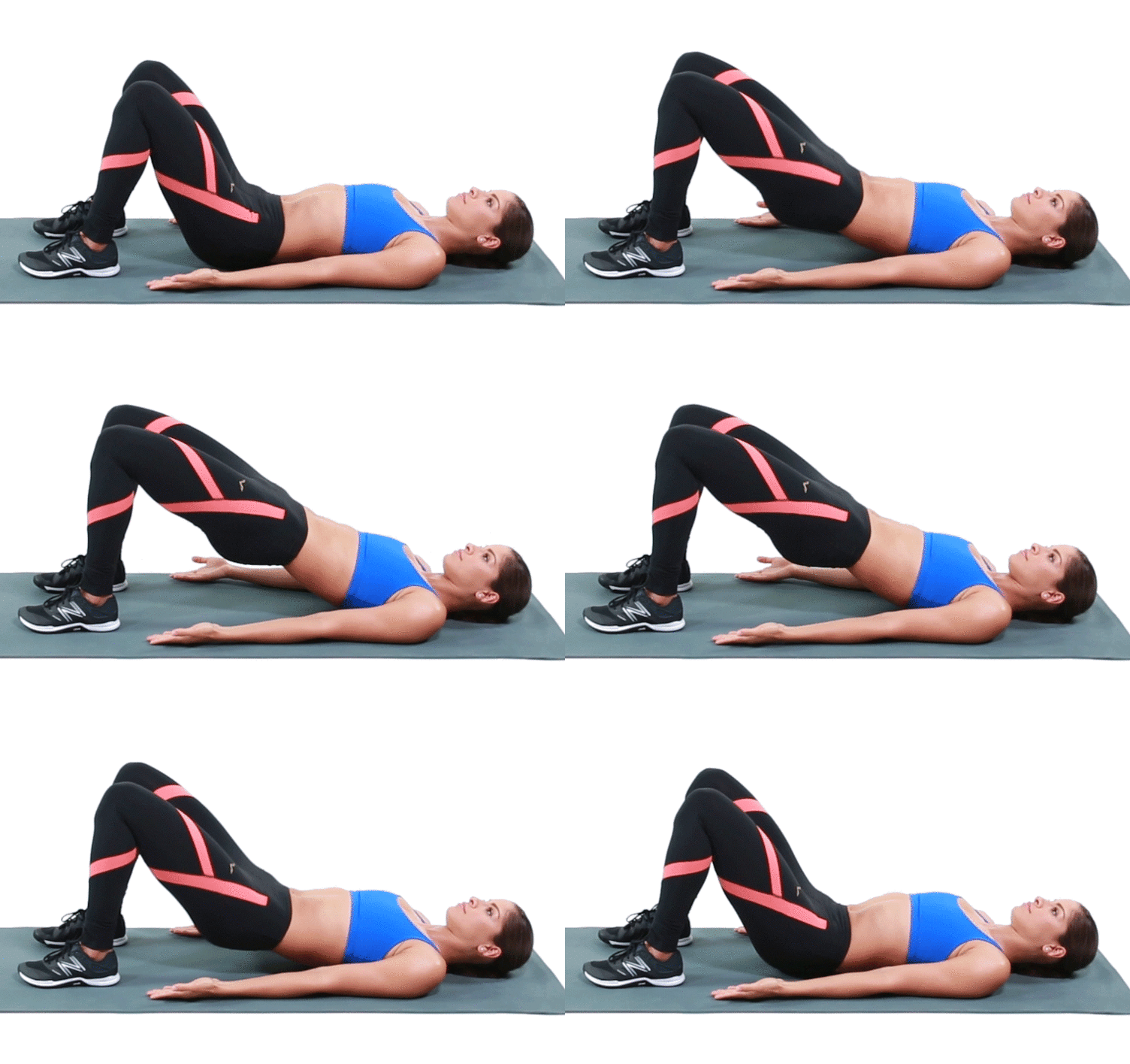 image credits: self.com[/caption]
Start by lying on your back with your knees bent and your arms in a low V shape alongside your hips. Your feet should be about hip-width apart and your heels a few inches from your glutes.
Push through your heels to lift your hips while squeezing your glutes. Try to create a diagonal line from your shoulders to your knees.
Pause for 1-2 seconds, then lower back down.
More advanced exercisers can try it with one leg at a time.
image credits: self.com[/caption]
Start by lying on your back with your knees bent and your arms in a low V shape alongside your hips. Your feet should be about hip-width apart and your heels a few inches from your glutes.
Push through your heels to lift your hips while squeezing your glutes. Try to create a diagonal line from your shoulders to your knees.
Pause for 1-2 seconds, then lower back down.
More advanced exercisers can try it with one leg at a time.
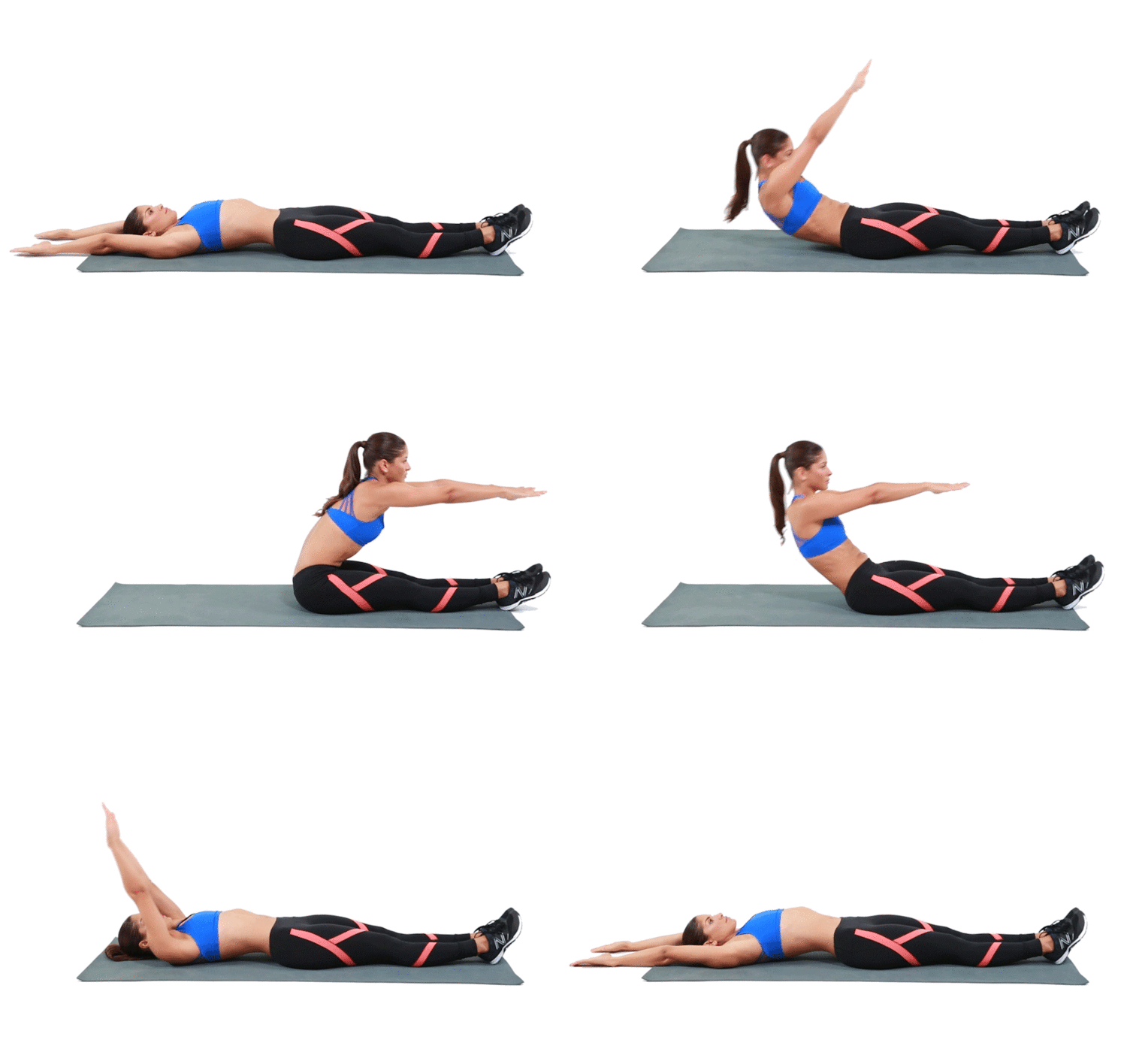 image credits: self.com[/caption]
Lie face up on a yoga mat with your arms resting above your head.
Swing your arms into the air so your wrists are directly over your shoulders, and begin to roll your spine up and off the floor.
Fold your legs, forming a "U" shape with your body.
Reverse the movement to lower back to the mat.
image credits: self.com[/caption]
Lie face up on a yoga mat with your arms resting above your head.
Swing your arms into the air so your wrists are directly over your shoulders, and begin to roll your spine up and off the floor.
Fold your legs, forming a "U" shape with your body.
Reverse the movement to lower back to the mat.
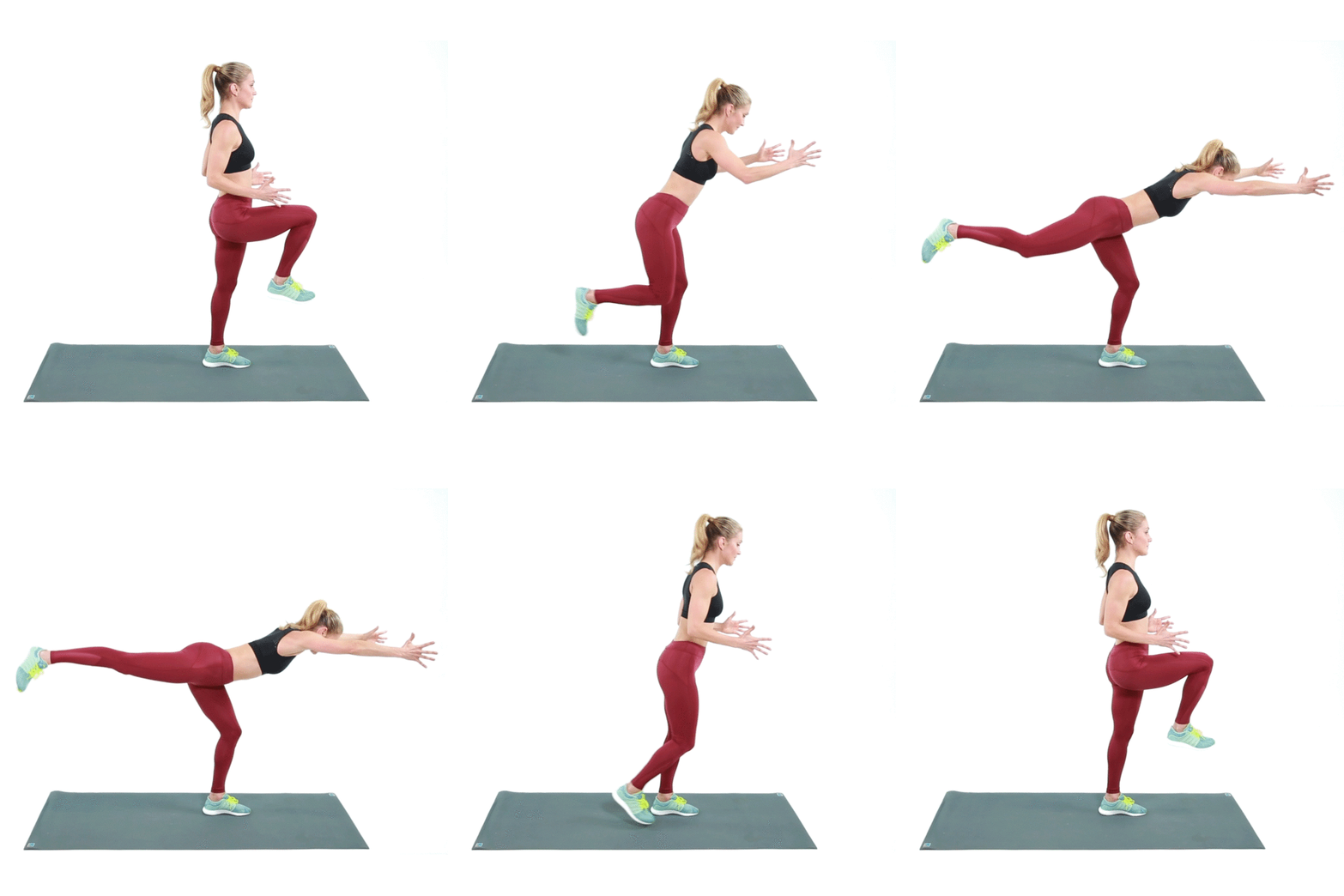 image credits: self.com[/caption]
Stand on your left leg and raise your right knee to hip height in front of your body.
Hinge your torso forward as you extend your right leg behind you.
Keep your standing leg slightly bent as your torso becomes parallel to the floor. Extend your arms overhead to aid balance.
Pause for one second, then reverse the movement.
Don't forget to do the other side!
image credits: self.com[/caption]
Stand on your left leg and raise your right knee to hip height in front of your body.
Hinge your torso forward as you extend your right leg behind you.
Keep your standing leg slightly bent as your torso becomes parallel to the floor. Extend your arms overhead to aid balance.
Pause for one second, then reverse the movement.
Don't forget to do the other side!
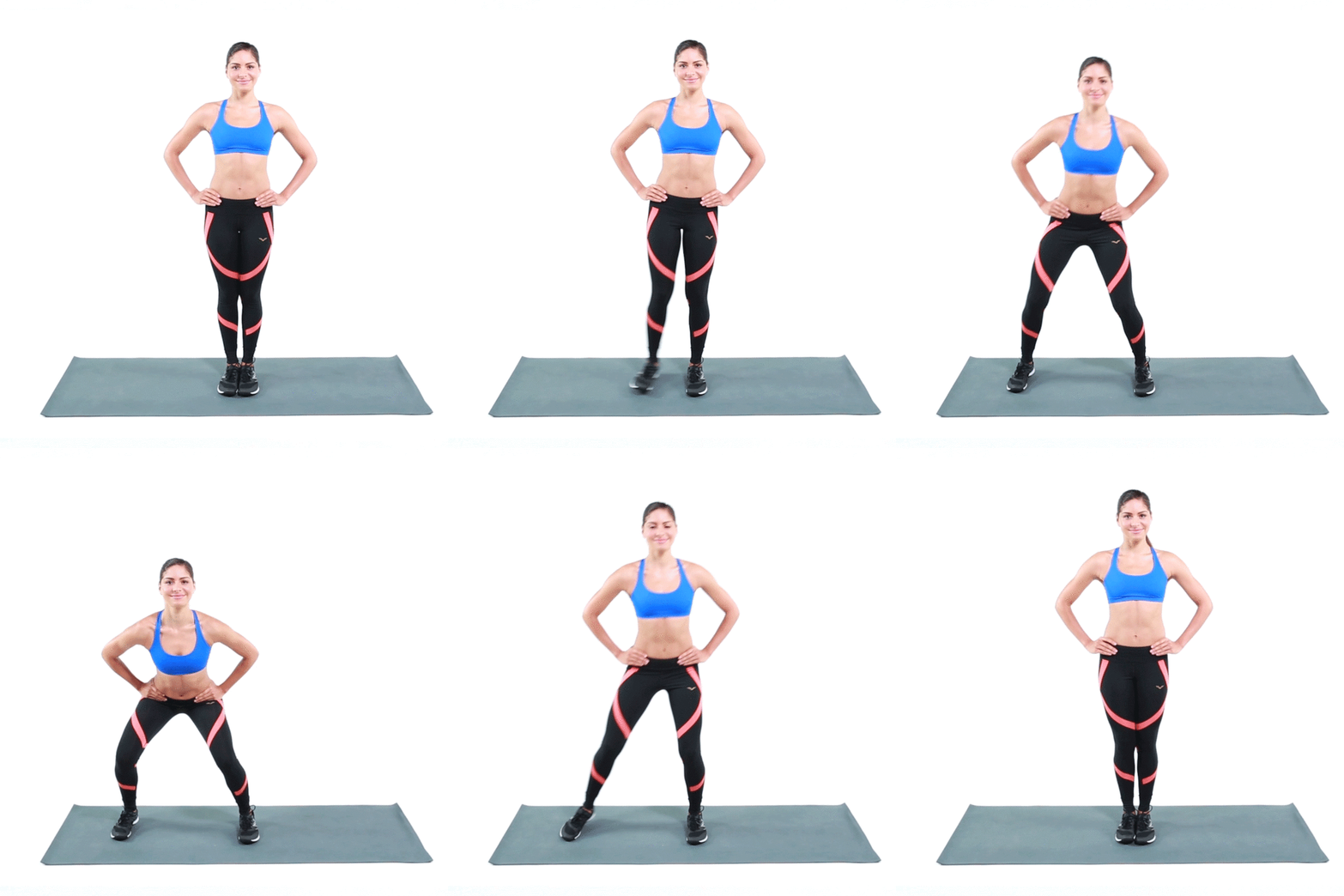 image credits: self.com[/caption]
Stand tall with your feet together and hands on your hips.
Step your right foot out to the right so your feet are just wider than shoulder-width apart.
Bend your knees and push your glutes back and down to lower into a squat stance.
Straighten your knees and bring your foot back to the starting position. Repeat with the other foot.
image credits: self.com[/caption]
Stand tall with your feet together and hands on your hips.
Step your right foot out to the right so your feet are just wider than shoulder-width apart.
Bend your knees and push your glutes back and down to lower into a squat stance.
Straighten your knees and bring your foot back to the starting position. Repeat with the other foot.
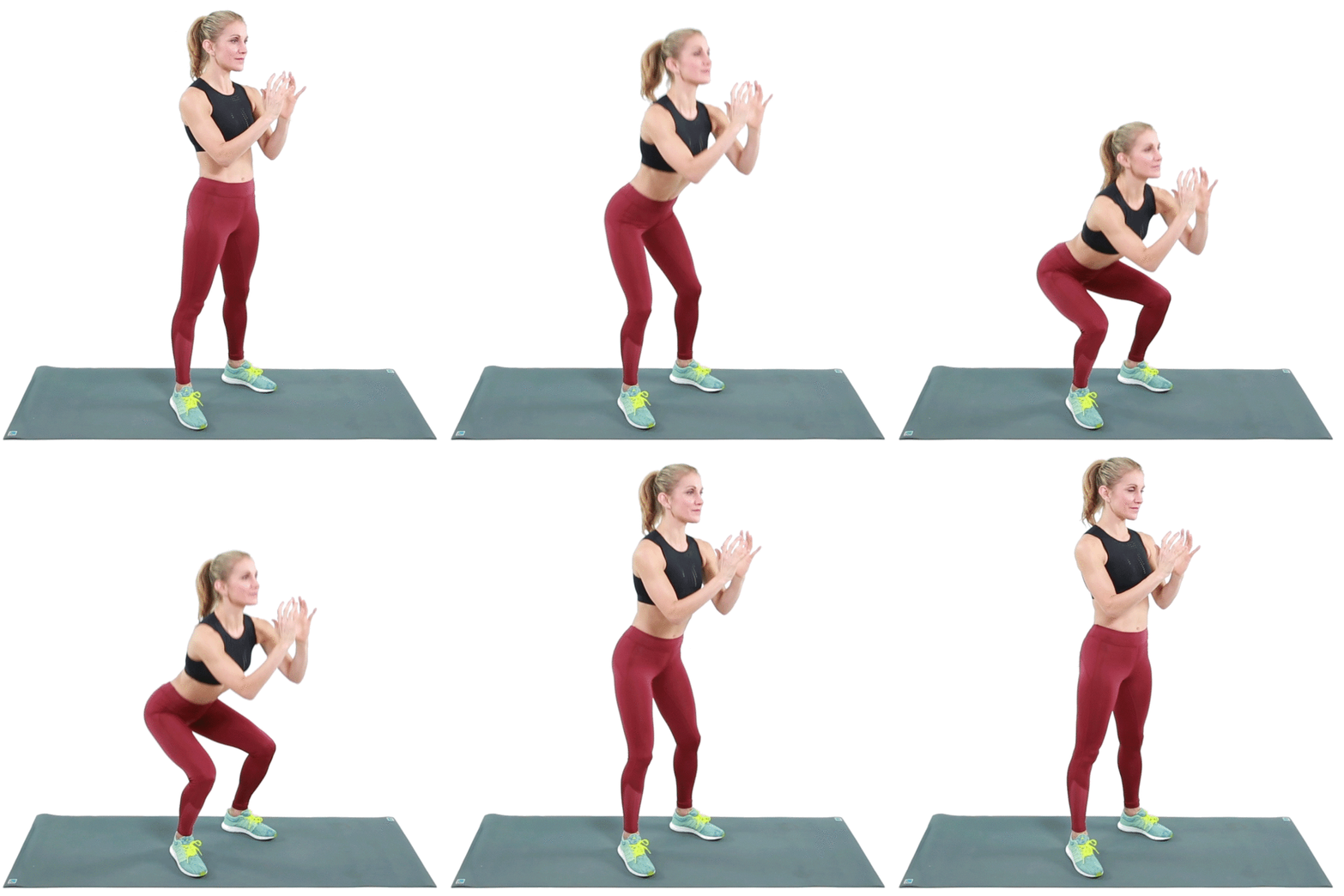 image credits: self.com[/caption]
Start by standing with your feet slightly wider than shoulder-width apart.
Lower your glutes back into a squat position, without letting your knees go past your toes. Make sure your weight is on your heels and keep your chest lifted high.
image credits: self.com[/caption]
Start by standing with your feet slightly wider than shoulder-width apart.
Lower your glutes back into a squat position, without letting your knees go past your toes. Make sure your weight is on your heels and keep your chest lifted high.
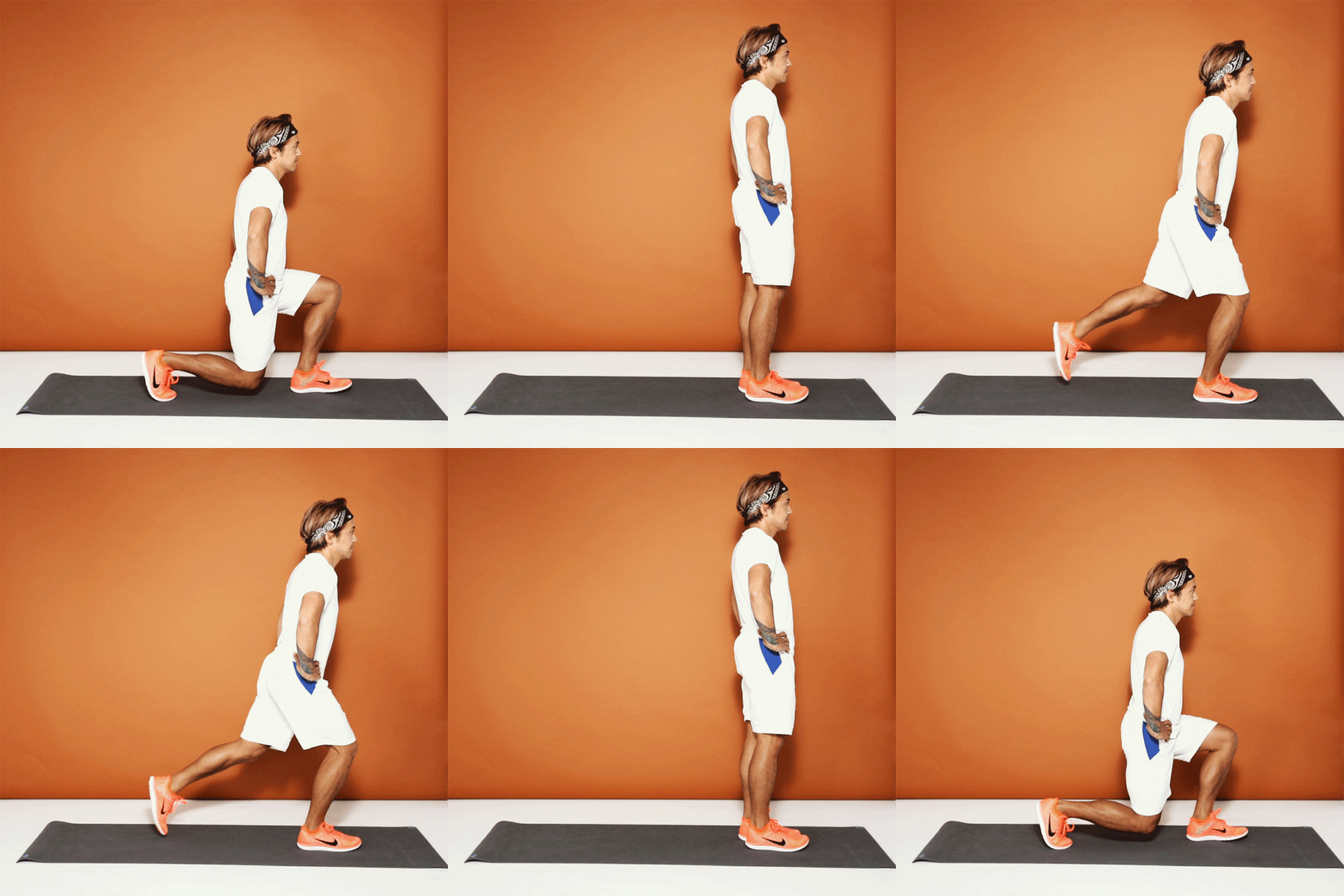 image credits: self.com[/caption]
Start in a standing position with your feet hip-width apart.
Inhale as you step backward with your left foot.
Land on the ball of your left foot and keep your heel off the ground.
Now bend your knees, creating two 90-degree angles with your legs. Keep your shoulders directly over your hips and your chest lifted high.
Push through the heel of your right foot to return to a standing position, then repeat with the opposite leg.
image credits: self.com[/caption]
Start in a standing position with your feet hip-width apart.
Inhale as you step backward with your left foot.
Land on the ball of your left foot and keep your heel off the ground.
Now bend your knees, creating two 90-degree angles with your legs. Keep your shoulders directly over your hips and your chest lifted high.
Push through the heel of your right foot to return to a standing position, then repeat with the opposite leg.
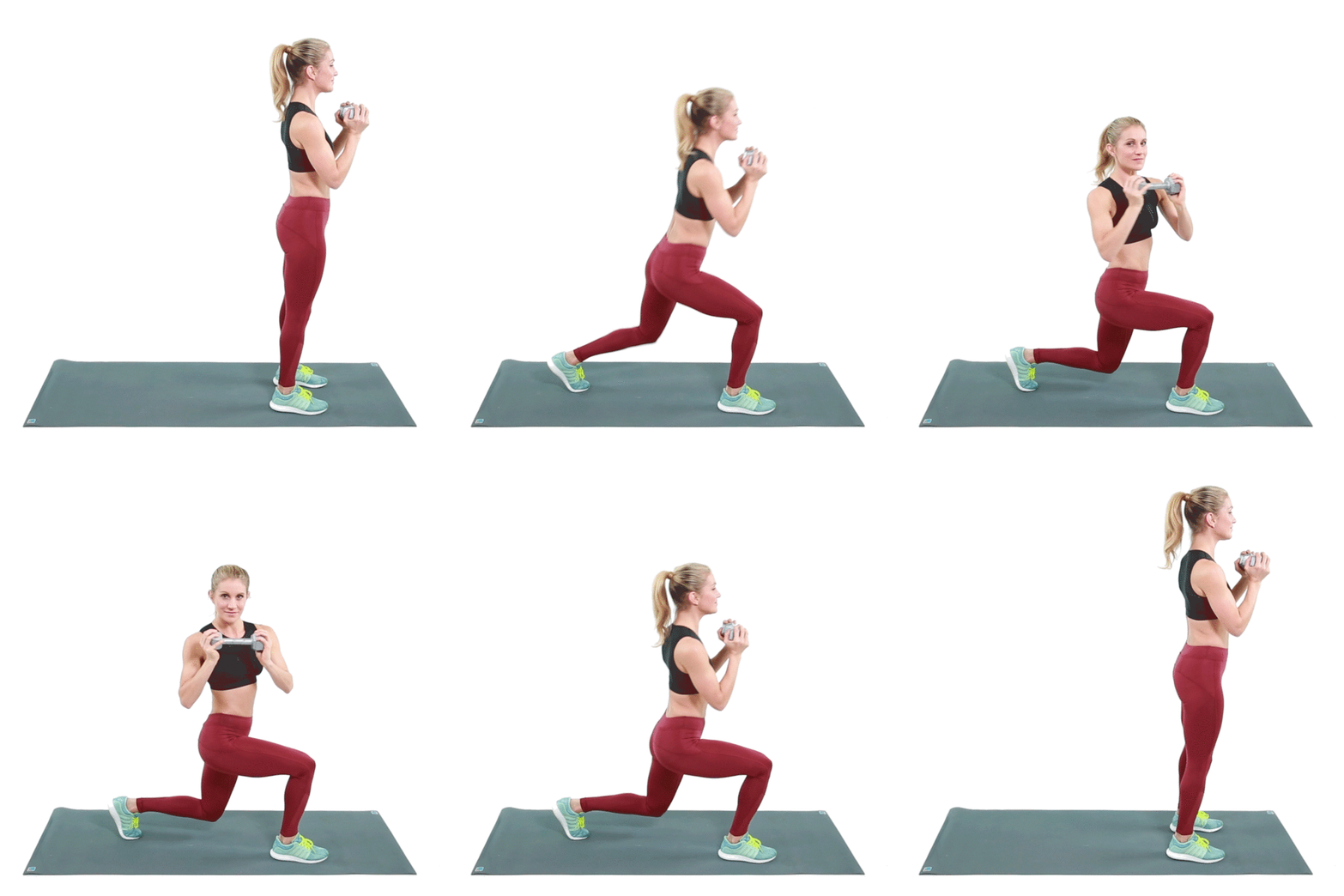 image: self.com[/caption]
Stand with your feet shoulder-width apart. Take a big step back with your left foot and bend your knees to lower into a lunge position, while simultaneously twisting your torso towards your right leg. Return to a standing position and then repeat with the opposite leg. Although the exercise is accompanied by a dumbbell, you can avoid it so as not to strain your back.
image: self.com[/caption]
Stand with your feet shoulder-width apart. Take a big step back with your left foot and bend your knees to lower into a lunge position, while simultaneously twisting your torso towards your right leg. Return to a standing position and then repeat with the opposite leg. Although the exercise is accompanied by a dumbbell, you can avoid it so as not to strain your back.
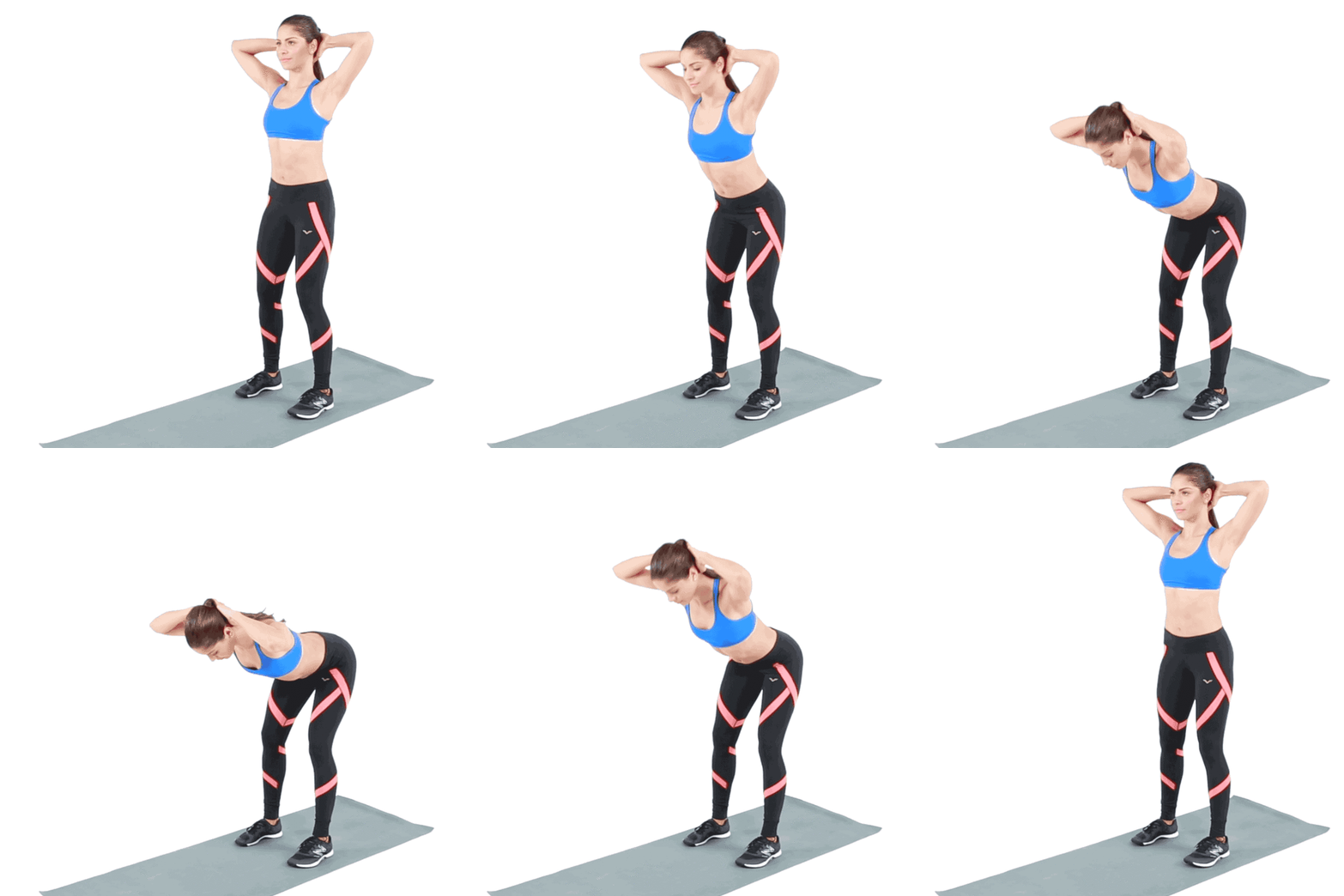 image credits: self.com[/caption]
Stand with your feet wider than your hips and your hands clasped behind your head with elbows open.
Keeping your core tight, bend your knees slightly and hinge your hips back, lowering your torso until it's almost parallel to the ground.
Return to a standing position.
Of course, since lower back pain is a very broad issue with different causes, when there is a body alignment problem or very acute pain, it is essential to first consult your doctor or a physiotherapist.
image credits: self.com[/caption]
Stand with your feet wider than your hips and your hands clasped behind your head with elbows open.
Keeping your core tight, bend your knees slightly and hinge your hips back, lowering your torso until it's almost parallel to the ground.
Return to a standing position.
Of course, since lower back pain is a very broad issue with different causes, when there is a body alignment problem or very acute pain, it is essential to first consult your doctor or a physiotherapist.

The main causes of lower back pain
Generally, lower back pain is observed either due to instability (due to a weak core or loose joints) or due to tension and tight muscles. Often, our body, accustomed to inactivity, can automatically feel the familiar "pull" when we bend or lift weight abruptly, as these movements are less familiar to it. A general program of aerobic exercises that include hip movement, stretching exercises, and dynamic core exercises can progressively improve the exacerbation of pain. This is because the hips and lower back are connected, and since the back is also part of our core (along with the abdominal muscles in the front of our body), exercising this entire muscle group helps us better support our back and avoid muscle strain and pain. To better understand this connection in our body, our core muscles are concentrated around the abdomen, as mentioned, the back, the pelvic floor (the lower part of our pelvis), and the hips. All these muscles together are responsible for balance, posture, core stability, and form the foundation of movement. If they are weak, then other muscles must compensate for the weight and pressure, which leads to poor posture and back pain.11 basic exercises for strengthening the lower back
Let's look at some strategic exercises to improve your lower back problem, starting with the simplest ones and moving on to slightly more demanding ones, which you can gradually incorporate into your routine.- The moving beetle
image credits: self.com[/caption]
Lie on your back with your feet in the air and your knees bent at 90 degrees.
Raise your arms in the air so that they are directly above your shoulders.
Slowly extend your right leg in front of you and your left arm over your head, keeping your lower back pressed to the floor.
Return to the starting position. Repeat on the other side.
- The opening and closing clam
image credits: self.com[/caption]
Lie on your left side with your hip, knees, and ankles stacked one on top of the other.
Bend your knees at a 90-degree angle.
Keeping your feet together, rotate your right knee open, then slowly lower it back to the ground.
Don't forget to do the other side!
- The flying dog
image credits: self.com[/caption]
Start on your hands and knees in a tabletop position, with your wrists directly under your shoulders and your knees directly under your hips.
Extend your right arm forward and your left leg back, keeping your back flat and hips square.
Engage your core and exhale as you draw your right elbow to your left knee.
Extend back out and repeat.
Don't forget to do the other side!
- The glute bridge
image credits: self.com[/caption]
Start by lying on your back with your knees bent and your arms in a low V shape alongside your hips. Your feet should be about hip-width apart and your heels a few inches from your glutes.
Push through your heels to lift your hips while squeezing your glutes. Try to create a diagonal line from your shoulders to your knees.
Pause for 1-2 seconds, then lower back down.
More advanced exercisers can try it with one leg at a time.
- The Pilates roll-up
image credits: self.com[/caption]
Lie face up on a yoga mat with your arms resting above your head.
Swing your arms into the air so your wrists are directly over your shoulders, and begin to roll your spine up and off the floor.
Fold your legs, forming a "U" shape with your body.
Reverse the movement to lower back to the mat.
- Warrior Balance
image credits: self.com[/caption]
Stand on your left leg and raise your right knee to hip height in front of your body.
Hinge your torso forward as you extend your right leg behind you.
Keep your standing leg slightly bent as your torso becomes parallel to the floor. Extend your arms overhead to aid balance.
Pause for one second, then reverse the movement.
Don't forget to do the other side!
- Side squat
image credits: self.com[/caption]
Stand tall with your feet together and hands on your hips.
Step your right foot out to the right so your feet are just wider than shoulder-width apart.
Bend your knees and push your glutes back and down to lower into a squat stance.
Straighten your knees and bring your foot back to the starting position. Repeat with the other foot.
- Bodyweight squat
image credits: self.com[/caption]
Start by standing with your feet slightly wider than shoulder-width apart.
Lower your glutes back into a squat position, without letting your knees go past your toes. Make sure your weight is on your heels and keep your chest lifted high.
- Reverse lunge
image credits: self.com[/caption]
Start in a standing position with your feet hip-width apart.
Inhale as you step backward with your left foot.
Land on the ball of your left foot and keep your heel off the ground.
Now bend your knees, creating two 90-degree angles with your legs. Keep your shoulders directly over your hips and your chest lifted high.
Push through the heel of your right foot to return to a standing position, then repeat with the opposite leg.
- Lunge with twist
image: self.com[/caption]
Stand with your feet shoulder-width apart. Take a big step back with your left foot and bend your knees to lower into a lunge position, while simultaneously twisting your torso towards your right leg. Return to a standing position and then repeat with the opposite leg. Although the exercise is accompanied by a dumbbell, you can avoid it so as not to strain your back.
- Good Mornings
image credits: self.com[/caption]
Stand with your feet wider than your hips and your hands clasped behind your head with elbows open.
Keeping your core tight, bend your knees slightly and hinge your hips back, lowering your torso until it's almost parallel to the ground.
Return to a standing position.
Of course, since lower back pain is a very broad issue with different causes, when there is a body alignment problem or very acute pain, it is essential to first consult your doctor or a physiotherapist.
Lumbar Support Belt
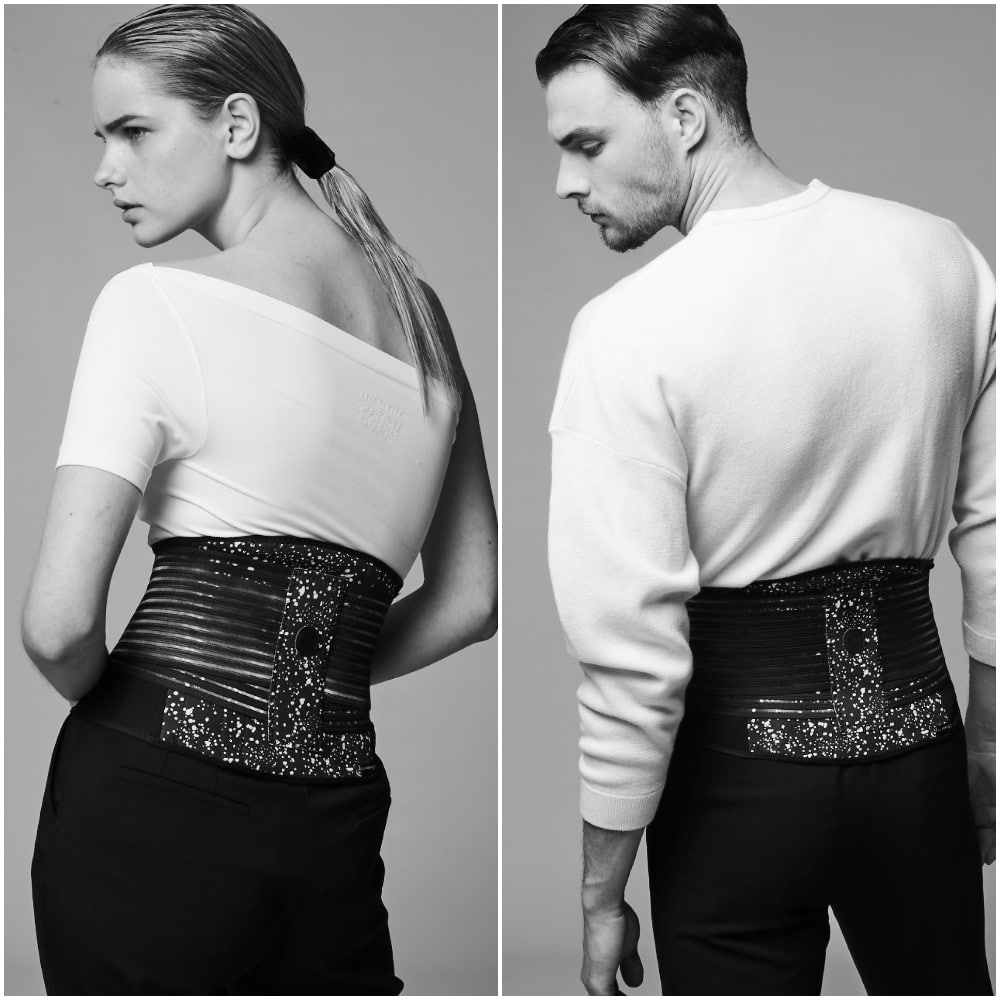
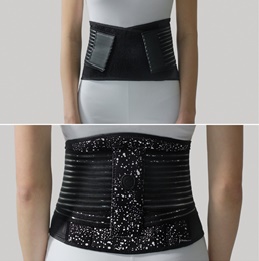
To have complete support for your back and eliminate pain symptoms always in a natural way and without resorting to strong anti-inflammatory drugs every time that burden your body, you can choose the protective accessory of a lumbar support belt. The lumbar support belt from Christou1910 is specially designed to perfectly support the back and relieve the spine, helping the muscles relax.
The hyperemia created is very important, as it allows active blood nutrients to "travel" quickly to the painful area and immediately address lumbago. The belt causes the body's immediate response to combat pain. At the same time, thanks to the 4 flexible splints that follow the natural movement of the body and the extra side straps, it is very easy to wear and hugs the waist, making us feel safe and comfortable in all our activities. The body remains free, allowing every movement, from sitting correctly in the workplace and casual walking, to your exercise routines and even dancing! The timeless design in a simple black color with white oxygen molecules, symbolizing free circulation and oxygenation of the body, is the safest addition to any of your looks.
Shop the story online by clicking here
Or
look for it on your next trip to your nearest supermarket, pharmacy, or informed health store (see the list here), don't forget to visit the Christou1910 health corner in the cosmetics section, choosing a protective health accessory that will comfortably accompany you in all your small and large activities!