
The History of Tights
[big]Opaque or graphite sheer? Fluorescent shades, bold fishnets, or the classic vertical pre-war seam down the calf? Whatever our preference for the unique accessory that flatteringly envelops our legs – hosiery – it's interesting to learn more about its history and its evolution in the sartorial codes throughout the centuries![/big]
 Sample of knitted socks in Ancient Egypt. Image source: julzcrafts.com[/caption]
China and Japan also had their own version of cotton or silk hosiery, with a looser fit that initially resembled socks more closely.
Sample of knitted socks in Ancient Egypt. Image source: julzcrafts.com[/caption]
China and Japan also had their own version of cotton or silk hosiery, with a looser fit that initially resembled socks more closely.
 Charles IX of France, wearing padded hose[/caption]
In the 16th and 17th centuries, Spain, with its wealth from the New World, dictated fashion trends, imposing elaborate fabrics, adorned with jewels and silk stockings embroidered with coats of arms, thus coining the expression "fancy feet." Stockings were now widely used for both their practical and aesthetic contribution. White or coloured silk stockings were the privilege of the nobility, while black or dark woollen and cotton ones symbolized the working class.
[caption id="attachment_3333" align="aligncenter" width="328"]
Charles IX of France, wearing padded hose[/caption]
In the 16th and 17th centuries, Spain, with its wealth from the New World, dictated fashion trends, imposing elaborate fabrics, adorned with jewels and silk stockings embroidered with coats of arms, thus coining the expression "fancy feet." Stockings were now widely used for both their practical and aesthetic contribution. White or coloured silk stockings were the privilege of the nobility, while black or dark woollen and cotton ones symbolized the working class.
[caption id="attachment_3333" align="aligncenter" width="328"]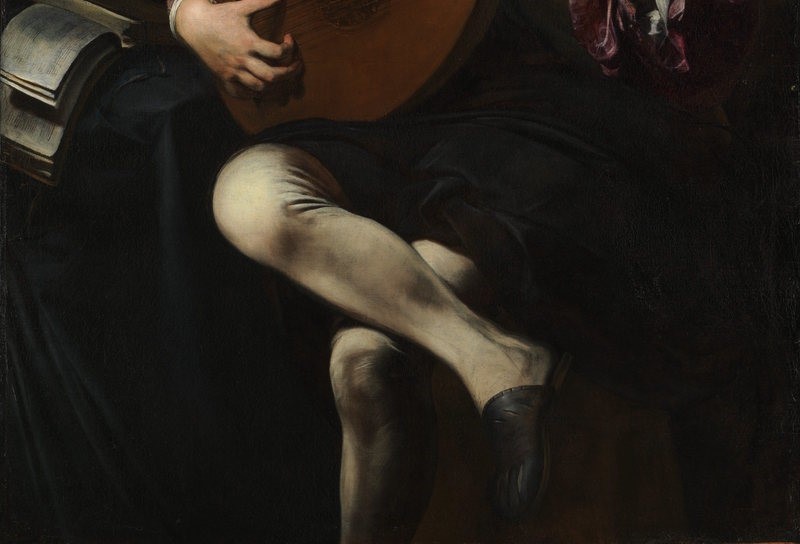 The white men's hosiery of the era[/caption]
[caption id="attachment_3335" align="aligncenter" width="311"]
The white men's hosiery of the era[/caption]
[caption id="attachment_3335" align="aligncenter" width="311"]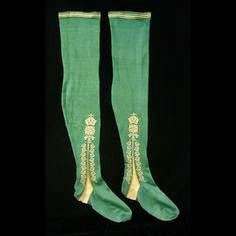 Men's socks with embroidered coats of arms. Image source: foottalk.blogspot.com[/caption]
In 1589, Reverend William Lee invented the first knitting machine for stockings, a type of the familiar "loom," facilitating their production and making fabric processing much easier and more affordable compared to handmade knitting, which was very expensive and considered a luxury item.
The first woman to wear knee-length silk stockings was Queen Elizabeth I of England in 1562. Elizabeth was thrilled by the comfort and softness of this luxurious accessory and decided to make it a permanent part of her wardrobe, creating her personal collection of different colours and special designs, tying them with a criss-cross garter or a bow at the knee.
[caption id="attachment_3337" align="aligncenter" width="326"]
Men's socks with embroidered coats of arms. Image source: foottalk.blogspot.com[/caption]
In 1589, Reverend William Lee invented the first knitting machine for stockings, a type of the familiar "loom," facilitating their production and making fabric processing much easier and more affordable compared to handmade knitting, which was very expensive and considered a luxury item.
The first woman to wear knee-length silk stockings was Queen Elizabeth I of England in 1562. Elizabeth was thrilled by the comfort and softness of this luxurious accessory and decided to make it a permanent part of her wardrobe, creating her personal collection of different colours and special designs, tying them with a criss-cross garter or a bow at the knee.
[caption id="attachment_3337" align="aligncenter" width="326"]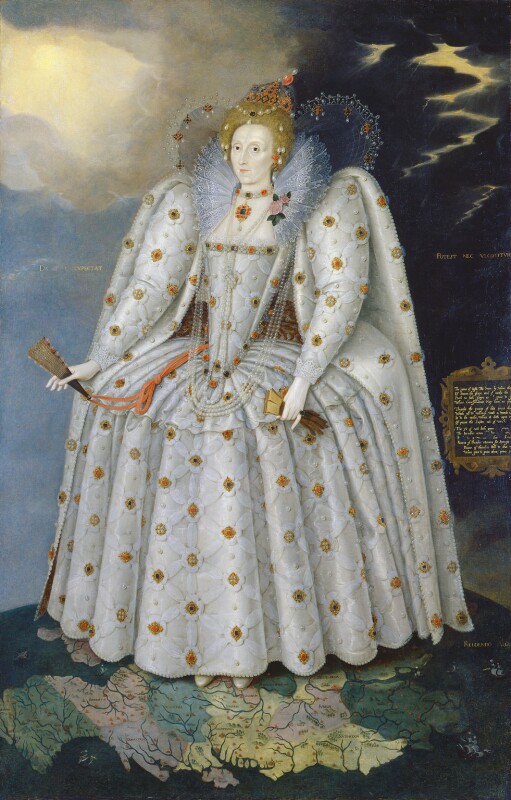 Queen Elizabeth I[/caption]
Her favourite colour was white, but rumour has it that she also adopted light blue silk, out of jealousy for her sworn cousin Mary Stuart. Stuart, Queen of Scots, but raised in the elegant French court, wore blue stockings embroidered with silver thread and green garters.
[caption id="attachment_3339" align="aligncenter" width="335"]
Queen Elizabeth I[/caption]
Her favourite colour was white, but rumour has it that she also adopted light blue silk, out of jealousy for her sworn cousin Mary Stuart. Stuart, Queen of Scots, but raised in the elegant French court, wore blue stockings embroidered with silver thread and green garters.
[caption id="attachment_3339" align="aligncenter" width="335"]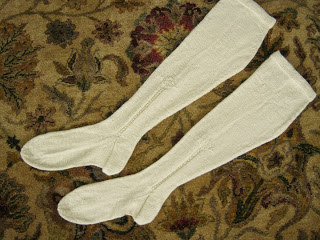 White silk stockings from the Elizabethan era. Image source: foottalk.blogspot.com[/caption]
The popularity of silk stockings continued at the same pace, while gradually declining in men's fashion. In the 18th and 19th centuries, a knee-length type was worn under long dresses and crinolines by women of the time, mainly for reasons of modesty, protection, and comfort. With the exception of the fashionable courtesans of the Belle Époque, who wore daring peacock blue and yellow stockings with elaborate ankle embroidery, stockings for all other women were plain and discreet.
[caption id="attachment_3386" align="aligncenter" width="246"]
White silk stockings from the Elizabethan era. Image source: foottalk.blogspot.com[/caption]
The popularity of silk stockings continued at the same pace, while gradually declining in men's fashion. In the 18th and 19th centuries, a knee-length type was worn under long dresses and crinolines by women of the time, mainly for reasons of modesty, protection, and comfort. With the exception of the fashionable courtesans of the Belle Époque, who wore daring peacock blue and yellow stockings with elaborate ankle embroidery, stockings for all other women were plain and discreet.
[caption id="attachment_3386" align="aligncenter" width="246"]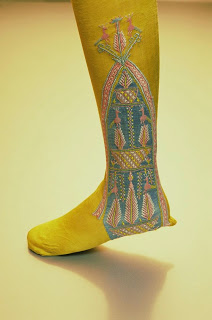 Daring Belle Époque stockings. Image source: foottalk.blogspot.com[/caption]
For morning wear, hosiery came in olive, grey, and brown, paired with quiet, pastel, white, or black dresses. White silk knit was the formal choice for evening occasions, but the soft "blush" of pink began to be preferred for daily outings, giving the leg a graceful, healthy glow. However, no matter how beautiful legs looked in hosiery, they remained carefully hidden for reasons of propriety.
In 1892, a group of British chemists discovered rayon, the first synthetic fabric made of artificial fibres, making hosiery much more accessible to the majority of women compared to expensive silk.
[caption id="attachment_3341" align="aligncenter" width="353"]
Daring Belle Époque stockings. Image source: foottalk.blogspot.com[/caption]
For morning wear, hosiery came in olive, grey, and brown, paired with quiet, pastel, white, or black dresses. White silk knit was the formal choice for evening occasions, but the soft "blush" of pink began to be preferred for daily outings, giving the leg a graceful, healthy glow. However, no matter how beautiful legs looked in hosiery, they remained carefully hidden for reasons of propriety.
In 1892, a group of British chemists discovered rayon, the first synthetic fabric made of artificial fibres, making hosiery much more accessible to the majority of women compared to expensive silk.
[caption id="attachment_3341" align="aligncenter" width="353"]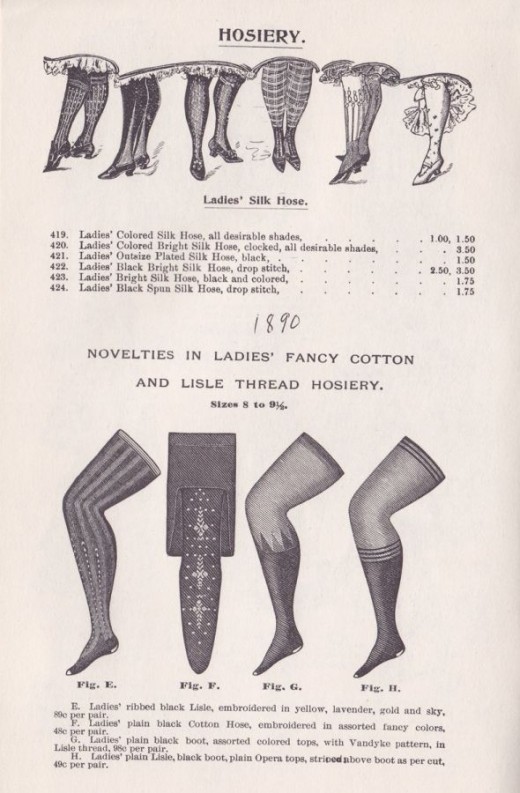 Catalogue from Harper's Bazaar magazine in 1890[/caption]
 The daring women of the '20s flaunt their garters. Image source: Behind the Curtain[/caption]
[caption id="attachment_3345" align="aligncenter" width="335"]
The daring women of the '20s flaunt their garters. Image source: Behind the Curtain[/caption]
[caption id="attachment_3345" align="aligncenter" width="335"]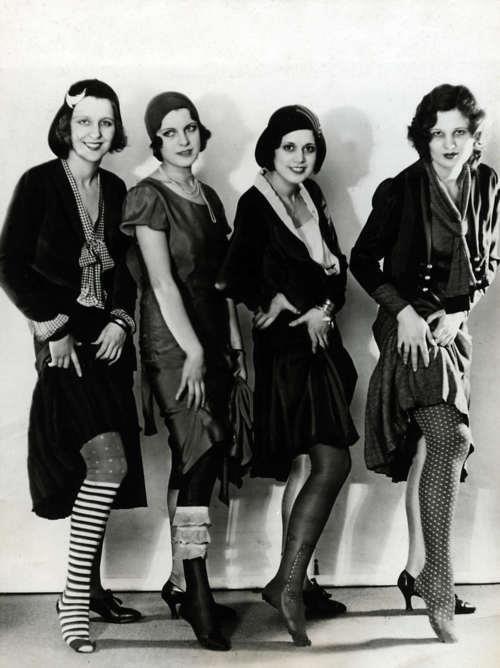 The "flapper" girls of the '20s reveal the designs on their stockings. Image source: vintagedancer.com[/caption]
In the 1930s, however, the real revolution occurred, laying the groundwork for the creation of hosiery as we know it today. In 1939, the American company DuPont invented nylon, an economical material with exceptional elasticity that fit women of all sizes, thus making it the most useful accessory for the female silhouette. Nylon was famously described as a synthetic material with "the durability of steel and a sheer, fine weave like a spider's web."
[caption id="attachment_3347" align="aligncenter" width="345"]
The "flapper" girls of the '20s reveal the designs on their stockings. Image source: vintagedancer.com[/caption]
In the 1930s, however, the real revolution occurred, laying the groundwork for the creation of hosiery as we know it today. In 1939, the American company DuPont invented nylon, an economical material with exceptional elasticity that fit women of all sizes, thus making it the most useful accessory for the female silhouette. Nylon was famously described as a synthetic material with "the durability of steel and a sheer, fine weave like a spider's web."
[caption id="attachment_3347" align="aligncenter" width="345"]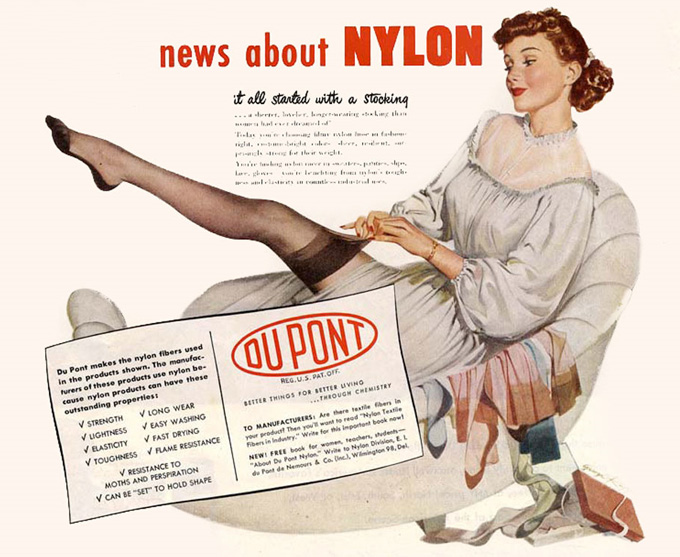 The first nylon stockings from DuPont. Image Source: wired.com[/caption]
Unfortunately, World War II, along with all essential goods, also halted the circulation of hosiery. Women decided to make a small sacrifice to their appearance, donating all their stockings so that nylon could be used for the production of... parachutes! Thus, women's beloved accessory was temporarily replaced with a creative alternative! Women dyed their bare legs with paint and then drew the characteristic black seam line on the back of their legs with a small brush!
[caption id="attachment_3349" align="aligncenter" width="347"]
The first nylon stockings from DuPont. Image Source: wired.com[/caption]
Unfortunately, World War II, along with all essential goods, also halted the circulation of hosiery. Women decided to make a small sacrifice to their appearance, donating all their stockings so that nylon could be used for the production of... parachutes! Thus, women's beloved accessory was temporarily replaced with a creative alternative! Women dyed their bare legs with paint and then drew the characteristic black seam line on the back of their legs with a small brush!
[caption id="attachment_3349" align="aligncenter" width="347"] Woman donates her nylon stockings for the production of parachutes, during World War II. Image source: vintagedancer.com[/caption]
[caption id="attachment_3351" align="aligncenter" width="350"]
Woman donates her nylon stockings for the production of parachutes, during World War II. Image source: vintagedancer.com[/caption]
[caption id="attachment_3351" align="aligncenter" width="350"]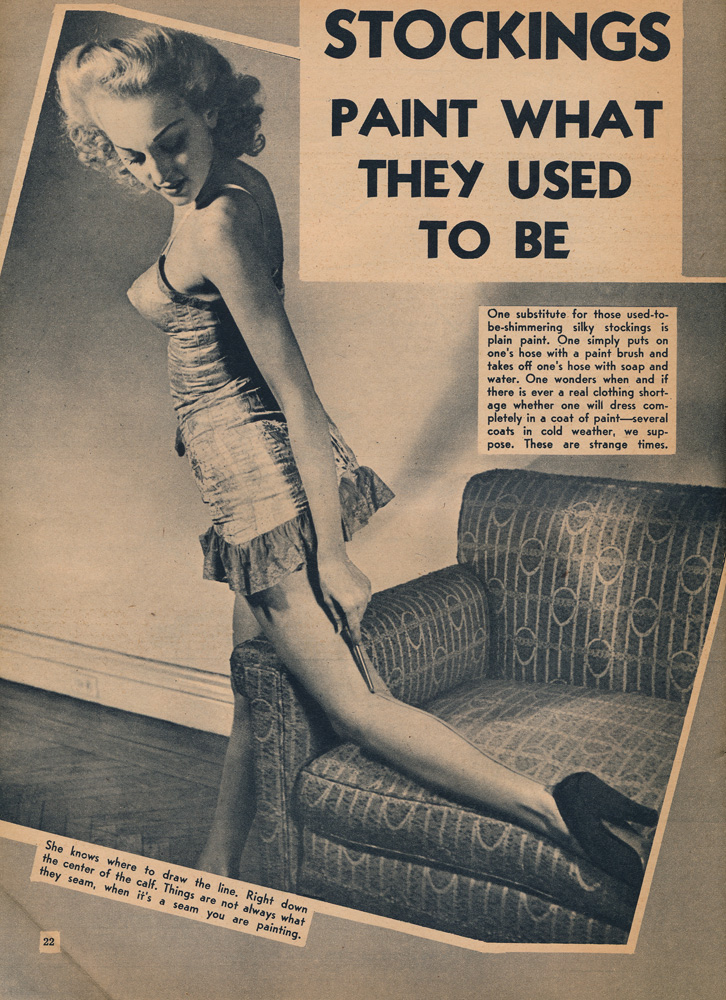 "Do it yourself" advertisement from Giggles magazine in 1943 for leg paint. Image Source: Atomic Red Head[/caption]
Immediately after the war, nylon stockings made their comeback, and DuPont struggled to meet the enormous demand for the product. In just 6 hours, in 1945, at the end of the war, Macy's department store in America sold out its entire stock of 50,000 pairs!
[caption id="attachment_3353" align="aligncenter" width="366"]
"Do it yourself" advertisement from Giggles magazine in 1943 for leg paint. Image Source: Atomic Red Head[/caption]
Immediately after the war, nylon stockings made their comeback, and DuPont struggled to meet the enormous demand for the product. In just 6 hours, in 1945, at the end of the war, Macy's department store in America sold out its entire stock of 50,000 pairs!
[caption id="attachment_3353" align="aligncenter" width="366"]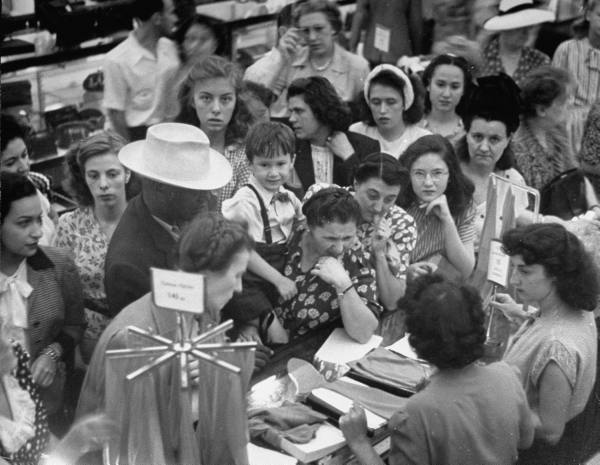 The enormous demand for nylon stockings at an American department store in 1945. Image Source: Smithsonianmag.com[/caption]
The craze for stockings was a characteristic phenomenon of the 1940s and 1950s. However, there was still a small problem: they couldn't stay up on the body without the aid of garters or some supplementary belt. Especially in Hollywood, with the revealing dance costumes and leotards of the actresses, film producers and costume designers were forced to temporarily sew the hem of the stockings to women's slips, so that there would be continuity in the ensemble.
[caption id="attachment_3355" align="aligncenter" width="389"]
The enormous demand for nylon stockings at an American department store in 1945. Image Source: Smithsonianmag.com[/caption]
The craze for stockings was a characteristic phenomenon of the 1940s and 1950s. However, there was still a small problem: they couldn't stay up on the body without the aid of garters or some supplementary belt. Especially in Hollywood, with the revealing dance costumes and leotards of the actresses, film producers and costume designers were forced to temporarily sew the hem of the stockings to women's slips, so that there would be continuity in the ensemble.
[caption id="attachment_3355" align="aligncenter" width="389"]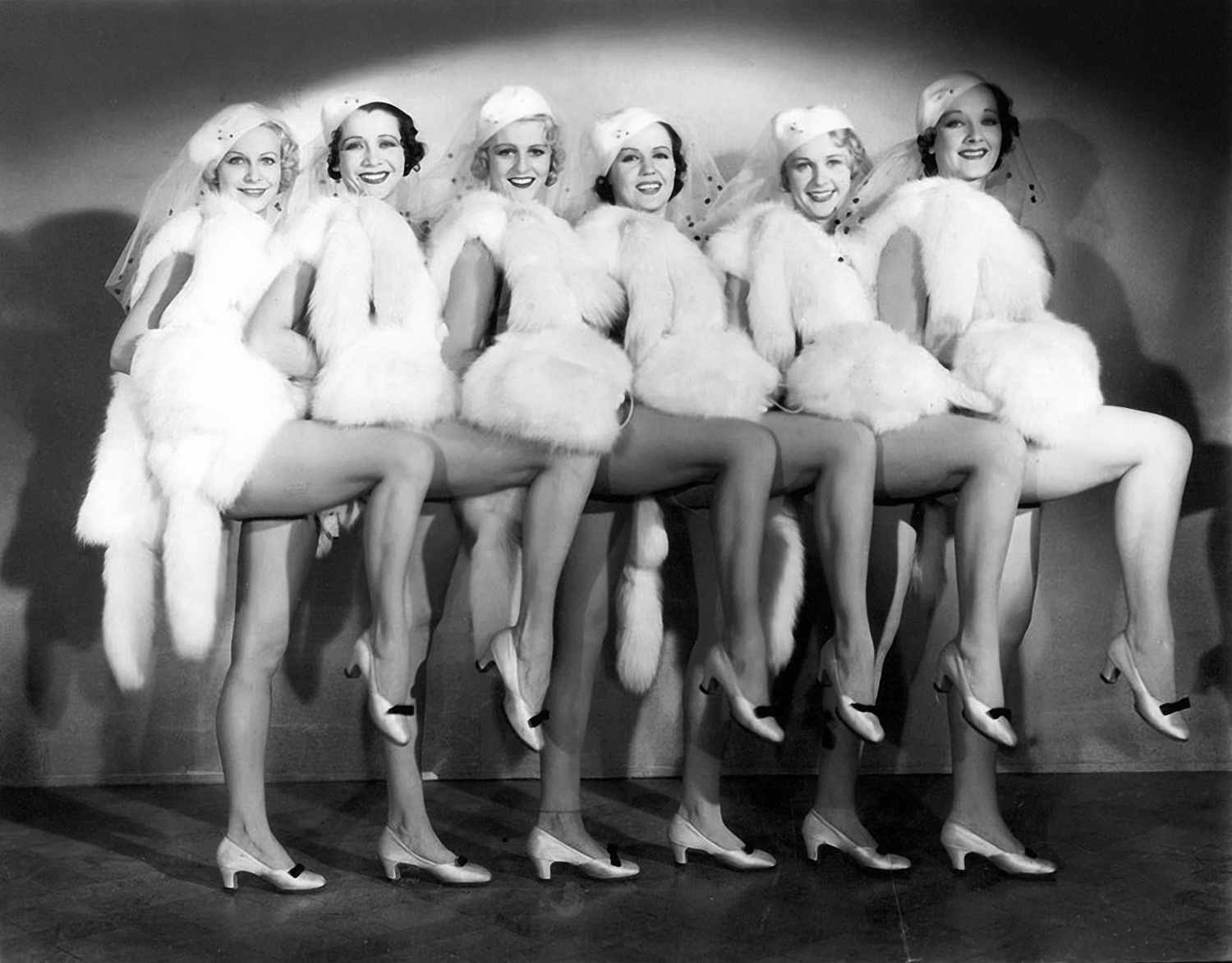 Chorus girls in Hollywood, 1933. Image Source: vickiarcher.com[/caption]
[caption id="attachment_3357" align="aligncenter" width="381"]
Chorus girls in Hollywood, 1933. Image Source: vickiarcher.com[/caption]
[caption id="attachment_3357" align="aligncenter" width="381"]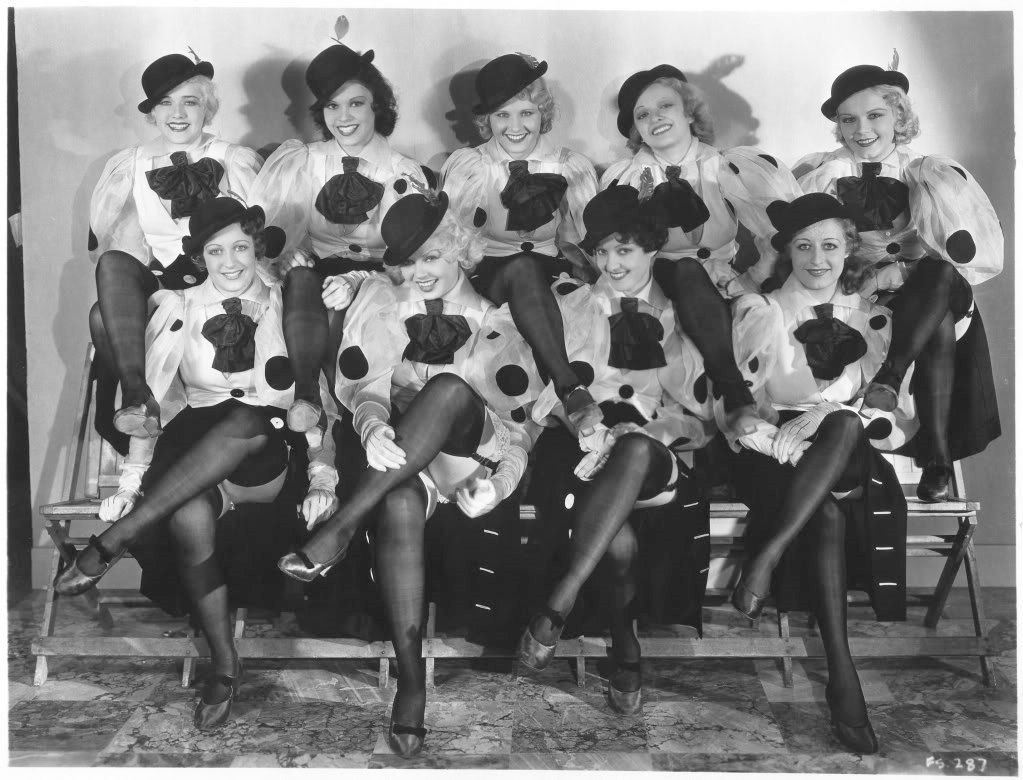 Dance number in Hollywood. Image Source: Songbook1.wordpress[/caption]
[caption id="attachment_3359" align="aligncenter" width="335"]
Dance number in Hollywood. Image Source: Songbook1.wordpress[/caption]
[caption id="attachment_3359" align="aligncenter" width="335"]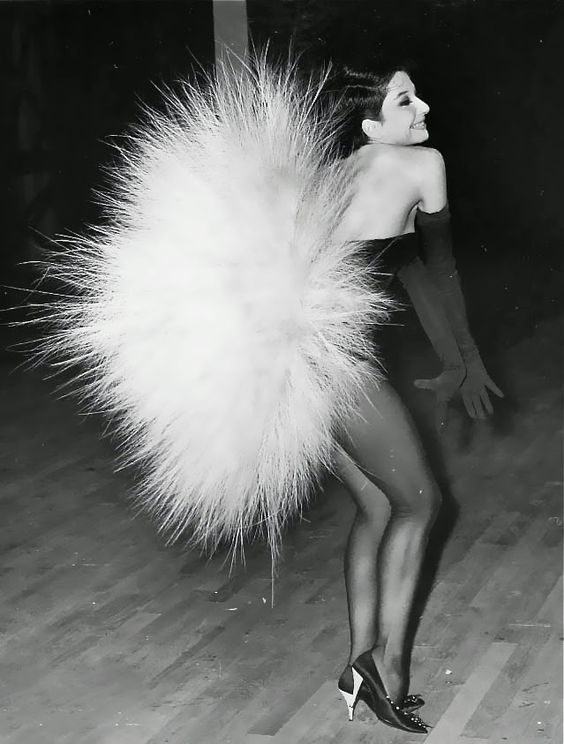 The famous dancer Zizi Jeanmaire[/caption]
This idea sparked its transformation into what we know today: a single, sheer garment with a leg divider, a gusset at the crotch, and elastic at the waist. As the idea stemmed from stockings sewn onto women's underwear (panties), the term "pantyhose" was born.
[caption id="attachment_3361" align="aligncenter" width="329"]
The famous dancer Zizi Jeanmaire[/caption]
This idea sparked its transformation into what we know today: a single, sheer garment with a leg divider, a gusset at the crotch, and elastic at the waist. As the idea stemmed from stockings sewn onto women's underwear (panties), the term "pantyhose" was born.
[caption id="attachment_3361" align="aligncenter" width="329"]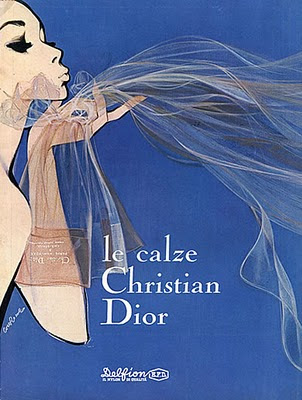 Advertisement for Christian Dior's lightweight stockings. Image Source: Model's Own[/caption]
[caption id="attachment_3363" align="aligncenter" width="353"]
Advertisement for Christian Dior's lightweight stockings. Image Source: Model's Own[/caption]
[caption id="attachment_3363" align="aligncenter" width="353"]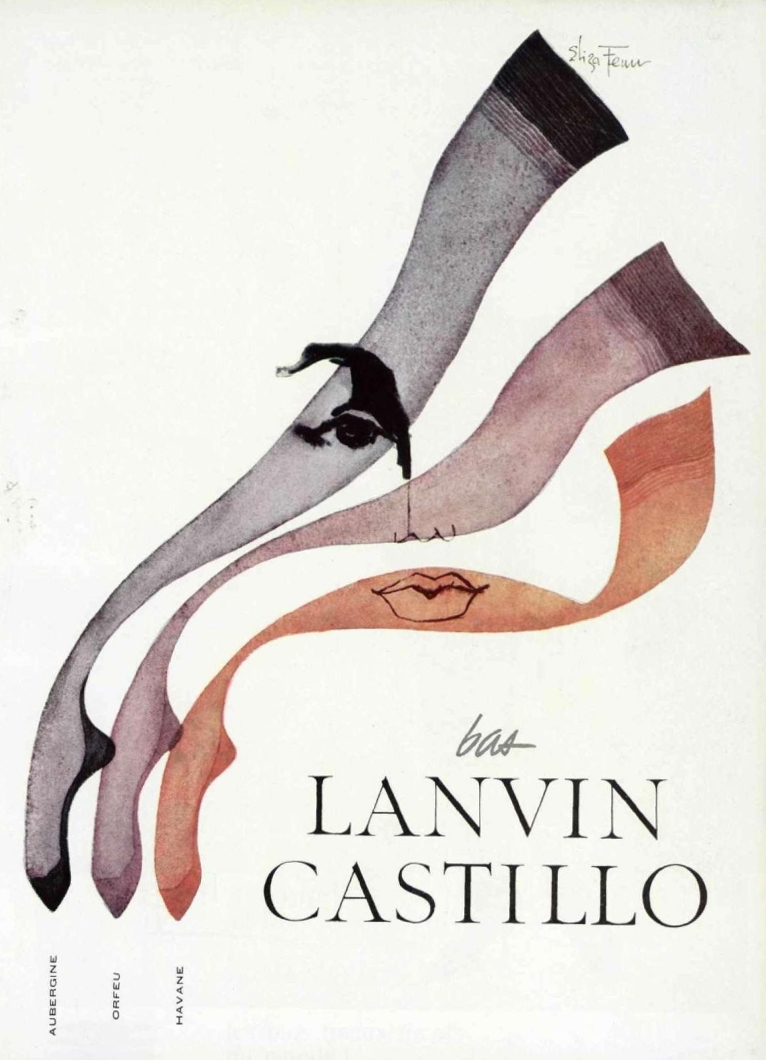 Advertisement for Lanvin Castillo tights. Image Source: L'officiel magazine, n° 449-450, 1959[/caption]
Pantyhose became synonymous with glamour, flatteringly outlining women's legs. Advertisements featuring pin-up girls elevated it to the ultimate symbol of female femininity, encouraging everyday women to be as attractive as Broadway stars, wearing the suggestive black accessory on their shapely legs.
[caption id="attachment_3365" align="aligncenter" width="346"]
Advertisement for Lanvin Castillo tights. Image Source: L'officiel magazine, n° 449-450, 1959[/caption]
Pantyhose became synonymous with glamour, flatteringly outlining women's legs. Advertisements featuring pin-up girls elevated it to the ultimate symbol of female femininity, encouraging everyday women to be as attractive as Broadway stars, wearing the suggestive black accessory on their shapely legs.
[caption id="attachment_3365" align="aligncenter" width="346"]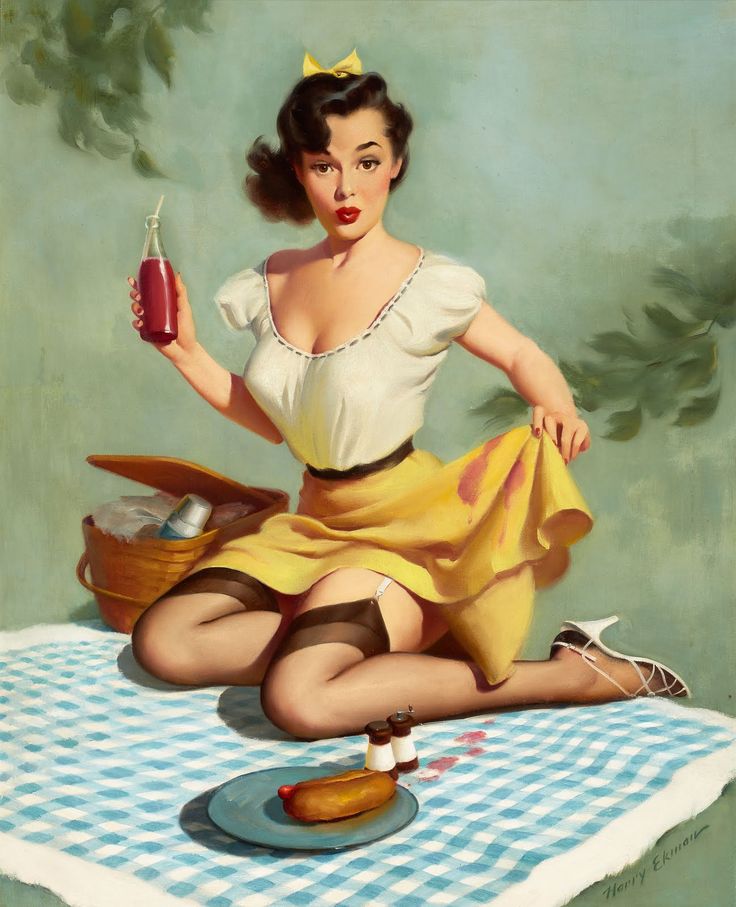 Harry Ekmann's pin-up girl in hip-high stockings. Image source: pinupcartoongirls[/caption]
The swinging 60s brought with them the invention of the mini-skirt by Mary Quant, and daring young women, with Twiggy as their role model, continued to wear stockings in white tones and cheerful pop colours, colour-coordinated with their tiny outfits. Designer Pierre Cardin introduced the first opaque stockings in various bold colours and prints, while simultaneously, diamond-cut patterns in the knit, fishnets, and caramel colours for a tanned look on the legs made their appearance. In 1962, the invention of Lycra composition made them even easier and more durable, so they could be worn with style and comfort throughout the day.
[caption id="attachment_3367" align="aligncenter" width="357"]
Harry Ekmann's pin-up girl in hip-high stockings. Image source: pinupcartoongirls[/caption]
The swinging 60s brought with them the invention of the mini-skirt by Mary Quant, and daring young women, with Twiggy as their role model, continued to wear stockings in white tones and cheerful pop colours, colour-coordinated with their tiny outfits. Designer Pierre Cardin introduced the first opaque stockings in various bold colours and prints, while simultaneously, diamond-cut patterns in the knit, fishnets, and caramel colours for a tanned look on the legs made their appearance. In 1962, the invention of Lycra composition made them even easier and more durable, so they could be worn with style and comfort throughout the day.
[caption id="attachment_3367" align="aligncenter" width="357"]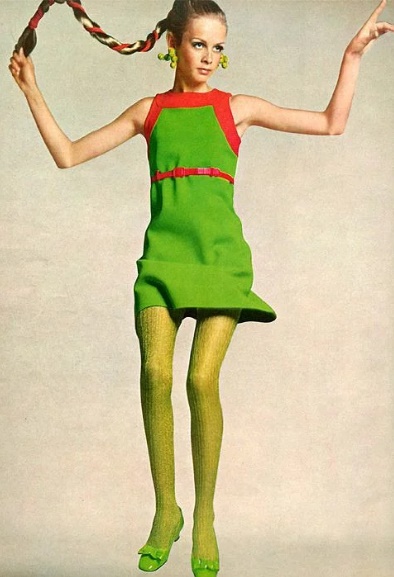 Twiggy in colourful stockings in the '60s[/caption]
[caption id="attachment_3369" align="aligncenter" width="343"]
Twiggy in colourful stockings in the '60s[/caption]
[caption id="attachment_3369" align="aligncenter" width="343"]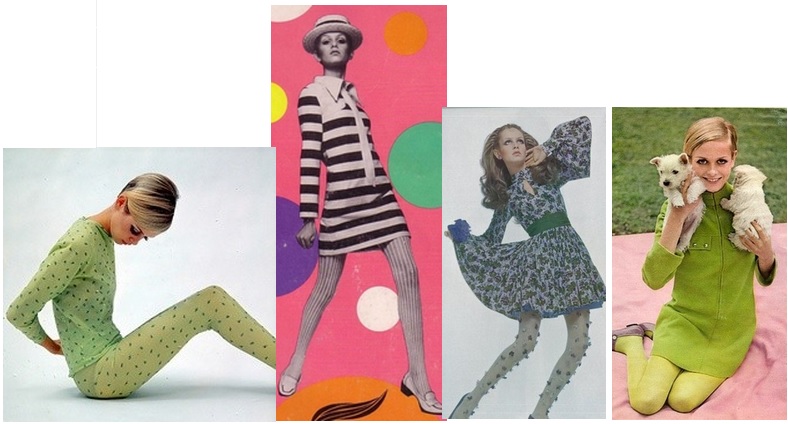 The '60s trend: stockings in all colours![/caption]
The 70s, with their disco dance floor fever, brought ripped fishnets and shiny glitter into fashion, worn with stiletto heels and oversized boots, while the 80s launched extravagant looks with Azzedine Alaïa's tight bodycon dresses and black lace details on the legs.
[caption id="attachment_3371" align="aligncenter" width="357"]
The '60s trend: stockings in all colours![/caption]
The 70s, with their disco dance floor fever, brought ripped fishnets and shiny glitter into fashion, worn with stiletto heels and oversized boots, while the 80s launched extravagant looks with Azzedine Alaïa's tight bodycon dresses and black lace details on the legs.
[caption id="attachment_3371" align="aligncenter" width="357"]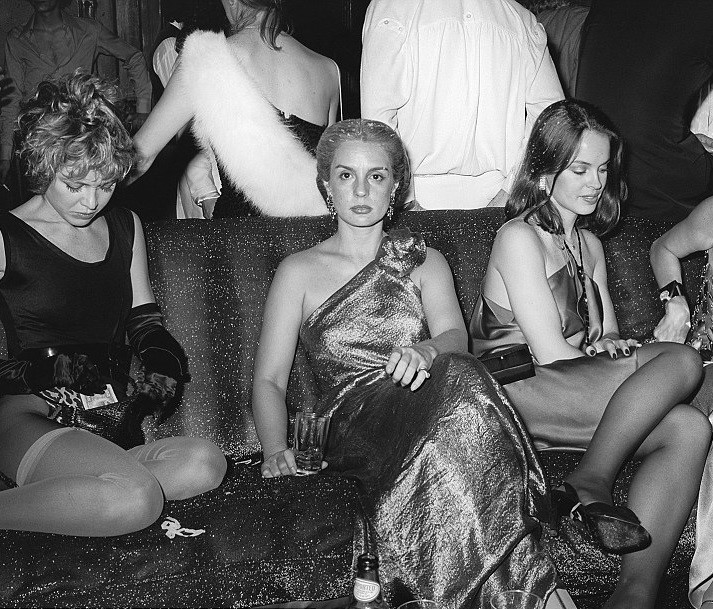 Designer Carolina Herrera at Studio 54. Image source: Stanley Barker[/caption]
[caption id="attachment_4311" align="aligncenter" width="345"]
Designer Carolina Herrera at Studio 54. Image source: Stanley Barker[/caption]
[caption id="attachment_4311" align="aligncenter" width="345"]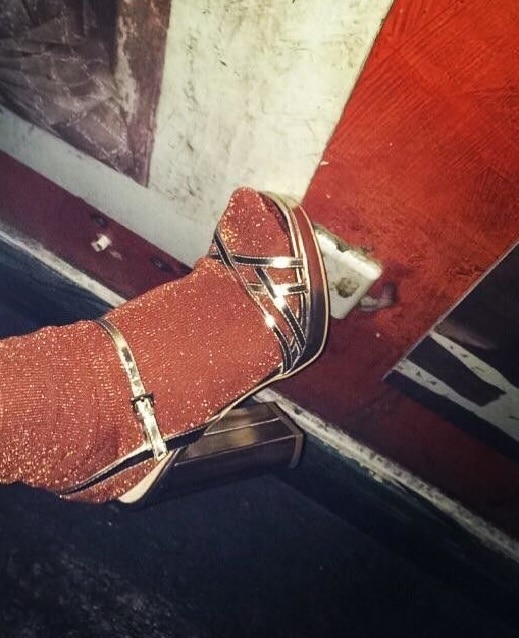 Glitter stockings of the ‘70s[/caption]
[caption id="attachment_3373" align="aligncenter" width="356"]
Glitter stockings of the ‘70s[/caption]
[caption id="attachment_3373" align="aligncenter" width="356"]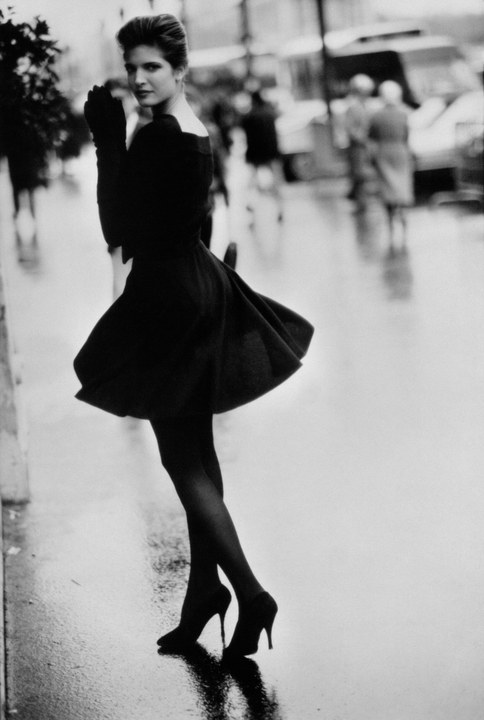 Stephanie Seymour in an Azzedine Alaïa creation and opaque stockings, Vogue, 1987[/caption]
[caption id="attachment_3375" align="aligncenter" width="353"]
Stephanie Seymour in an Azzedine Alaïa creation and opaque stockings, Vogue, 1987[/caption]
[caption id="attachment_3375" align="aligncenter" width="353"]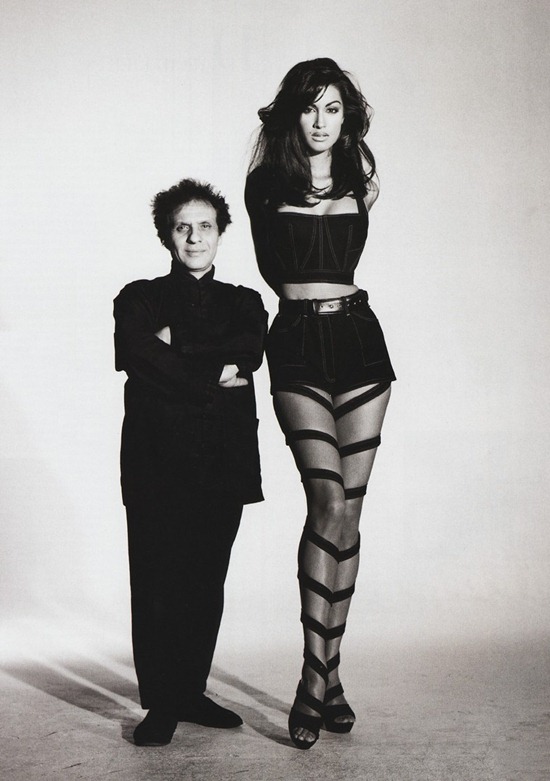 Azzedine Alaïa, Yasmin Gauri, Vogue 1991[/caption]
The 90s, in turn, introduced us to the leg massage method, with tights supporting and sculpting the female body at the waist, abdomen, and hips.
Reaching today, the options are countless, but the desire for beautiful hosiery has not been satiated!
Azzedine Alaïa, Yasmin Gauri, Vogue 1991[/caption]
The 90s, in turn, introduced us to the leg massage method, with tights supporting and sculpting the female body at the waist, abdomen, and hips.
Reaching today, the options are countless, but the desire for beautiful hosiery has not been satiated!
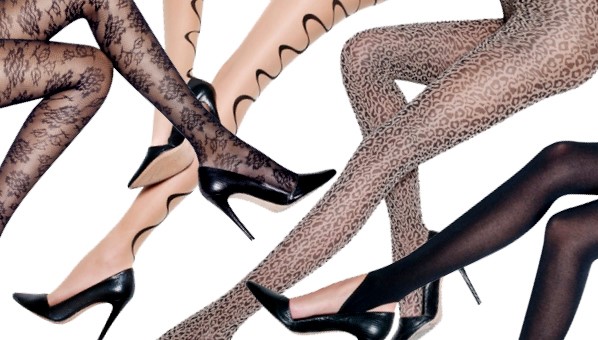
 To get it, you don't need to wait in lines at department stores, like in the 1940s! By taking your usual trip to the supermarket (see the list here), you can simply add it to your basket, from the company's health corner stand, in the cosmetics section. Take care of yourself by giving a small gift with a transformative effect on your tired legs!

Hosiery in Antiquity
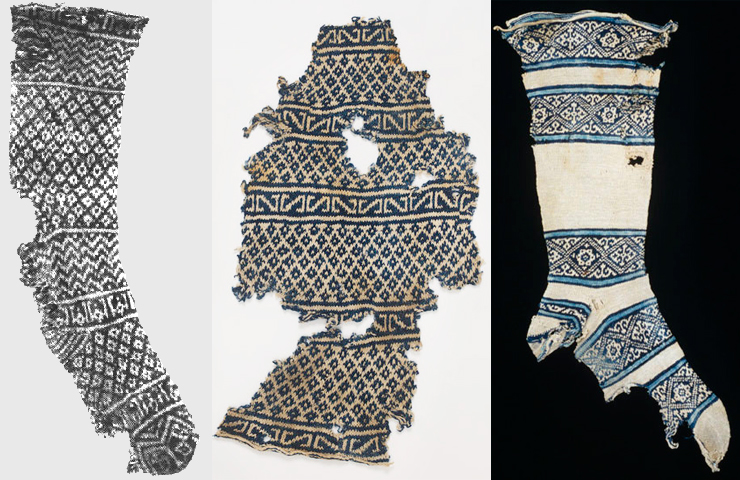
Before socks, people wrapped their feet in skins or cloth. In ancient Greece, in the 8th century BC, Greeks already wore woollen socks to protect themselves from the cold. The poet Hesiod, in his work "Works and Days," advises his brother Perses not to neglect wrapping his feet with the so-called "pilema," which was fabric made of compressed wool or animal hair. In ancient Rome, men and women alike wore a type of low and comfortable foot covering with their sandals at home, known as "soccus," derived from the Greek term "sykkos," meaning Phrygian shoe. In Old English, the word became "socc," while in Middle English it was "socke," evolving into the familiar modern term "sock." Officially, however, the invention of hosiery is attributed to ancient Egypt. Archaeologists first discovered an early form of it, at least 2,000 years old, in the tomb of a wealthy noblewoman. The craftsmanship in its construction was highly advanced for its time, as its design already included a fitted heel reinforcement for greater comfort, as well as a drawstring at the top to secure it to the body. [caption id="attachment_3329" align="aligncenter" width="358"] Sample of knitted socks in Ancient Egypt. Image source: julzcrafts.com[/caption]
China and Japan also had their own version of cotton or silk hosiery, with a looser fit that initially resembled socks more closely.
The evolution of hosiery in Europe
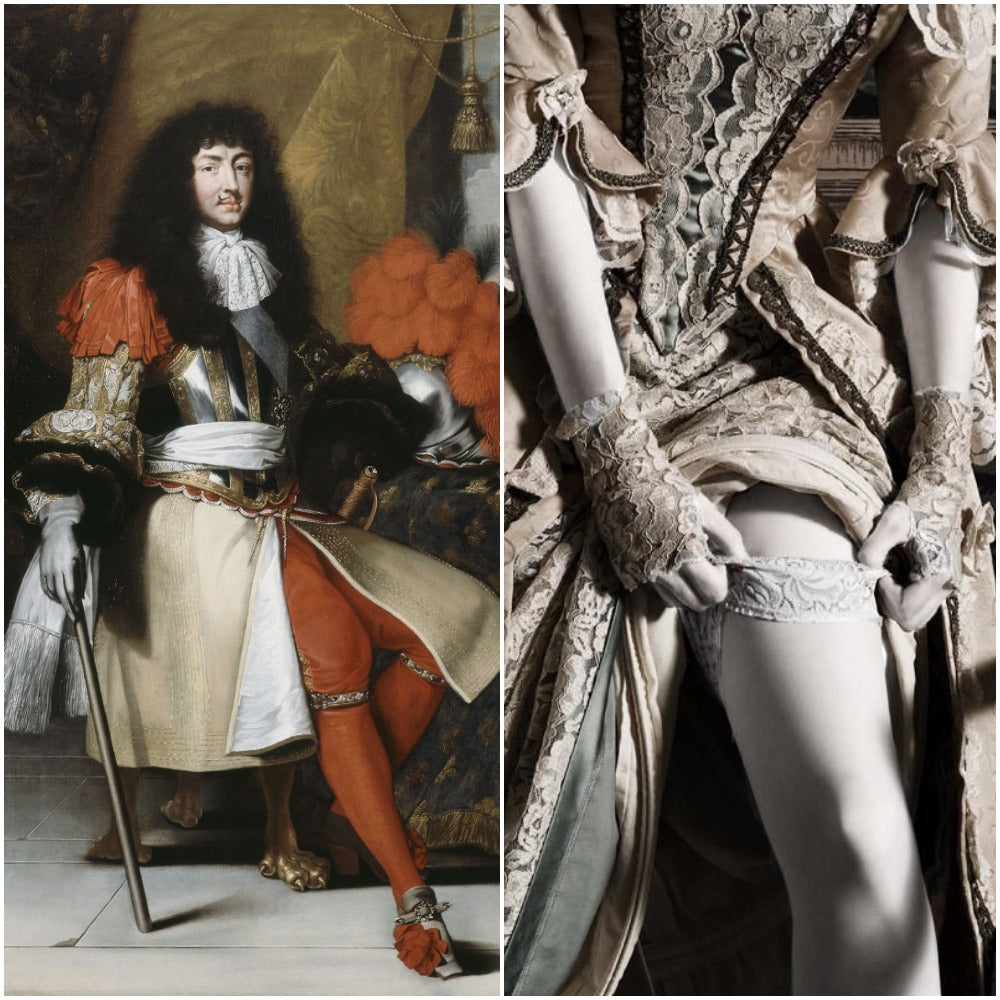
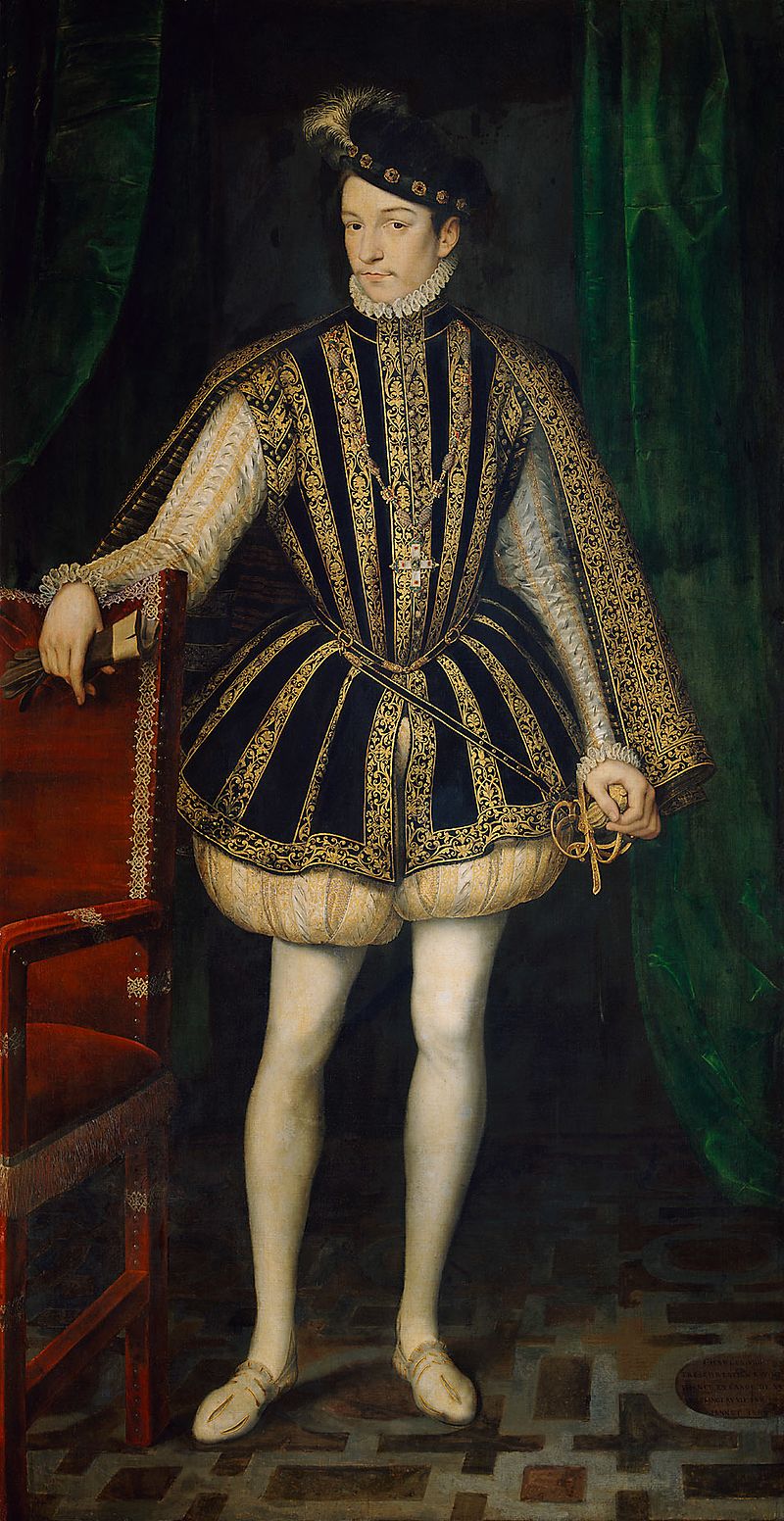
Although it might seem strange to us, hosiery was first worn by noble men, as it facilitated their movements during horseback riding. In the Middle Ages (5th century AD) in Europe, the length of men's trousers extended, and the sock became a tight, tube-like fabric that covered the lower part of the leg and was held up by some kind of garter. As men's trousers or "breeches" of the time became shorter, conversely, stockings lengthened. Around 1490, the two parts were joined, creating a type of hosiery resembling today's leggings, made of colourful silk, wool, and velvet. The most interesting aspect is that hosiery in the Middle Ages was considered a symbol of purity and was strictly forbidden to show even the slightest hole! [caption id="attachment_3331" align="aligncenter" width="277"] Charles IX of France, wearing padded hose[/caption]
In the 16th and 17th centuries, Spain, with its wealth from the New World, dictated fashion trends, imposing elaborate fabrics, adorned with jewels and silk stockings embroidered with coats of arms, thus coining the expression "fancy feet." Stockings were now widely used for both their practical and aesthetic contribution. White or coloured silk stockings were the privilege of the nobility, while black or dark woollen and cotton ones symbolized the working class.
[caption id="attachment_3333" align="aligncenter" width="328"] The white men's hosiery of the era[/caption]
[caption id="attachment_3335" align="aligncenter" width="311"] Men's socks with embroidered coats of arms. Image source: foottalk.blogspot.com[/caption]
In 1589, Reverend William Lee invented the first knitting machine for stockings, a type of the familiar "loom," facilitating their production and making fabric processing much easier and more affordable compared to handmade knitting, which was very expensive and considered a luxury item.
The first woman to wear knee-length silk stockings was Queen Elizabeth I of England in 1562. Elizabeth was thrilled by the comfort and softness of this luxurious accessory and decided to make it a permanent part of her wardrobe, creating her personal collection of different colours and special designs, tying them with a criss-cross garter or a bow at the knee.
[caption id="attachment_3337" align="aligncenter" width="326"] Queen Elizabeth I[/caption]
Her favourite colour was white, but rumour has it that she also adopted light blue silk, out of jealousy for her sworn cousin Mary Stuart. Stuart, Queen of Scots, but raised in the elegant French court, wore blue stockings embroidered with silver thread and green garters.
[caption id="attachment_3339" align="aligncenter" width="335"] White silk stockings from the Elizabethan era. Image source: foottalk.blogspot.com[/caption]
The popularity of silk stockings continued at the same pace, while gradually declining in men's fashion. In the 18th and 19th centuries, a knee-length type was worn under long dresses and crinolines by women of the time, mainly for reasons of modesty, protection, and comfort. With the exception of the fashionable courtesans of the Belle Époque, who wore daring peacock blue and yellow stockings with elaborate ankle embroidery, stockings for all other women were plain and discreet.
[caption id="attachment_3386" align="aligncenter" width="246"] Daring Belle Époque stockings. Image source: foottalk.blogspot.com[/caption]
For morning wear, hosiery came in olive, grey, and brown, paired with quiet, pastel, white, or black dresses. White silk knit was the formal choice for evening occasions, but the soft "blush" of pink began to be preferred for daily outings, giving the leg a graceful, healthy glow. However, no matter how beautiful legs looked in hosiery, they remained carefully hidden for reasons of propriety.
In 1892, a group of British chemists discovered rayon, the first synthetic fabric made of artificial fibres, making hosiery much more accessible to the majority of women compared to expensive silk.
[caption id="attachment_3341" align="aligncenter" width="353"] Catalogue from Harper's Bazaar magazine in 1890[/caption]
Hosiery in the modern era
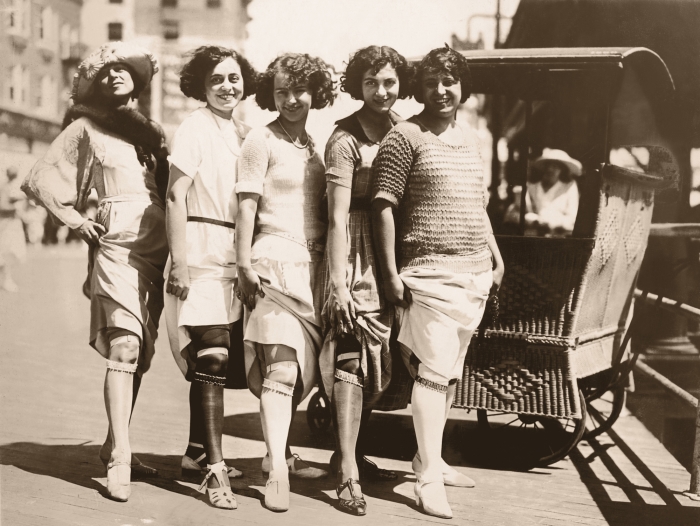
The feverish and light-hearted Jazz Age of the 1920s provocatively raised women's hemlines to the knee, bringing knee-high socks and women's garters into vogue. [caption id="attachment_3343" align="aligncenter" width="392"] The daring women of the '20s flaunt their garters. Image source: Behind the Curtain[/caption]
[caption id="attachment_3345" align="aligncenter" width="335"] The "flapper" girls of the '20s reveal the designs on their stockings. Image source: vintagedancer.com[/caption]
In the 1930s, however, the real revolution occurred, laying the groundwork for the creation of hosiery as we know it today. In 1939, the American company DuPont invented nylon, an economical material with exceptional elasticity that fit women of all sizes, thus making it the most useful accessory for the female silhouette. Nylon was famously described as a synthetic material with "the durability of steel and a sheer, fine weave like a spider's web."
[caption id="attachment_3347" align="aligncenter" width="345"] The first nylon stockings from DuPont. Image Source: wired.com[/caption]
Unfortunately, World War II, along with all essential goods, also halted the circulation of hosiery. Women decided to make a small sacrifice to their appearance, donating all their stockings so that nylon could be used for the production of... parachutes! Thus, women's beloved accessory was temporarily replaced with a creative alternative! Women dyed their bare legs with paint and then drew the characteristic black seam line on the back of their legs with a small brush!
[caption id="attachment_3349" align="aligncenter" width="347"] Woman donates her nylon stockings for the production of parachutes, during World War II. Image source: vintagedancer.com[/caption]
[caption id="attachment_3351" align="aligncenter" width="350"] "Do it yourself" advertisement from Giggles magazine in 1943 for leg paint. Image Source: Atomic Red Head[/caption]
Immediately after the war, nylon stockings made their comeback, and DuPont struggled to meet the enormous demand for the product. In just 6 hours, in 1945, at the end of the war, Macy's department store in America sold out its entire stock of 50,000 pairs!
[caption id="attachment_3353" align="aligncenter" width="366"] The enormous demand for nylon stockings at an American department store in 1945. Image Source: Smithsonianmag.com[/caption]
The craze for stockings was a characteristic phenomenon of the 1940s and 1950s. However, there was still a small problem: they couldn't stay up on the body without the aid of garters or some supplementary belt. Especially in Hollywood, with the revealing dance costumes and leotards of the actresses, film producers and costume designers were forced to temporarily sew the hem of the stockings to women's slips, so that there would be continuity in the ensemble.
[caption id="attachment_3355" align="aligncenter" width="389"] Chorus girls in Hollywood, 1933. Image Source: vickiarcher.com[/caption]
[caption id="attachment_3357" align="aligncenter" width="381"] Dance number in Hollywood. Image Source: Songbook1.wordpress[/caption]
[caption id="attachment_3359" align="aligncenter" width="335"] The famous dancer Zizi Jeanmaire[/caption]
This idea sparked its transformation into what we know today: a single, sheer garment with a leg divider, a gusset at the crotch, and elastic at the waist. As the idea stemmed from stockings sewn onto women's underwear (panties), the term "pantyhose" was born.
[caption id="attachment_3361" align="aligncenter" width="329"] Advertisement for Christian Dior's lightweight stockings. Image Source: Model's Own[/caption]
[caption id="attachment_3363" align="aligncenter" width="353"] Advertisement for Lanvin Castillo tights. Image Source: L'officiel magazine, n° 449-450, 1959[/caption]
Pantyhose became synonymous with glamour, flatteringly outlining women's legs. Advertisements featuring pin-up girls elevated it to the ultimate symbol of female femininity, encouraging everyday women to be as attractive as Broadway stars, wearing the suggestive black accessory on their shapely legs.
[caption id="attachment_3365" align="aligncenter" width="346"] Harry Ekmann's pin-up girl in hip-high stockings. Image source: pinupcartoongirls[/caption]
The swinging 60s brought with them the invention of the mini-skirt by Mary Quant, and daring young women, with Twiggy as their role model, continued to wear stockings in white tones and cheerful pop colours, colour-coordinated with their tiny outfits. Designer Pierre Cardin introduced the first opaque stockings in various bold colours and prints, while simultaneously, diamond-cut patterns in the knit, fishnets, and caramel colours for a tanned look on the legs made their appearance. In 1962, the invention of Lycra composition made them even easier and more durable, so they could be worn with style and comfort throughout the day.
[caption id="attachment_3367" align="aligncenter" width="357"] Twiggy in colourful stockings in the '60s[/caption]
[caption id="attachment_3369" align="aligncenter" width="343"] The '60s trend: stockings in all colours![/caption]
The 70s, with their disco dance floor fever, brought ripped fishnets and shiny glitter into fashion, worn with stiletto heels and oversized boots, while the 80s launched extravagant looks with Azzedine Alaïa's tight bodycon dresses and black lace details on the legs.
[caption id="attachment_3371" align="aligncenter" width="357"] Designer Carolina Herrera at Studio 54. Image source: Stanley Barker[/caption]
[caption id="attachment_4311" align="aligncenter" width="345"] Glitter stockings of the ‘70s[/caption]
[caption id="attachment_3373" align="aligncenter" width="356"] Stephanie Seymour in an Azzedine Alaïa creation and opaque stockings, Vogue, 1987[/caption]
[caption id="attachment_3375" align="aligncenter" width="353"] Azzedine Alaïa, Yasmin Gauri, Vogue 1991[/caption]
The 90s, in turn, introduced us to the leg massage method, with tights supporting and sculpting the female body at the waist, abdomen, and hips.
Reaching today, the options are countless, but the desire for beautiful hosiery has not been satiated!
Compression technology in hosiery
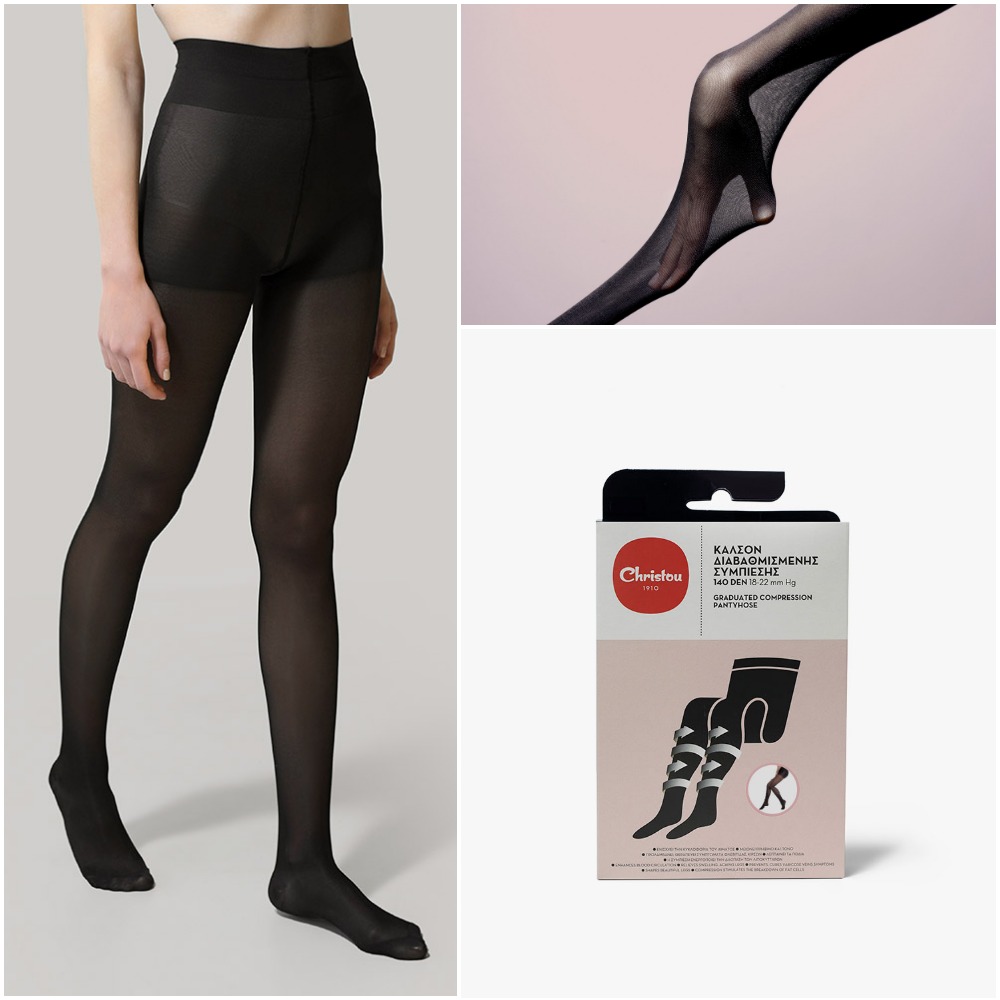
Taking even more care of our body, compression technology in hosiery protects our tired legs from unsightly symptoms such as swelling, phlebitis, and varicose veins, while enhancing blood circulation, stimulating tired muscles with oxygen, so that they remain not only elegant but also healthy. That's why at [big]Christou1910,[/big] we chose to create beautiful, elastic 140 DEN hosiery with graduated compression technology in timeless black and beige shades, which also offers a contouring effect for the legs! The elastic, double knit with high-tech fibres leaves an exceptionally soft and warm feel, acting as the ideal matte finish for our limbs, covering every imperfection. For comfort and beauty with every step you take, the reinforced, seamless finish keeps the hosiery stable and prevents it from slipping, all without showing through! Smooth, well-shaped legs are easier to maintain than ever before!
To get it, you don't need to wait in lines at department stores, like in the 1940s! By taking your usual trip to the supermarket (see the list here), you can simply add it to your basket, from the company's health corner stand, in the cosmetics section. Take care of yourself by giving a small gift with a transformative effect on your tired legs!